
In February 2026, with Avalanche's native token AVAX trading at $10.10, enterprises are accelerating their pivot to RWA tokenization subnets on custom Avalanche L1 deployments. This isn't hype; it's a structural shift driven by Avalanche's subnet architecture, which delivers sovereign, high-throughput blockchains tailored for institutional-grade asset tokenization. BlackRock's $500 million on-chain money market fund and SkyBridge Capital's $300 million tokenized hedge funds underscore why forward-thinking organizations prioritize Avalanche subnets enterprise solutions over rigid public chains.
Avalanche's edge lies in its modular design, where the Primary Network anchors the ecosystem while subnets enable permissioned environments compliant with regulatory demands. Recent upgrades like Avalanche9000 (Etna), slashing C-Chain costs by 99.9%, and Octane's 96% fee reduction, make enterprise blockchain RWA viable at scale. Propy's NFT-based real estate title deeds exemplify how subnets transform illiquid assets into programmable, transferable tokens.
Avalanche Subnets: Precision-Engineered for Institutional RWA Workloads
At their core, Avalanche subnets represent customizable L1 blockchains that route transactions with surgical efficiency. Unlike monolithic networks, they allow enterprises to spin up isolated chains with bespoke virtual machines, validator sets, and tokenomics. This flexibility is crucial for RWA tokenization, where real estate deeds or private equity stakes demand privacy, KYC enforcement, and sub-second finality.
Consider the architecture: the Primary Network handles X-Chain (assets), P-Chain (staking), and C-Chain (EVM contracts), but subnets extend this with dedicated L1s. Validators stake AVAX at $10.10 to secure both, fostering network effects without compromising sovereignty. For enterprises, this means deploying custom Avalanche L1 deployment for real estate tokenization without public chain congestion.
Avalanche Subnets vs. Other L1s for RWA Tokenization
| Metric | Avalanche Subnets | Ethereum | Solana | Polkadot |
|---|---|---|---|---|
| ⚡ Throughput | Ultra-high scalability (4,500+ TPS base, 100k+ possible with custom subnets) | Low (~15-30 TPS on L1) | High (2,000-65,000 TPS theoretical/practical) | High (1,000+ TPS per parachain, parallelized) |
| 🔒 Customization | Full L1 sovereignty: custom VMs, tokenomics, permissioned validators | Limited (relies on L2 rollups) | Minimal (monolithic architecture) | High (parachains with custom logic, but shared security) |
| 📋 Compliance | Enterprise-ready: permissioned networks, KYC/AML, regulatory hooks (e.g., BlackRock, JP Morgan) | Public chain; requires L2/private layers for compliance | Public; enterprise compliance challenges | Sovereign parachains enable compliance, but complex setup |
| 💰 Cost | Near-zero fees (<$0.001/tx post-Etna & Octane upgrades) | High ($0.50-$50+ per tx during congestion) | Very low (~$0.00025/tx) | Low tx fees, but high parachain auction costs ($10M+) |
TokenMinds and genfinity. io highlight how private subnets streamline the journey from design to deployment, often via Avalanche-CLI for genesis file creation. In my analysis, subnets outperform competitors by treating blockchains as infrastructure layers, solving business constraints like scalability and interoperability head-on.
Institutional Momentum Fuels 2026 RWA Tokenization Boom
AVAX's 24-hour range from $9.55 to $10.22 reflects steady demand amid ecosystem expansion. Partnerships with JP Morgan's Onyx, WisdomTree, and Deloitte have birthed tokenized securities and ESG oracles, positioning Avalanche as the go-to for rwa tokenization subnets. SkyBridge's move signals hedge funds viewing subnets as yield-bearing infrastructure.
Institutional adoption isn't optional; it's the litmus test for blockchain maturity. Avalanche passes with flying colors.
Real estate leads the charge: Spydra notes Avalanche's subnet flexibility enables tailor-made chains for property NFTs, mirroring Propy's legally binding deeds. Chainlink's guidance on Avalanche RWA underscores why: low fees post-upgrades make fractional ownership economical, even for high-value assets.
Blueprint for Enterprise Subnet Launch: From CLI to Compliance
Launching a subnet starts locally with Avalanche-CLI, as per official tutorials. Generate a genesis file, configure validators, and test in a private network before mainnet. Chainstack's MetaMask integration simplifies wallet access, while Zeeve demystifies routing for production.
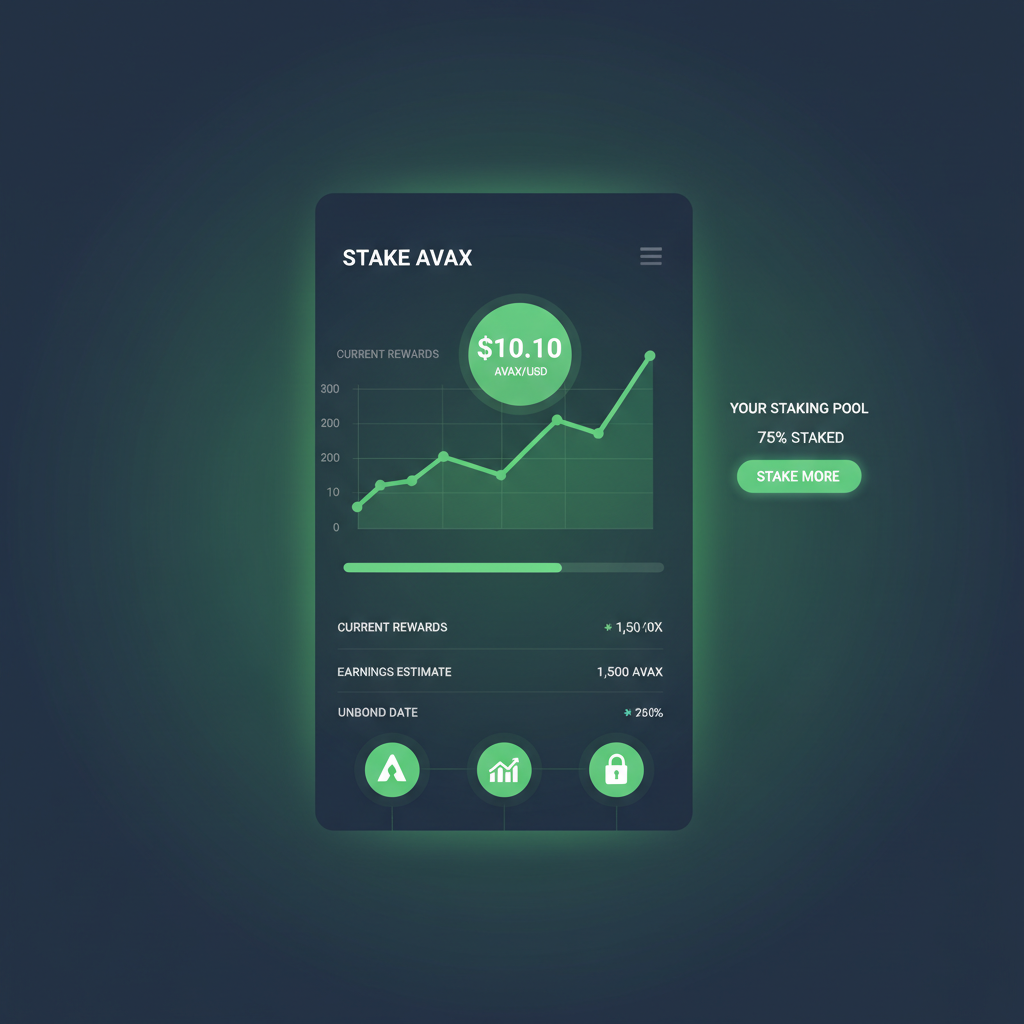
- Stake AVAX at current $10.10 valuation for validators.
- Design VM for RWA-specific logic, like Chainlink oracles for off-chain data.
- Deploy permissioned validators for compliance.
This phased approach minimizes risks, blending technical rigor with enterprise needs. Prediction models suggest AVAX's trajectory supports long-term subnet viability.
Avalanche (AVAX) Price Prediction 2027-2032: Bullish RWA Tokenization Scenario
Projections based on enterprise adoption of Avalanche Subnets for Real-World Asset (RWA) tokenization, institutional partnerships, and technical upgrades starting from 2026 baseline of ~$10-20
| Year | Minimum Price | Average Price | Maximum Price | YoY % Change (Avg) | Key Insights |
|---|---|---|---|---|---|
| 2027 | $18.00 | $35.00 | $60.00 | +75% | Initial RWA launches drive adoption; post-Etna/Octane upgrades boost scalability |
| 2028 | $30.00 | $55.00 | $90.00 | +57% | Institutional inflows from BlackRock/SkyBridge; real estate tokenization via Propy expands |
| 2029 | $45.00 | $80.00 | $130.00 | +45% | Regulatory clarity on RWAs; partnerships with JP Morgan, Deloitte accelerate enterprise subnets |
| 2030 | $60.00 | $110.00 | $170.00 | +38% | Market cycle upswing; Avalanche captures 5-10% of $10T RWA market by 2030 |
| 2031 | $80.00 | $150.00 | $230.00 | +36% | Mature ecosystem; competition from ETH/Solana contained by subnet customization advantages |
| 2032 | $100.00 | $200.00 | $320.00 | +33% | Dominant RWA platform; potential $80B+ market cap with sustained 30%+ CAGR |
Price Prediction Summary
AVAX is poised for strong growth in a bullish RWA adoption scenario, with average prices rising from $35 in 2027 to $200 by 2032, driven by Avalanche's subnet architecture enabling compliant, scalable tokenization for enterprises. Min/max ranges account for market volatility, regulatory risks, and competition.
Key Factors Affecting Avalanche Price
- Institutional RWA tokenization (e.g., BlackRock $500M, SkyBridge $300M)
- Avalanche9000/Etna & Octane upgrades reducing fees by 96-99.9%
- Partnerships with JP Morgan Onyx, WisdomTree, Deloitte for tokenized securities/ESG
- Real estate NFT deeds via Propy and subnet flexibility for compliance
- Broader market cycles, regulatory tailwinds for RWAs, and AVAX's high throughput vs. competitors
- Potential risks: macroeconomic downturns, ETH L2 competition, delayed adoption
Disclaimer: Cryptocurrency price predictions are speculative and based on current market analysis. Actual prices may vary significantly due to market volatility, regulatory changes, and other factors. Always do your own research before making investment decisions.
Oodles Blockchain frames subnets as modular solutions; for RWAs, they unlock liquidity pools previously siloed in TradFi. Enterprises must now weigh CLI-driven autonomy against managed services like TokenMinds.
CLI autonomy shines for tech-forward teams, but managed services accelerate time-to-market for compliance-heavy RWAs like real estate portfolios. In 2026, with AVAX at $10.10, staking costs remain accessible, enabling even mid-tier enterprises to secure their custom Avalanche L1 deployment.
Hands-On Subnet Deployment: Technical Deep Dive for RWA Tokenization
Transitioning from local testing to production demands precision. Avalanche-CLI's genesis file wizard automates much of the heavy lifting: define token rules, whitelist validators, and embed RWA-specific smart contracts for fractional ownership or yield distribution. Post-Etna and Octane upgrades, subnets achieve enterprise blockchain RWA throughput exceeding 100,000 TPS in isolated environments, dwarfing legacy systems.
Deploy Custom Avalanche Subnet for RWA Tokenization: Enterprise CLI Guide
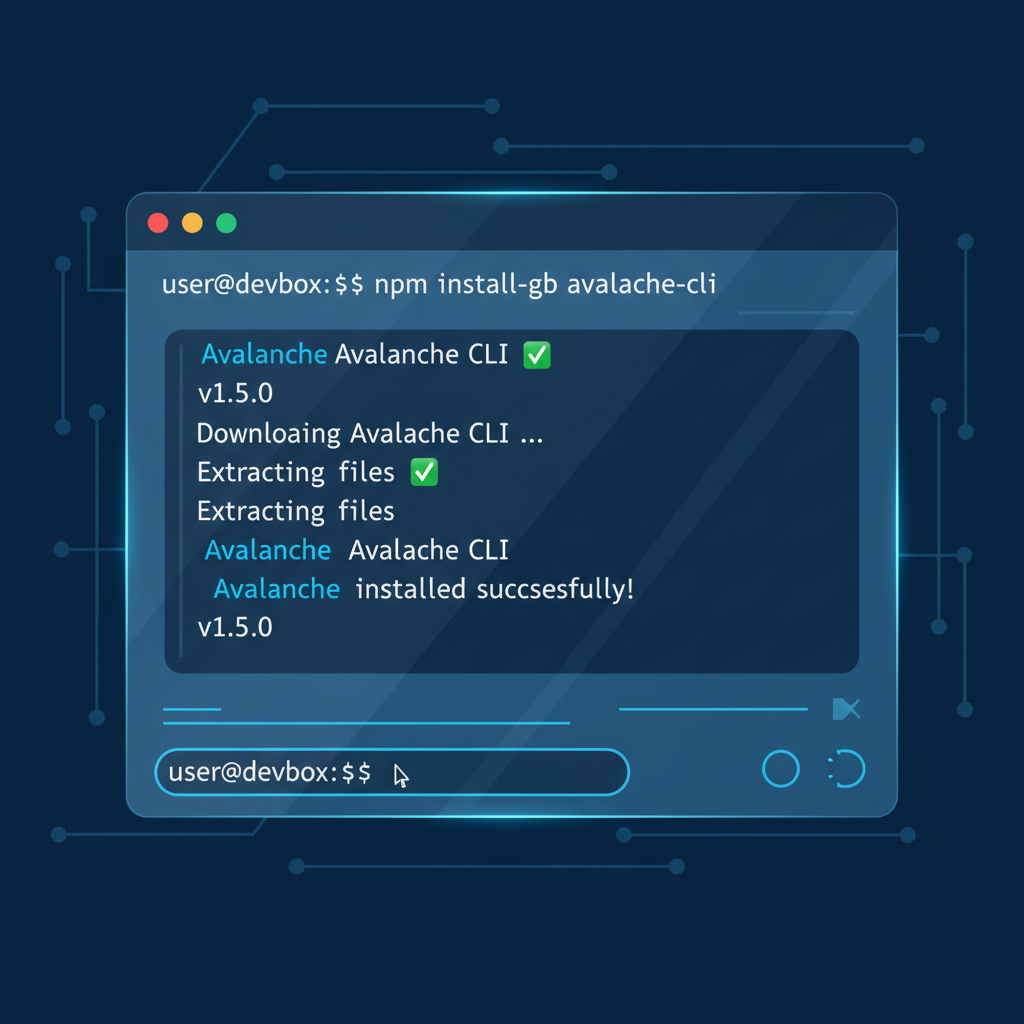
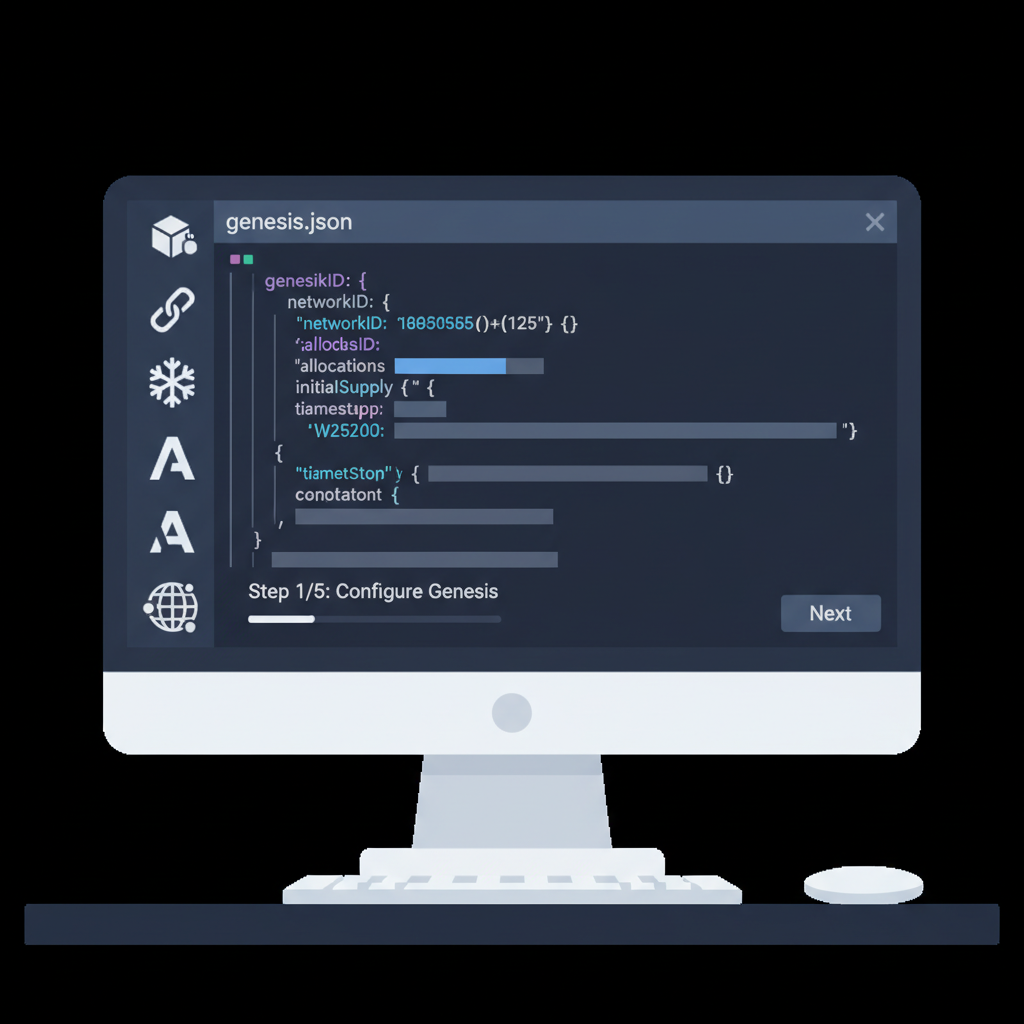
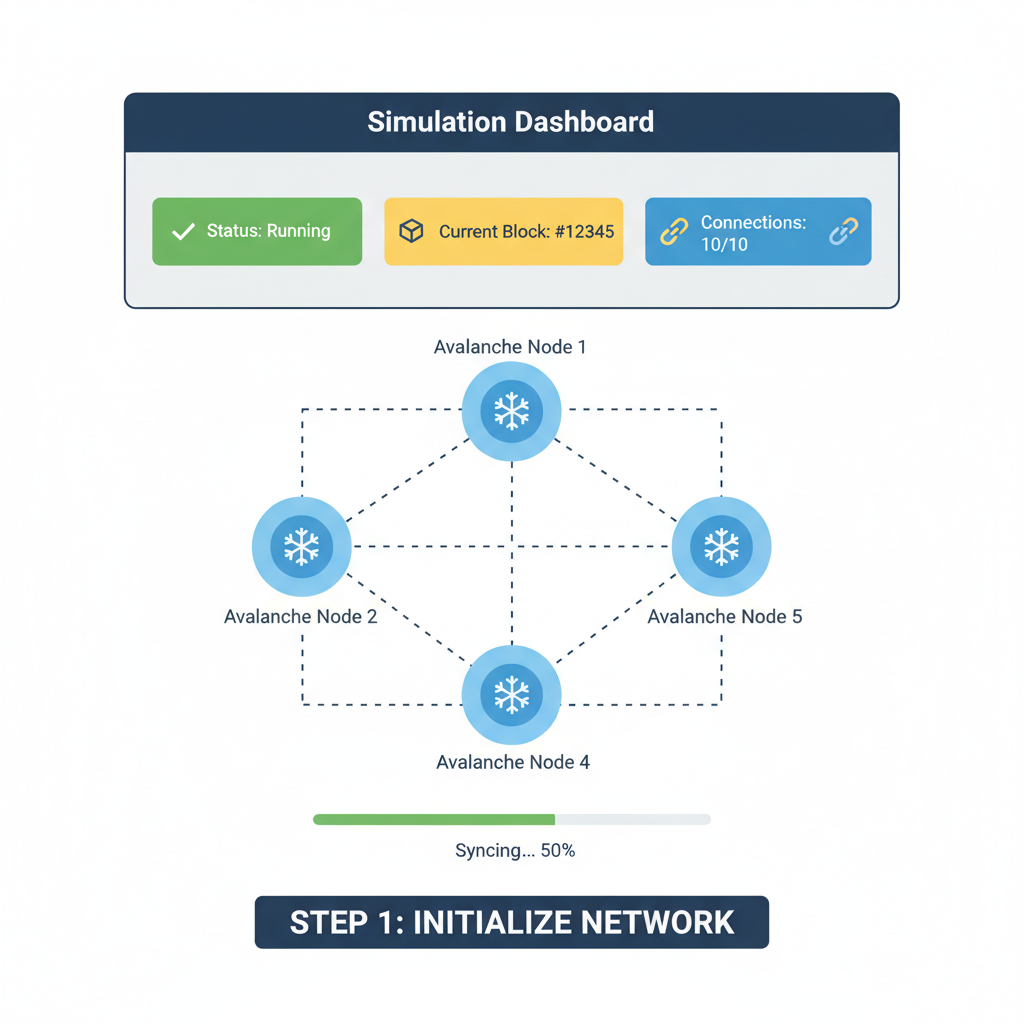
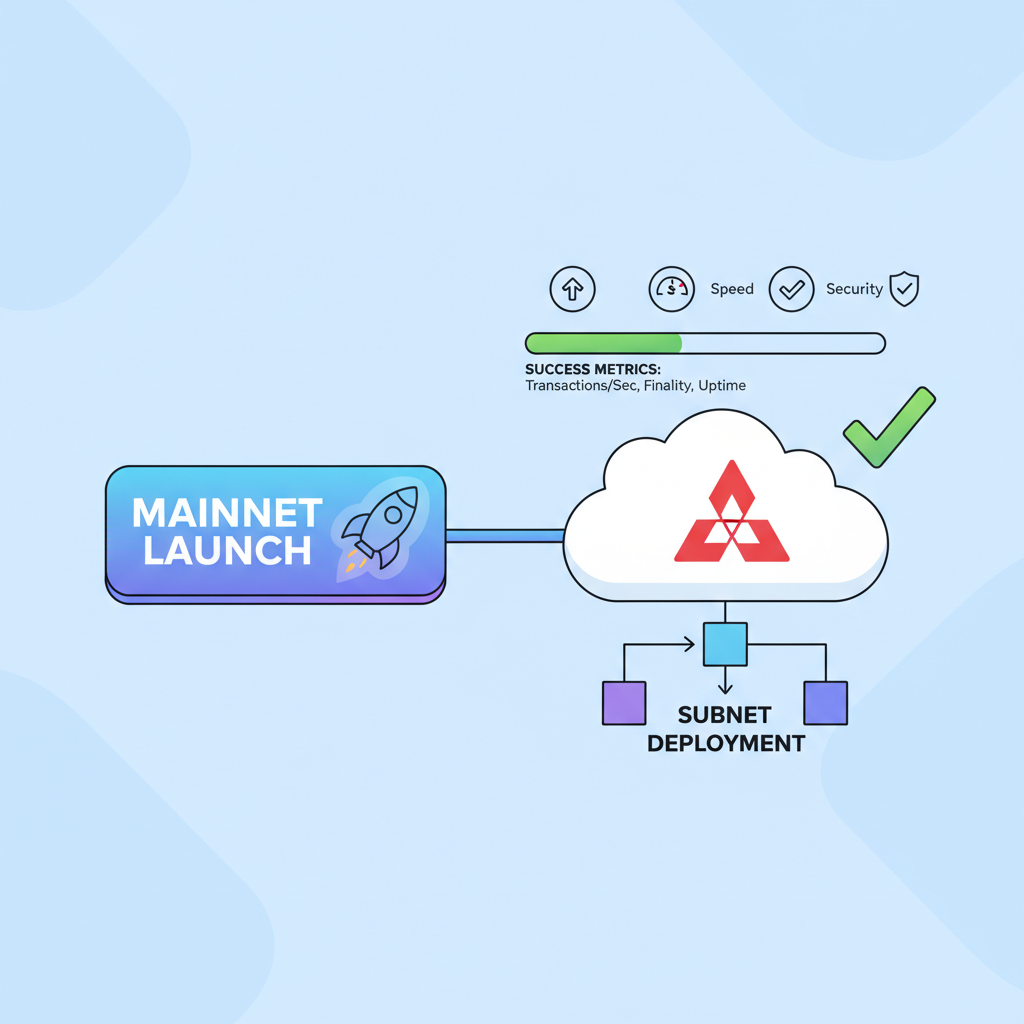
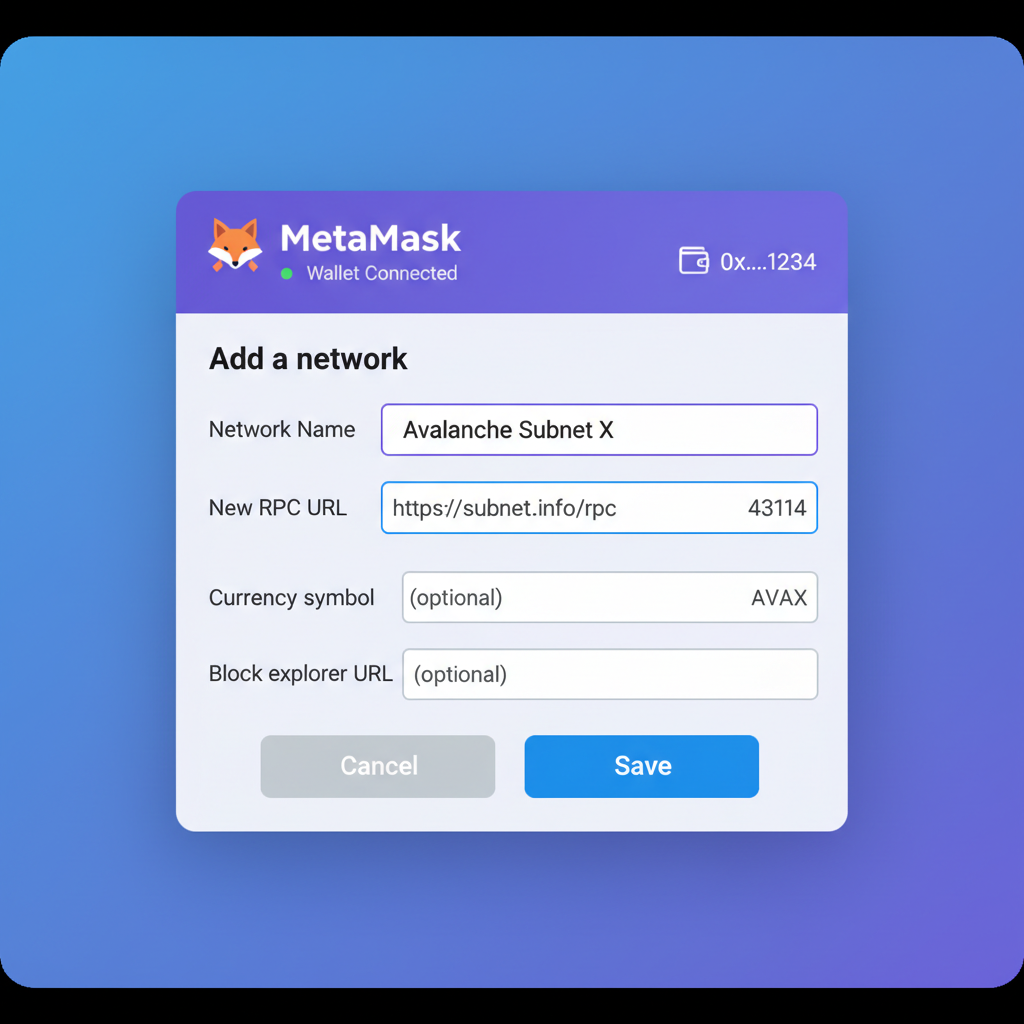
This process, drawn from Avalanche Builder Hub and GitHub docs, ensures subnets align with institutional workflows. For RWA tokenization, integrate Chainlink oracles directly into the VM for real-time asset pricing, pulling fiat feeds without oracle centralization risks. My take: this isn't just deployment; it's architecting liquidity engines that TradFi envies.
Real estate tokenization amplifies the case. Propy's subnet-deployed NFTs encode title deeds as ERC-721s with legal enforceability, fractionalized for retail access. Enterprises replicate this by permissioning validators to vetted nodes, enforcing KYC at the chain level. Spydra's analysis confirms: Avalanche's modularity trumps Ethereum's rollups for such use cases, avoiding sequencer bottlenecks.
Risk Mitigation and Scalability in Production
Production subnets demand vigilance. Monitor validator uptime via P-Chain staking at $10.10 AVAX; lapses trigger slashing, incentivizing reliability. For RWAs, hybrid models blend public Primary Network liquidity with private subnet execution, routing tokenized assets seamlessly. Zeeve's routing schemes optimize this, preventing silos.
Scalability shines under load: post-Octane, fees hover sub-cent levels, making micro-transactions for RWA dividends feasible. Enterprises like those partnering with Deloitte layer ESG data oracles, verifying sustainable real estate claims on-chain. Opinion: competitors falter here; Solana's outages and Ethereum's gas wars pale against Avalanche's deterministic finality.
Compliance weaves through every layer. Permissioned validators support whitelisting, while custom VMs enforce AML checks pre-mint. BlackRock's fund and SkyBridge's hedge plays prove regulators nod at Avalanche's sovereignty, unlike fully public alternatives.
2026 Outlook: Subnets as RWA Liquidity Catalysts
With AVAX's 24-hour low at $9.55 and high at $10.22, market stability underpins subnet economics. Institutional inflows, from JP Morgan's tokenized securities to WisdomTree's funds, forecast trillions in RWA TVL by year-end. Subnets enable this by customizing gas tokens, avoiding AVAX dependency for enterprise billing.
Forward enterprises prioritize Avalanche subnets enterprise for their blend of speed and control. Tokenize a skyscraper? Spin a subnet with geo-fenced access. Hedge fund? Private L1 with audited yields. The CLI-to-cloud path, bolstered by Chainstack tutorials, democratizes this power.
Ultimately, 2026 marks Avalanche's ascent as the institutional RWA backbone. Enterprises launching now capture first-mover yields, staking at $10.10 into a network engineered for the tokenization era. The blueprint exists; execution defines leaders.




No comments yet. Be the first to share your thoughts!