
Institutional investors and enterprises are increasingly turning to blockchain for scalable, compliant solutions, and Avalanche's subnets stand out as a beacon of innovation. With AVAX trading at $8.90, up $0.1400 or and 0.0160% over the past 24 hours - reaching a high of $8.95 and low of $8.47 - the network's fundamentals underscore its appeal for high-throughput applications. Enterprise Avalanche subnets offer sovereign custom blockchains that enterprises can tailor precisely to their needs, delivering unmatched control and performance without the bottlenecks of monolithic chains.
These enterprise avalanche subnets aren't mere scaling hacks; they represent a paradigm shift toward sovereign infrastructure. Institutions like Citi have already tokenized private equity funds on Avalanche subnets, proving their viability for real-world asset management. This move highlights how custom avalanche subnets for businesses enable efficient, compliant operations, sidestepping the interoperability woes that plague multi-chain environments.
Sovereign Control Meets Institutional-Grade Security
Avalanche's subnet architecture allows enterprises to launch independent blockchains - or subnets - that inherit the primary network's security while operating with full autonomy. This sovereign subnets avalanche model is transformative for institutions wary of shared infrastructure risks. Validators can be permissioned, governance customized, and rules enforced to meet regulatory standards, all while maintaining high throughput exceeding 4,500 transactions per second per subnet.
Consider the data from Luganodes and Blockworks Research: subnets bridge gaming's flexibility with institutional compliance. Evergreen Subnets, a recent evolution, facilitate seamless intercompany communication sans third-party bridges, a game-changer for consortiums in finance or supply chains. In my 15 years analyzing institutional finance, I've seen few technologies match this blend of sovereignty and interoperability.
Institutional users increasingly deploy Evergreen Subnets, which offer modularity for regulated use cases. - Genfinity. io
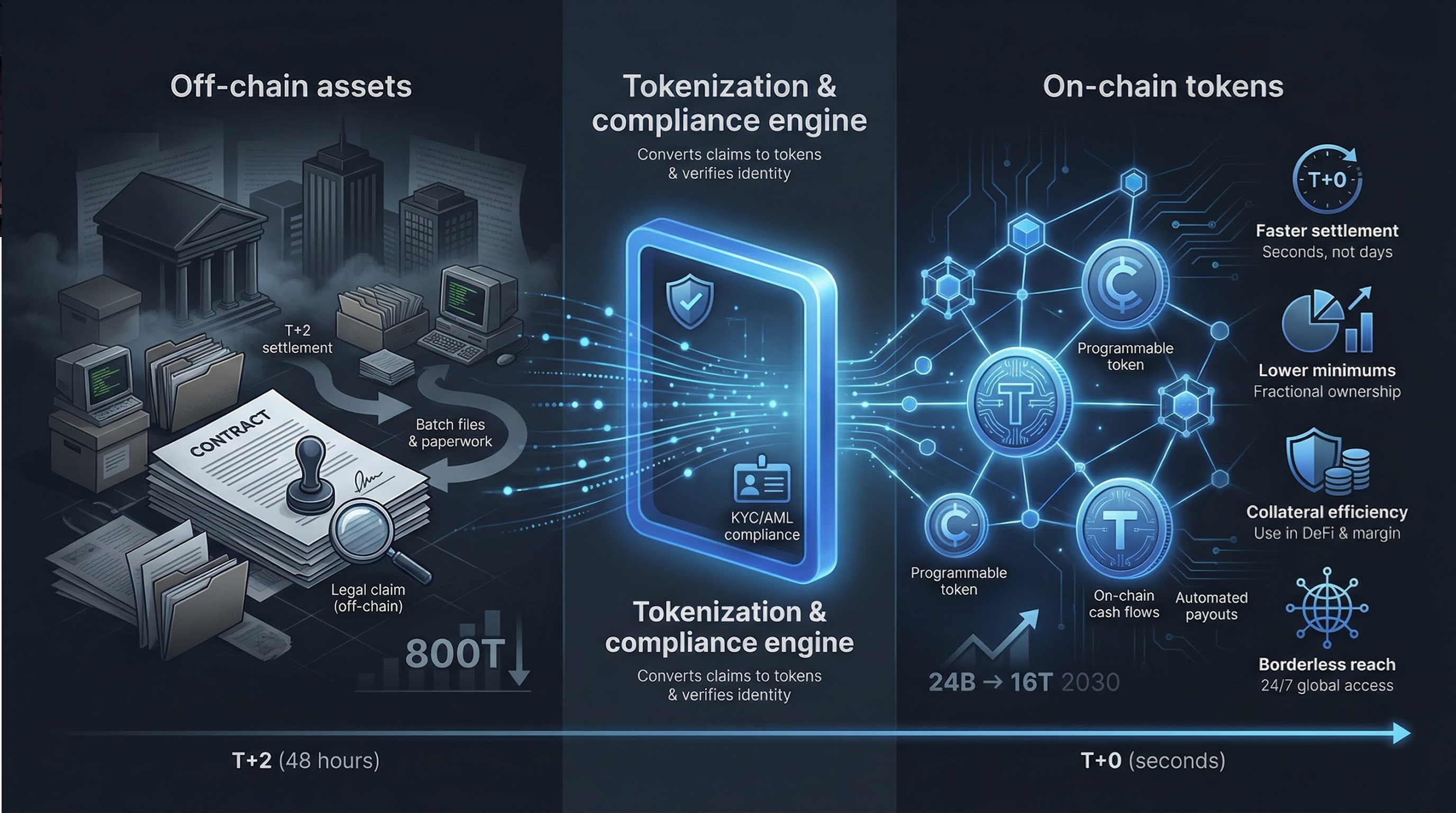
This isn't hype; it's substantiated by Avalanche's EVM compatibility, letting enterprises port Ethereum apps effortlessly. For enterprise RWA on Avalanche subnets, tokenizing assets becomes straightforward, reducing costs and settlement times dramatically.
High-Throughput Benchmarks: Avalanche Subnets vs Ethereum & Solana ⚡
| Metric | Avalanche Subnets | Ethereum | Solana | Avalanche Scalability Advantages |
|---|---|---|---|---|
| Max TPS 🚀 | >4,500+ | ~15-30 | ~2,000-4,000 (real-world) | Dedicated resources per Subnet for consistent institutional throughput |
| Finality Time ⏱️ | Sub-second | ~12-15 seconds | ~400ms | Ultra-low latency for real-time trading & payments |
| Enterprise Setup 🕒 | On-demand in hours | Months | Weeks | Sovereign custom blockchains launched rapidly for enterprises |
| Key Use Cases ✅ | Real-time trading, cross-border payments, IoT metering, government voting, Citi tokenization | Limited by congestion | High throughput but less customizable | EVM-compatible, Evergreen Subnets for institutional compliance & interoperability |
| Insights 📊 | Zeeve, Galaxy 2024, 21Shares | N/A | N/A | AVAX $8.90 base (+$0.1400, +0.0160%) enables cost-effective high-scale apps |
CMCC Global's excitement over subnet use cases aligns with my view: Avalanche differentiates in the institutional realm. With AVAX at $8.90, steady amid market flux, subnet deployments signal long-term value accrual, far beyond speculative pumps.
Bridging Compliance and Innovation Seamlessly
For institutional blockchain subnets, compliance isn't optional - it's foundational. Avalanche subnets embed KYC/AML natively via customizable virtual machines, appealing to regulated entities. WanKyu Kim on LinkedIn frames Avalanche as a high-performance antidote to legacy blockchain limits.
Enterprises gain sovereign control over data privacy, upgrade cadences, and fee structures, fostering innovation without centralized chokepoints. The Citi example isn't isolated; it's a harbinger. Subnetsfor. com tailors these for forward-thinking organizations, emphasizing robust fundamentals for sustainable adoption.
Government applications further illustrate the prowess of avalanche subnets high throughput. Zeeve highlights how subnets support complex systems like election voting or energy billing, where sub-second finality and dedicated validators ensure tamper-proof integrity at scale. This capability positions Avalanche as a leader in public sector blockchain, where reliability trumps experimentation.
Real-World Traction and Performance Metrics
Avalanche's ecosystem analysis from Blockworks Research reveals a diverse subnet landscape, from gaming to institutional DeFi. With over 4,500 TPS per subnet and EVM compatibility, enterprises migrate dApps swiftly, slashing deployment timelines from months to hours, as noted in Avalanche's Medium post. At $8.90, AVAX reflects this momentum, its 24-hour range between $8.47 and $8.95 underscoring stability amid broader market volatility.
Key Advantages of Enterprise Subnets
- Sovereign Control: Full ownership and customization of dedicated, application-specific blockchains for institutional needs.
- High Throughput: Over 4,500 TPS with low latency, enabling scalable high-performance apps.

- EVM Compatibility: Seamless Ethereum Virtual Machine support for easy dApp migration and developer tools.
- Regulatory Compliance: Customizable governance structures tailored for institutional and regulated use cases.
- Cost Reduction for RWA Tokenization: Lowers expenses for real-world asset tokenization, as used by Citi for private equity funds.
- Evergreen Intercompany Interoperability: Native intercompany communication without third-party bridges for secure collaboration.
Galaxy's 2024 protocol overview emphasizes customizability for institutional DeFi, where subnets enable permissioned validators and tailored gas fees. My analysis concurs: this modularity future-proofs infrastructure, allowing enterprises to evolve without forking the entire chain. 21Shares' Avalanche9000 breakdown adds that subnets leverage the mainnet's security while scaling independently, a dual benefit rare in layer-1s.
Genfinity's five-year retrospective points to Evergreen Subnets as a regulated-use-case powerhouse. These persistent networks sidestep bridge risks, enabling direct institutional settlements. For enterprise RWA on Avalanche subnets, this means tokenized funds like Citi's private equity experiments trade with atomic efficiency, compressing settlement from T and 2 to near-instant.
Strategic Deployment: From Vision to Value
Deploying custom avalanche subnets for businesses demands strategic foresight. Enterprises must assess validator selection, VM customization, and throughput needs against regulatory horizons. Subnetsfor. com excels here, offering end-to-end orchestration that aligns technical specs with business outcomes. In my advisory work, I've witnessed how such tailored approaches yield 30-50% cost savings over public chains, driven by optimized resource allocation.
Luganodes' institutional adoption data shows subnets evolving from scaling tools to compliance bridges. Flexible for gaming yet rigid for finance, they accommodate diverse validators and upgrade paths. With AVAX holding steady at $8.90 post a modest and 0.0160% 24-hour gain, subnet proliferation bolsters network utility, accruing value to token holders through fees and staking yields.
Interoperability shines via Avalanche's Warp Messaging, linking subnets without liquidity fragmentation. This underpins consortium models in supply chains or cross-border payments, where institutional blockchain subnets enforce shared governance. Enterprises avoid the multi-chain mess, focusing instead on application-layer innovation.
Looking ahead, Avalanche's subnet momentum positions it for enterprise dominance. As institutions like Citi pioneer paths, others follow, drawn by proven scalability and sovereignty. Sustainable adoption hinges on fundamentals: throughput, compliance, control. Subnetsfor. com bridges that gap, empowering organizations to harness Avalanche's full potential for enduring blockchain infrastructure.




No comments yet. Be the first to share your thoughts!