
In the evolving landscape of real-world asset (RWA) tokenization, enterprises are increasingly turning to Avalanche's subnet architecture for its unmatched blend of scalability, security, and sovereignty. With AVAX trading at $9.09, down 0.76% over the past 24 hours between a high of $9.42 and low of $9.03, the network's fundamentals remain robust amid institutional inflows. Custom Avalanche subnets enable businesses to deploy permissioned blockchains tailored for tokenizing assets like real estate, treasuries, and credit instruments, all while retaining full institutional control over governance, compliance, and data privacy.
Avalanche Enterprise Subnets: The Backbone of Sovereign RWA Tokenization
Avalanche's subnet model stands out by allowing enterprises to create isolated, customizable chains that connect seamlessly to the primary network. Unlike monolithic blockchains, custom subnets for RWA tokenization let institutions define their own validators, gas tokens, and virtual machines. This sovereignty addresses key pain points in traditional finance's blockchain pivot: regulatory uncertainty and operational rigidity.
Consider the mechanics. Subnets operate as sovereign environments where enterprises can enforce KYC/AML at the protocol level, restrict token transfers to whitelisted participants, and integrate off-chain oracles for real-time asset pricing. Data from recent deployments shows Avalanche's ~$200 million TVL in RWAs, ranked ninth overall, has already facilitated $415 million in new capital through tokenized credit and treasuries. Institutions like SkyBridge Capital, which tokenized $300 million of hedge funds, exemplify how Avalanche enterprise subnets bridge TradFi and DeFi without compromising control.
Institutional Adoption Accelerates with Proven Use Cases
Bergen County's migration of 370,000 property deeds onto Avalanche underscores the platform's maturity for government-scale RWA applications. By leveraging a custom subnet, the county achieved immutable, verifiable records while maintaining jurisdictional oversight. Similarly, Galaxy Digital's $75 million tokenized CLO highlights Avalanche's edge in structured credit products, where subnets ensure collateral isolation and compliant yield distribution.
Wyoming's Frontier Stable Token (FRNT), a state-backed initiative, further cements Avalanche's role in public-sector tokenization. These cases align with broader trends: banks, asset managers, and governments opting for Avalanche due to its production-ready deployments worth billions. As noted in analyses from Medium and Avax. network, the platform's five-step methodology for institutional adoption prioritizes controlled environments, making institutional Avalanche subnets ideal for RWAs that demand auditability and interoperability.

The diversity of Avalanche's ecosystem, spanning capital markets, payments, and consumer brands, positions it as a leader with over $1.25 billion in tokenized value. Subnets mitigate risks associated with public L1s, offering enhanced liquidity pools and scalability without the bottlenecks seen elsewhere.
Technical Superiority for Enterprise Blockchain Subnets
At the core of enterprise blockchain subnets on Avalanche lies the ability to fine-tune consensus mechanisms and throughput. Subnets achieve sub-second finality and handle thousands of TPS, critical for high-volume RWA trading. Enterprises can deploy EVM-compatible or custom VMs, integrating legacy systems via Avalanche's Warp Messaging for cross-subnet communication.
Compliance features shine here: built-in token gating, multi-sig treasuries, and upgradable contracts ensure regulatory alignment. For RWAs, this means tokenized treasuries can accrue yields programmatically while adhering to SEC guidelines. Zeeve's insights warn that bypassing Avalanche L1 for RWAs hampers scalability; subnets solve this by providing L1-grade security in a permissioned wrapper.
Avalanche (AVAX) Price Prediction 2027-2032
Projections based on RWA tokenization growth, custom Subnets for enterprises, and institutional adoption amid bullish market cycles
| Year | Minimum Price | Average Price | Maximum Price | YoY % Change (Avg) |
|---|---|---|---|---|
| 2027 | $15.00 | $25.00 | $40.00 | +175% |
| 2028 | $28.00 | $48.00 | $75.00 | +92% |
| 2029 | $35.00 | $65.00 | $110.00 | +35% |
| 2030 | $45.00 | $85.00 | $145.00 | +31% |
| 2031 | $55.00 | $105.00 | $175.00 | +24% |
| 2032 | $70.00 | $135.00 | $220.00 | +29% |
Price Prediction Summary
AVAX is forecasted to experience robust growth from $25 average in 2027 to $135 by 2032, driven by RWA tokenization leadership and Subnet deployments. Min/Max reflect bearish corrections and bullish adoption surges, with overall 15x potential from 2026 baseline amid favorable cycles.
Key Factors Affecting Avalanche Price
- Explosion in RWA tokenization TVL via Subnets ($1.25B+ already, targeting billions)
- Institutional pilots like SkyBridge ($300M funds), Bergen deeds, Galaxy CLO ($75M)
- Regulatory tailwinds for compliant enterprise blockchains
- Subnet scalability advantages over competitors for custom L1s
- Market cycle recovery post-2026, with AVAX capturing TradFi-DeFi bridge share
Disclaimer: Cryptocurrency price predictions are speculative and based on current market analysis. Actual prices may vary significantly due to market volatility, regulatory changes, and other factors. Always do your own research before making investment decisions.
CMCC Global's report on Avalanche as the blockchain for business emphasizes these technical benefits, forecasting impacts across verticals like lending and supply chain. With TVL growth signaling momentum, sovereign subnets for businesses are not just viable; they represent the sustainable path forward, prioritizing long-term value over hype.
Enterprises eyeing custom subnets RWA tokenization must weigh these advantages against alternatives. Public chains expose sensitive assets to retail volatility; permissionless L2s lack granular control. Avalanche subnets, however, deliver L1 security in a bespoke package, proven by deployments handling billions in value.
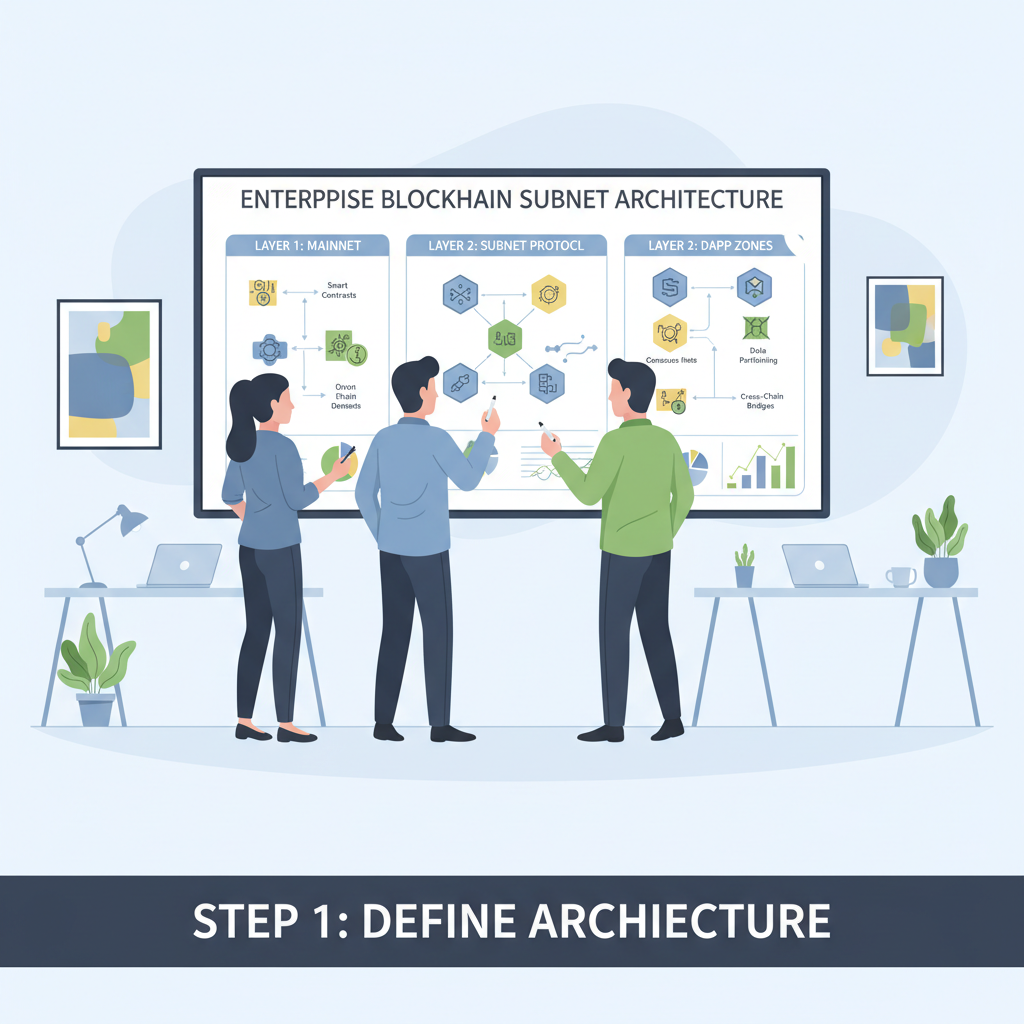
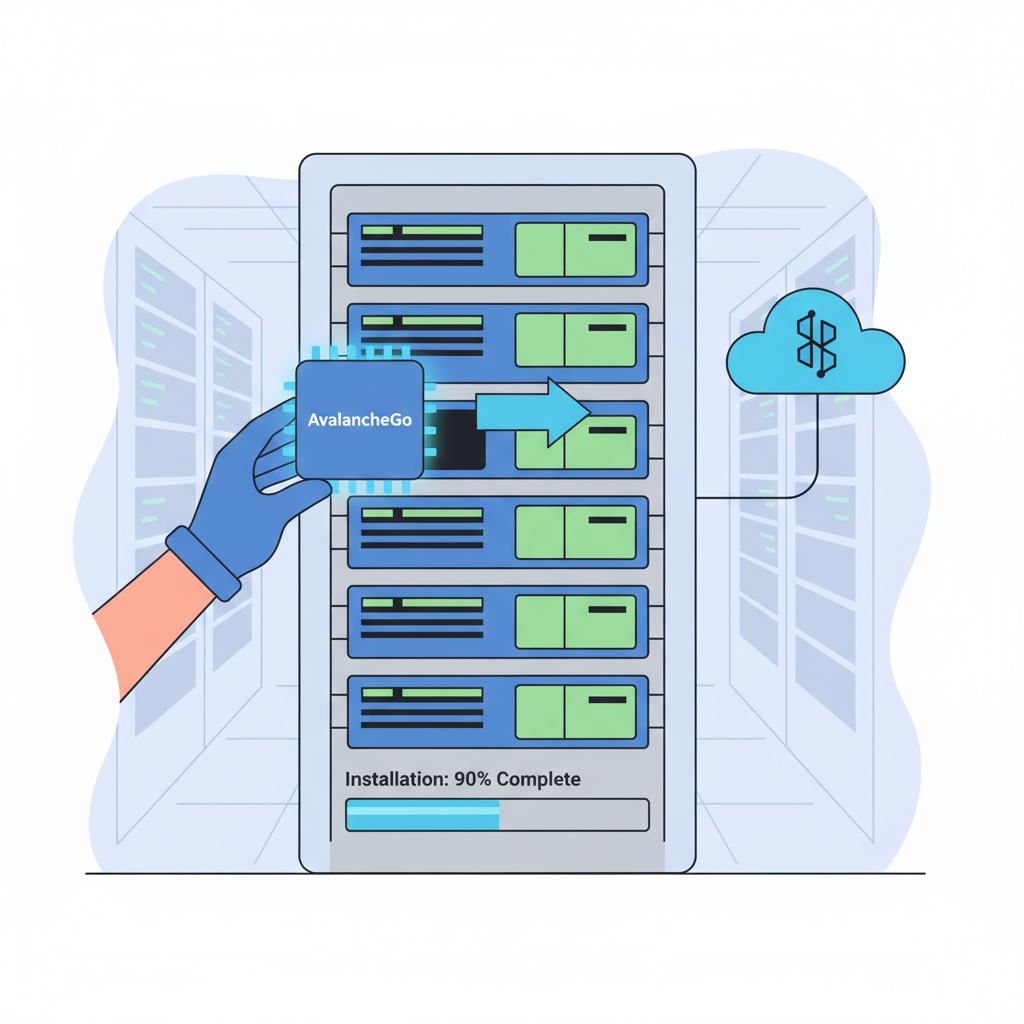
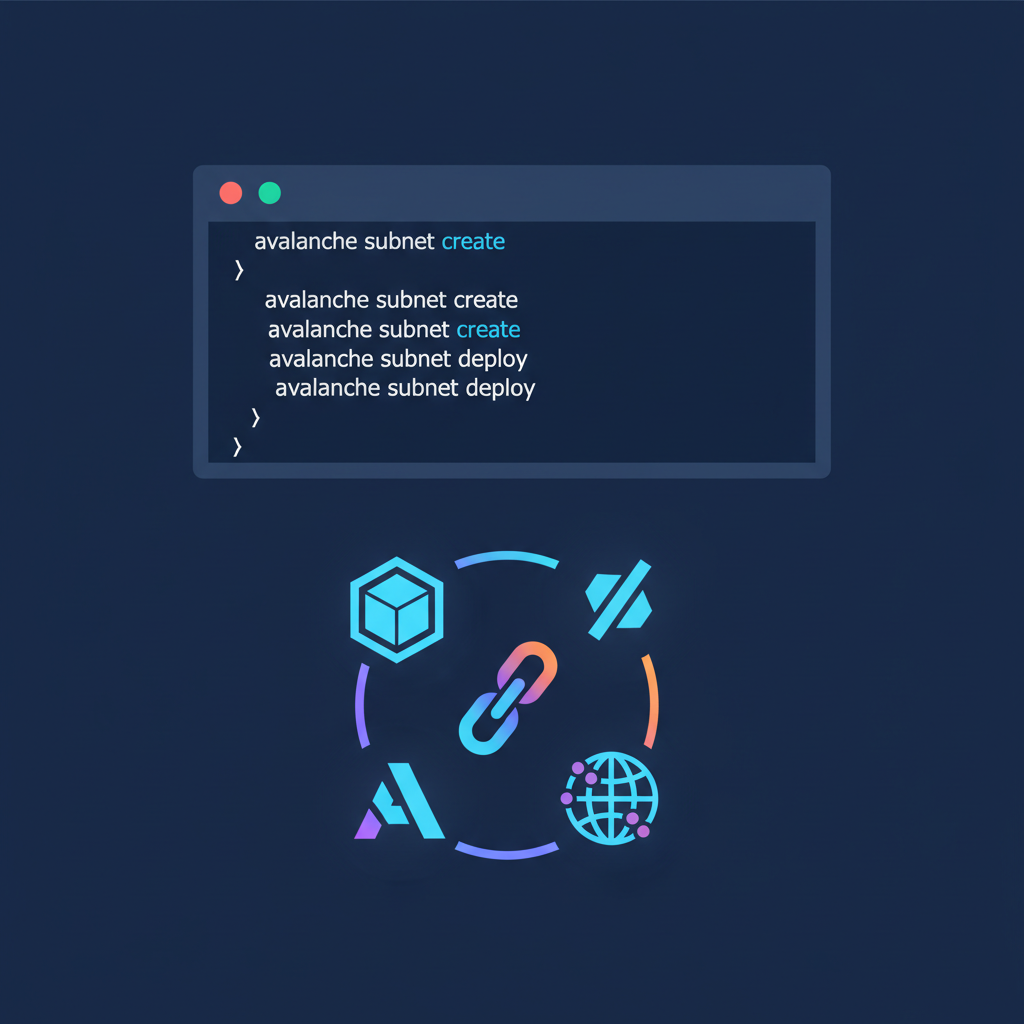
Practical Deployment: Step-by-Step for Institutional Subnets
Transitioning to production requires a structured approach. Institutions start by assessing asset types, compliance mandates, and throughput needs. Avalanche's toolkit simplifies this, from subnet bootstrapping to integration testing. The process ensures seamless interoperability with the Primary Network, unlocking shared liquidity while preserving isolation.
Deploy Custom Avalanche Subnet: Enterprise RWA Tokenization Guide
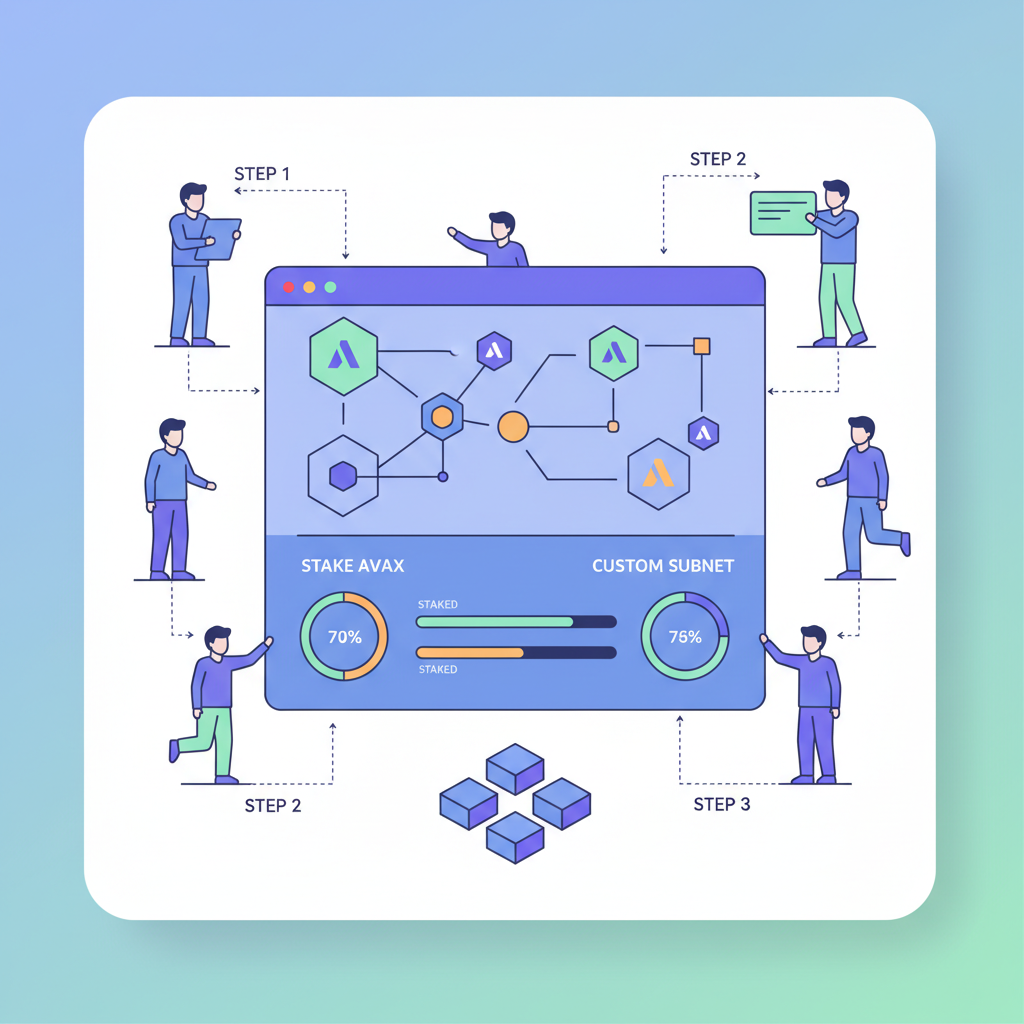
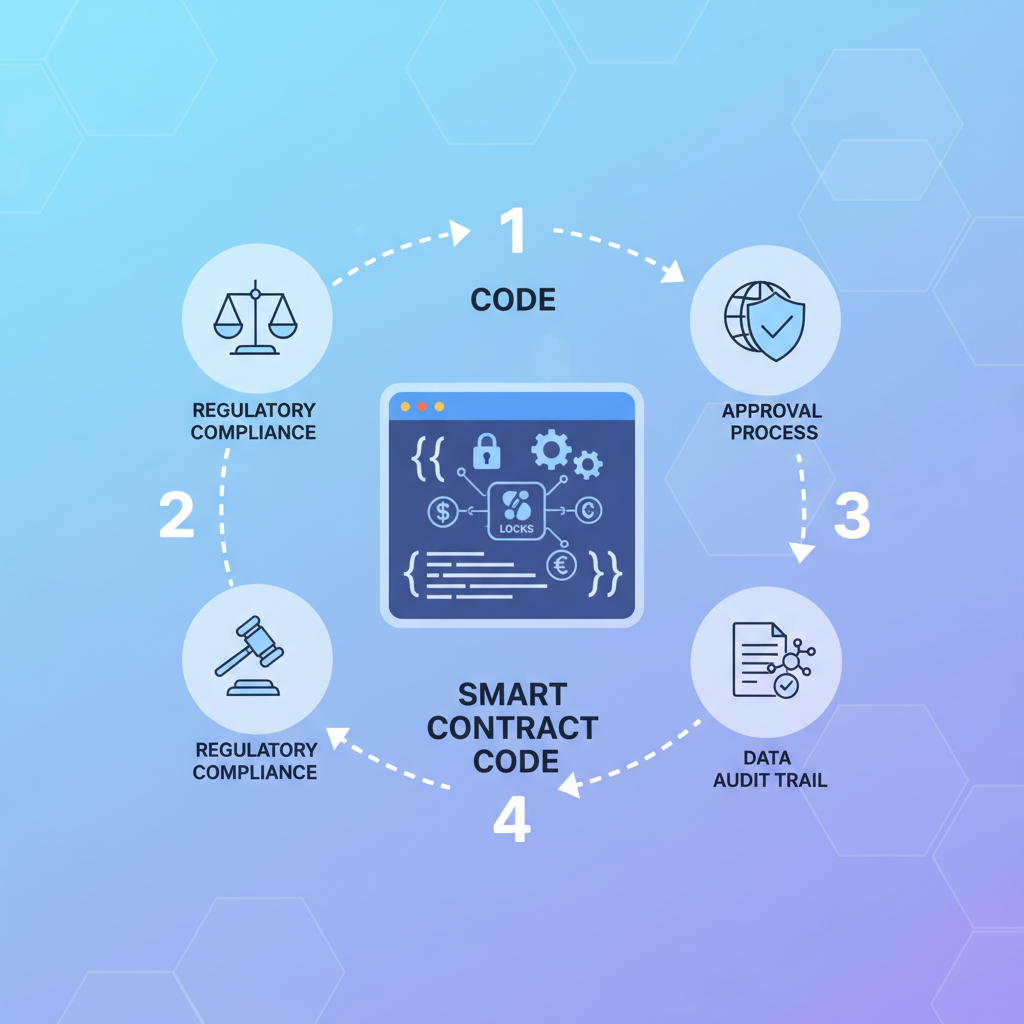
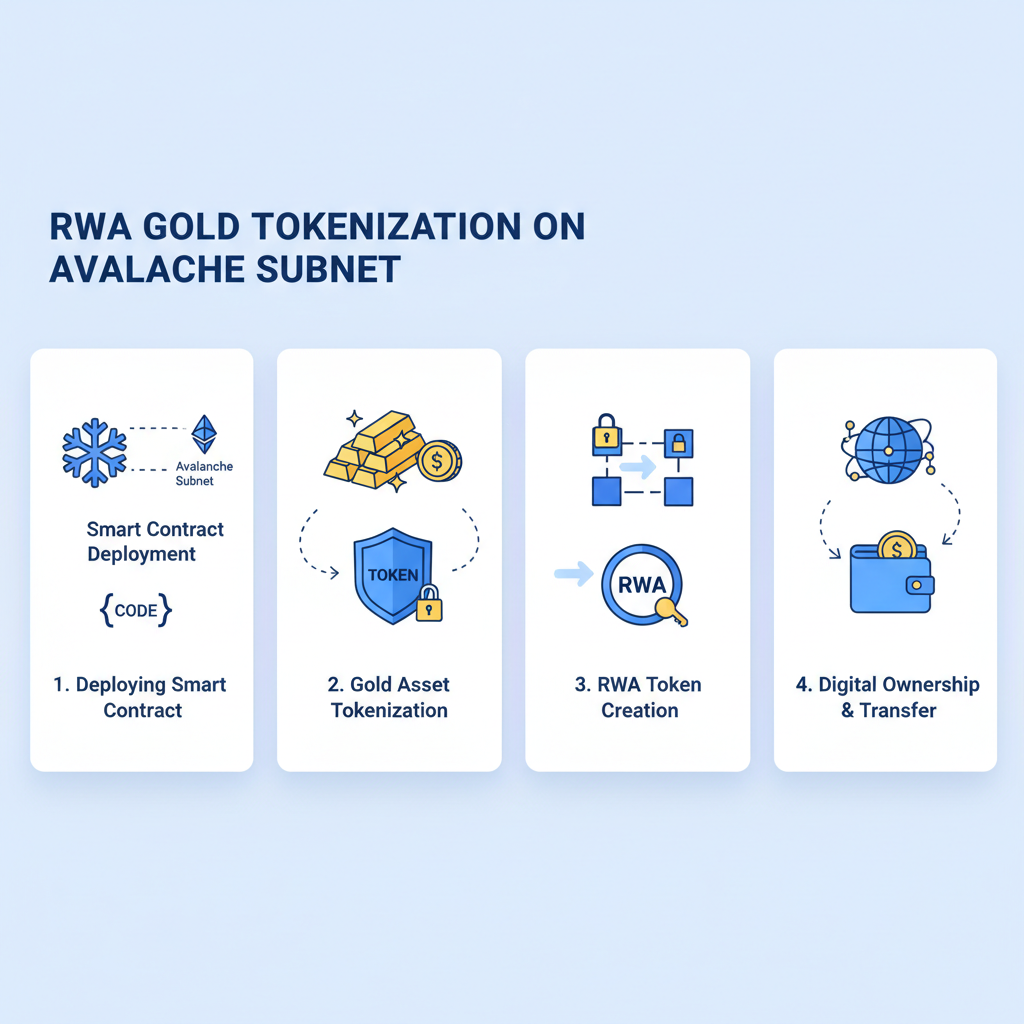


Once live, subnets enable tokenized RWAs to interact with DeFi primitives securely. For real estate deeds like Bergen County's, smart contracts automate title transfers with embedded legal clauses. Treasuries yield farm compliantly; CLOs distribute proceeds via oracle-verified cash flows. This operationalizes tokenization, converting static assets into programmable capital.
Benchmarking Performance: Subnets vs. Competitors
Avalanche's metrics outpace rivals in RWA suitability. Subnets scale to 100,000 and TPS per chain, dwarfing Ethereum L2s' congestion-prone limits. Costs plummet to fractions of a cent per transaction, vital for micro-yield products. Compliance tooling, absent in Solana or Polygon, embeds regulatory logic natively.
Avalanche Subnets vs Ethereum L2s vs Solana for RWA Tokenization
| Platform | TPS 🚀 | Tx Cost 💰 | Compliance Features 🛡️ | Institutional TVL 💼 |
|---|---|---|---|---|
| Avalanche Subnets | 10,000+ (customizable) | <$0.01 | Permissioned Subnets, Native KYC/AML, Custom gas & VMs 🛡️🛡️🛡️ | ~$1.25B+ (SkyBridge $300M, Galaxy $75M CLO, $415M new capital) |
| Ethereum L2s | 2,000-5,000 (e.g., Arbitrum) | $0.01-$0.50 | Some custom (Orbit), Mostly public rollups 🛡️🛡️ | ~$800M (e.g., Ondo, BlackRock BUIDL on Eth ecosystem) |
| Solana | 65,000 theoretical ~2,000 real | <$0.001 | High throughput, Limited enterprise controls 🛡️ | ~$150M |
Data underscores the edge: Avalanche's $200 million RWA TVL catalyzed $415 million inflows, per Spydra. SkyBridge's $300 million hedge fund tokenization and Galaxy's $75 million CLO thrive on this infrastructure. Wyoming's FRNT stablecoin leverages subnets for state sovereignty, blending public trust with blockchain efficiency.
Looking ahead, Canton Network's 2026 RWA outlook spotlights Aave's institutional lending as a blueprint. Avalanche extends this via subnets, supporting structured products from private credit to carbon credits. Banks like those in CMCC's case studies deploy for supply chains, tokenizing invoices for instant settlement. Governments follow, mirroring Bergen's deeds migration.
With AVAX steady at $9.09, reflecting a 24-hour range of $9.03 to $9.42, market resilience aligns with adoption tailwinds. Institutions prioritize platforms mitigating L1 risks, as Zeeve notes: skipping Avalanche hampers liquidity. Subnets counter this, fostering diversified ecosystems across capital markets and payments.
Team1. blog captures it well: Avalanche provides controlled environments where RWAs reside securely. This structured path suits conservative players, enabling gradual onboarding. Blockchain App Factory's case studies affirm institutional growth, with Avalanche leading due to customizable infrastructure.
For forward-thinking organizations, enterprise blockchain subnets Avalanche offer the compliant scalability TradFi craves. They transform RWAs from pilots to production, unlocking trillions in illiquid assets. Sustainable growth, rooted in sovereign control and proven deployments, defines this shift; speculative froth fades, but robust fundamentals endure.




No comments yet. Be the first to share your thoughts!