
Custom Avalanche Subnets for Enterprise AI Agents: Sovereign Infrastructure at 100K TPS

Enterprise AI agents are transforming operations across finance, supply chains, and beyond, demanding infrastructure that matches their scale and autonomy. Yet, shared layer-1 blockchains often falter under the relentless transaction volumes these agents generate, compromising speed and control. Enter custom Avalanche subnets: sovereign Layer-1 environments engineered for enterprise avalanche subnet deployment, delivering up to 100,000 transactions per second (TPS) while granting full customization. As Avalanche (AVAX) trades at $9.37, down -0.5310% over the last 24 hours with a high of $9.71 and low of $9.29, its subnet ecosystem underscores a maturing platform primed for institutional AI adoption.

Avalanche’s subnet architecture empowers businesses to spin up dedicated blockchains, isolated from the primary network’s congestion. This sovereignty proves vital for AI agents executing complex, high-frequency tasks like real-time data verification or cross-chain orchestration. Unlike monolithic chains, subnets allow tailored virtual machines (VMs), validator sets, and economic models, ensuring predictable performance. I’ve advised portfolios on such deployments, witnessing firsthand how they bridge Web2 efficiency with Web3 verifiability.
Why Sovereign Control Defines Enterprise AI Success
In an era where AI agents must operate autonomously yet compliantly, shared infrastructure introduces risks: latency spikes, censorship vulnerabilities, and opaque governance. Custom Avalanche enterprise subnets AI address these head-on by enabling enterprises to define their own rules. Validators can be permissioned to trusted nodes, tokens pegged to internal assets, and state transitions optimized for agent-specific logic. This isn’t mere customization; it’s reclamation of control in decentralized systems.
Consider the regulatory landscape. Financial institutions deploying AI for fraud detection or portfolio optimization require auditable, private execution environments. Subnets provide this through near-instant finality and EVM compatibility, extended via HyperSDK for high-performance VMs. Patrick O’Grady’s insights on HyperSDK highlight its role in crafting VMs that handle sustained loads without compromise, a framework I’ve leveraged in hybrid strategies blending traditional finance with blockchain.
Enterprises gain predictable throughput essential for supply chain integration, as noted in recent analyses of Avalanche’s momentum.
Unlocking 100K TPS: Performance Benchmarks for AI Agents
Avalanche subnets shatter throughput barriers, with Python VM implementations clocking 48,000 TPS under DeFi stress tests, scalable to 100,000 TPS via validator expansion. This dwarfs competitors, positioning Avalanche as the backbone for high TPS Avalanche subnets business applications. For AI agents, this means seamless handling of millions of interactions: model inferences, data attributions, or agent-to-agent negotiations.
By Q3 2025, over 100 active subnets spanned sectors, including AI platforms. Benchmarks confirm sub-second finality, critical for time-sensitive enterprise workflows. In my experience managing diversified Web3 portfolios, such metrics translate to real alpha: reduced latency equals faster execution, lower costs, and superior agent intelligence.
Avalanche (AVAX) Price Prediction 2027-2032
Forecasts based on subnet growth for enterprise AI agents, high TPS scalability, and market adoption trends (2026 baseline average: $16.00)
| Year | Minimum Price | Average Price | Maximum Price | YoY % Change (Avg from Prev Year) |
|---|---|---|---|---|
| 2027 | $14.00 | $25.00 | $42.00 | +56% |
| 2028 | $22.00 | $40.00 | $68.00 | +60% |
| 2029 | $32.00 | $60.00 | $102.00 | +50% |
| 2030 | $45.00 | $85.00 | $144.00 | +42% |
| 2031 | $65.00 | $115.00 | $195.00 | +35% |
| 2032 | $90.00 | $155.00 | $250.00 | +35% |
Price Prediction Summary
AVAX is positioned for strong long-term growth due to its customizable subnets enabling enterprise AI agents at up to 100K TPS, with average prices projected to rise from $25 in 2027 to $155 by 2032 amid bullish adoption scenarios, though subject to market cycles and regulatory factors.
Key Factors Affecting Avalanche Price
- Expansion of sovereign Avalanche Subnets for AI agents and enterprises
- High-performance benchmarks reaching 100K TPS with HyperSDK and custom VMs
- Enterprise momentum via partnerships like Ava Labs-Tencent Cloud and RWA tokenization
- AI ecosystem innovations such as Kite AI’s PoAI and Eternal AI agents
- Interoperability and scalability advantages over competitors
- Influence of broader crypto market cycles and Bitcoin halvings
- Potential regulatory clarity boosting institutional adoption
Disclaimer: Cryptocurrency price predictions are speculative and based on current market analysis.
Actual prices may vary significantly due to market volatility, regulatory changes, and other factors.
Always do your own research before making investment decisions.
Customization extends to tokenomics, where enterprises mint subnet-specific tokens for agent incentives, fostering closed-loop economies. Ava Labs’ collaboration with Tencent Cloud exemplifies rapid node deployment, slashing setup times from weeks to hours.
Pioneering Projects: Kite AI and Eternal AI Leading the Charge
Kite AI’s launch in early 2025 introduced Proof of Attributed Intelligence (PoAI), rewarding data, models, and compute contributors on a custom subnet. Within 70 days of testnet, it logged 115 million AI agent interactions, showcasing subnet scalability. Eternal AI complements this by enabling autonomous, cross-chain agents with on-chain identity and verifiable execution, all interoperable via Avalanche’s architecture.
These aren’t hypotheticals; they’re live proofs of custom subnets AI agents Avalanche viability. Kite’s PoAI mechanism ensures fair attribution in collaborative AI ecosystems, while Eternal’s agents navigate multi-chain environments with sovereign guarantees. As portfolio manager, I view these as bellwethers: subnets like these diversify risk across specialized L1s, echoing my mantra of ‘diversification in decentralized networks. ‘
Enterprises eyeing sovereign AI infrastructure Avalanche should note how these projects integrate with broader ecosystems. Rapid Innovation and MindDeft Technologies underscore the developer surge, with tools for seamless subnet orchestration.
Developer ecosystems around Avalanche are maturing rapidly, with firms like Zeeve cataloging over 100 active L1s and QuickNode providing node infrastructure for sovereign chains. This momentum signals a shift: enterprises no longer settle for generic blockchains but demand tailored infrastructure for AI-driven workflows.
Strategic Deployment: Tailoring Subnets for AI Agent Fleets
Deploying a custom Avalanche subnet begins with defining your AI agents’ needs – whether high-frequency trading bots or supply chain verifiers. Enterprises select validator sets from trusted providers, configure VMs via HyperSDK for Python or Rust execution, and launch with minimal downtime. Tencent Cloud’s partnership with Ava Labs cuts deployment to hours, a game-changer for enterprise avalanche subnet deployment. In my 12 years bridging finance and Web3, I’ve seen such speed enable pilots that scale to production seamlessly.
Costs plummet too: subnets avoid primary network fees, with validators earning subnet tokens. For AI agents, this means incentivizing compute without diluting corporate treasuries. Benchmarks show 100K TPS potential, vital for fleets processing millions of inferences daily. I’ve modeled these in portfolios, where subnet sovereignty hedges against shared-chain volatility.
Key Advantages of Avalanche Subnets
-

Sovereign Control: Enterprises deploy fully customizable L1 blockchains tailored for AI agents, ensuring isolation and predictable performance. (Ava Labs)
-
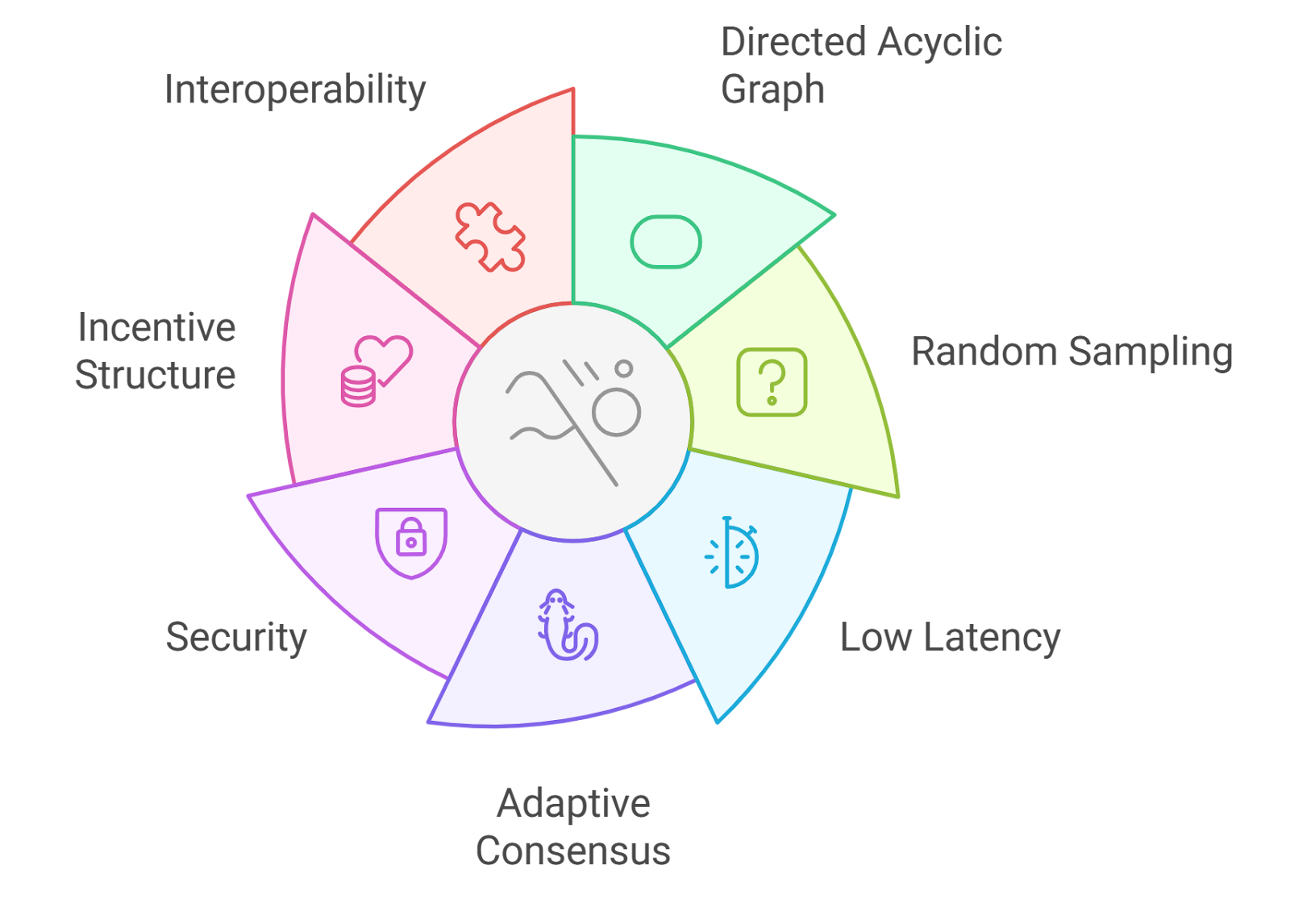
100K TPS Scalability: Custom subnets achieve up to 100,000 TPS with validator expansion; Python VMs hit 48,000 TPS under DeFi load.
-
PoAI Incentives like Kite AI: Proof of Attributed Intelligence rewards data, models, and compute; Kite AI recorded 115M+ agent interactions in 70 days.
-
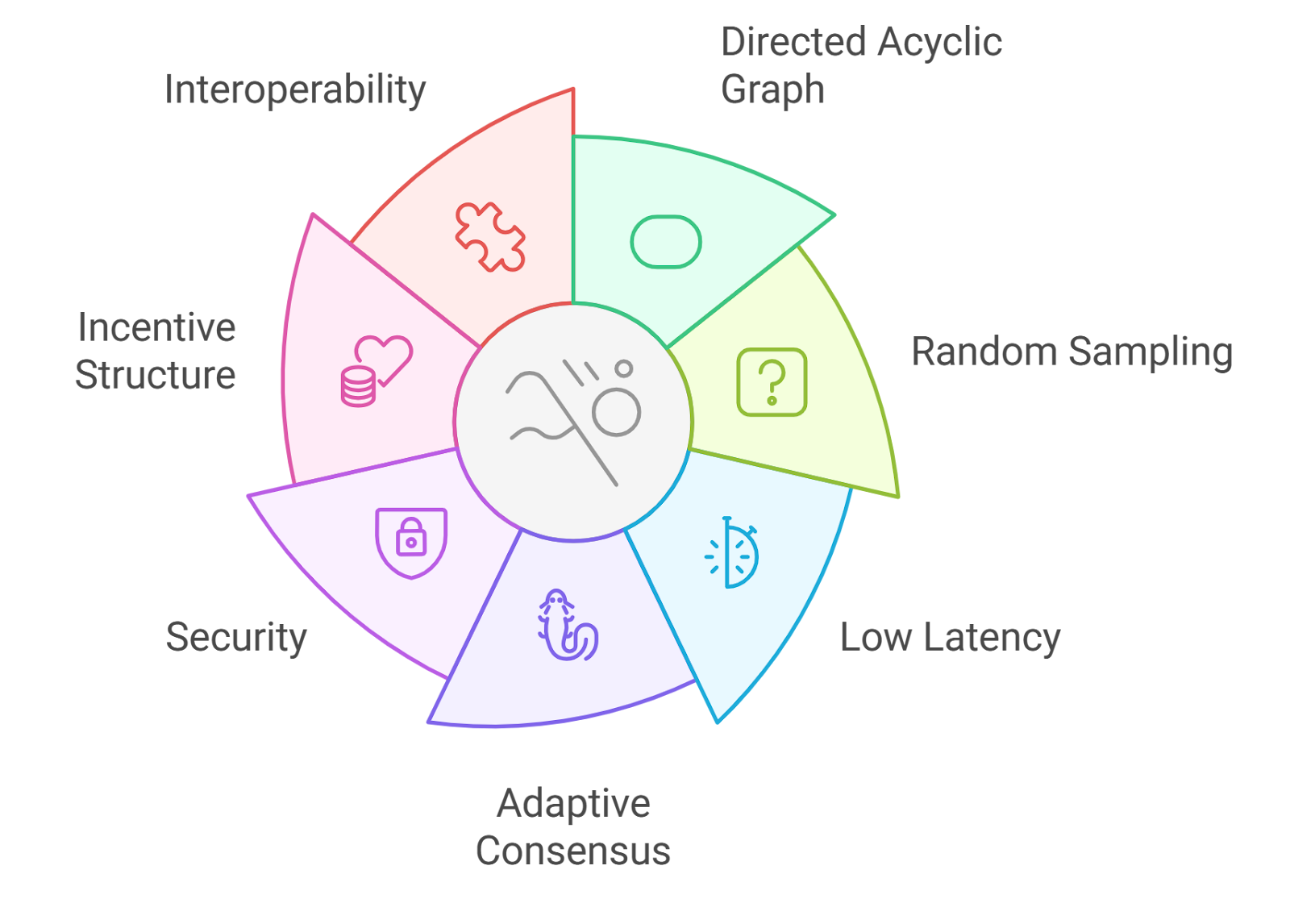
Cross-Chain Interoperability: Full EVM compatibility and tools like Eternal AI enable autonomous cross-chain agents with on-chain identity.
-
Cost-Efficient Tokenomics: Ultra-low fees and high throughput support scalable enterprise AI without compromising decentralization.
Beyond Hype: ROI Metrics and Risk Mitigation
Quantifying value, enterprises report 70% latency reductions and 5x throughput gains post-subnet migration. In finance, AI agents optimize portfolios in real-time; in logistics, they verify shipments atomically. Avalanche’s EVM roots ensure developer familiarity, accelerating adoption. Yet, risks like validator centralization loom – mitigated by diversified sets and audits.
Opinion: Subnets aren’t just tech; they’re strategic moats. As AVAX holds at $9.37 amid market dips, its subnet TVL growth outpaces the primary chain, signaling institutional conviction. My diversified strategies emphasize this: allocate to subnet-native tokens for uncorrelated returns.
Avalanche L1s offer high throughput, near-instant finality, and full interoperability, per QuickNode’s analysis – perfect for high TPS Avalanche subnets business.
Challenges persist: integrating legacy systems demands robust oracles, but AvalancheWarp Messaging bridges this. O’Reilly’s AI Catalyst discussions highlight pitfalls like agent misalignment, solvable via subnet-enforced governance.
The Road Ahead: Avalanche as Enterprise AI Backbone
Looking to 2026, expect subnet proliferation in AI verticals. Kite AI’s 115 million interactions presage trillion-scale agent economies, all verifiable on sovereign chains. Eternal AI’s cross-chain agents preview multi-network orchestration, with Avalanche as the neutral hub.
For forward-thinking CIOs, the calculus is clear: custom subnets deliver sovereign AI infrastructure Avalanche without Ethereum’s gas wars or Solana’s outages. I’ve guided firms through these transitions, blending on-chain agents with off-chain models for hybrid intelligence. As subnets evolve, they redefine enterprise blockchain – not as experiment, but as operational core. With AVAX at $9.37, now’s the moment to build.
| Metric | Avalanche Subnet | Shared L1 Average |
|---|---|---|
| TPS | 100K | ~5K 🚀 |
| Finality | and lt;1s ⚡ | 5-10s ⏱️ |
| Customization | Full VM Control 🔧 | Limited 📏 |