
Custom Avalanche Subnets for Enterprise RWA Tokenization: Sovereign Blockchain Solutions in 2026

As enterprises navigate the tokenized future in 2026, custom Avalanche subnets stand out for RWA tokenization on Avalanche. With AVAX trading at $10.33, down just 0.0105% over the last 24 hours between a high of $10.50 and low of $10.07, the network’s momentum feels unshakable. Subnets have exploded from 28 to 112 active chains, a 300% surge fueled by giants like Samsung, Deloitte, and Citi. These sovereign environments deliver tailored control, processing 45 million monthly transactions by February, outpacing the C-Chain. For enterprise subnet deployment, this scalability turns blockchain hype into institutional reality.

Sovereign Subnets: The Enterprise Edge in RWA Tokenization
Picture a world where property deeds in New Jersey, valued at $240 billion, live on-chain. That’s Balcony’s project, announced in May 2025 and built on Avalanche’s subnet architecture. Tokenization here isn’t abstract; it fractionalizes ownership, enables 24/7 trading, and erases borders while preserving legal integrity. I see this as a portfolio manager’s dream: diversified exposure to real estate without the illiquidity drag.
Custom subnets shine because they offer sovereignty. Enterprises dictate validators, gas tokens, and VM choices, sidestepping public chain congestion. Citi’s subnet, live since November 2025, has settled $1.8 billion in tokenized bonds with sub-two-second finality. Deloitte and Samsung follow suit, crafting niches for supply chain assets and digital securities. This isn’t generic blockchain; it’s sovereign blockchain subnets engineered for compliance and throughput.
Galaxy Digital’s $75M CLO Signals Institutional Floodgates
January 2026 brought fresh proof: Galaxy Digital’s $75 million tokenized collateralized loan obligation on Avalanche. Structured by their lending and infrastructure teams, managed by Galaxy Asset Management, it underscores subnets’ maturity for complex finance. Amid broader market noise, Avalanche’s ecosystem pulled in institutions, with RWAs leading the charge.
These moves align with a hybrid strategy I advocate: blending macro trends like regulatory thaw with subnet metrics. Throughput hits enterprise-grade levels, costs plummet versus Ethereum layers, and interoperability via Avalanche Warp Messaging keeps assets fluid. For institutional RWA solutions 2026, subnets reduce settlement risk, unlock liquidity pools, and integrate legacy systems seamlessly.
Why 2026 Marks the Tipping Point for Subnet Dominance
Tokenizing real-world assets means digitizing deeds, bonds, or loans into blockchain tokens, slashing intermediaries and boosting efficiency. Avalanche’s subnets amplify this: isolated yet connected, secure yet performant. The Balcony deal, the largest U. S. blockchain deed project, represents $240 billion in value on-chain. Galaxy’s CLO adds debt instruments to the mix, proving versatility.
Enterprises deploying Avalanche subnets enterprise solutions gain more than speed; they reclaim autonomy in a fragmented blockchain landscape. Sovereign control means selecting validators aligned with internal governance, customizing gas tokens to match treasury assets, and even tweaking virtual machines for proprietary logic. This flexibility proves vital for RWA tokenization Avalanche, where compliance layers must overlay raw performance. Samsung’s supply chain subnet, for instance, tracks tokenized commodities with immutable provenance, reducing fraud risks that plague traditional ledgers. Deloitte experiments with carbon credits, turning illiquid offsets into tradable tokens. These aren’t pilots; they’re production-scale operations, with subnets handling diverse assets from real estate to debt obligations.
Deployment Realities: From Concept to Institutional RWA Solutions 2026
Launching an enterprise subnet deployment follows a streamlined path on Avalanche. Start with the Subnet-EVM or tailor a custom VM, bootstrap validators from trusted nodes, and integrate via Warp Messaging for cross-chain flows. Costs? Substantially lower than public alternatives, often under $0.01 per transaction at scale. Citi’s experience bears this out: $1.8 billion settled since launch, with finality that crushes legacy systems’ T and 2 cycles. As AVAX holds at $10.33, network fees remain predictable, shielding enterprises from volatility spikes.
Yet balance tempers optimism. Subnets demand upfront expertise; misconfigured validators can bottleneck throughput. Regulatory scrutiny intensifies around tokenized RWAs, especially cross-border deeds like Balcony’s $240 billion initiative. Still, Avalanche’s track record – 112 active subnets, 45 million monthly transactions – positions it ahead. Galaxy Digital’s $75 million CLO, tokenized end-to-end on a dedicated setup, demonstrates debt markets’ readiness. Fractional ownership thrives here: a $10,000 deed slice trades globally, instantly settling against collateral.
Key Advantages of Avalanche Subnets
-
Sovereignty: Custom subnets offer dedicated, permissioned blockchains, giving enterprises full control over governance and data, as seen with Samsung, Deloitte, and Citi launching tailored subnets.
-
Sub-Second Finality: Achieve settlement in under 2 seconds, like Citi’s subnet processing $1.8B in tokenized bonds since November 2025.
-
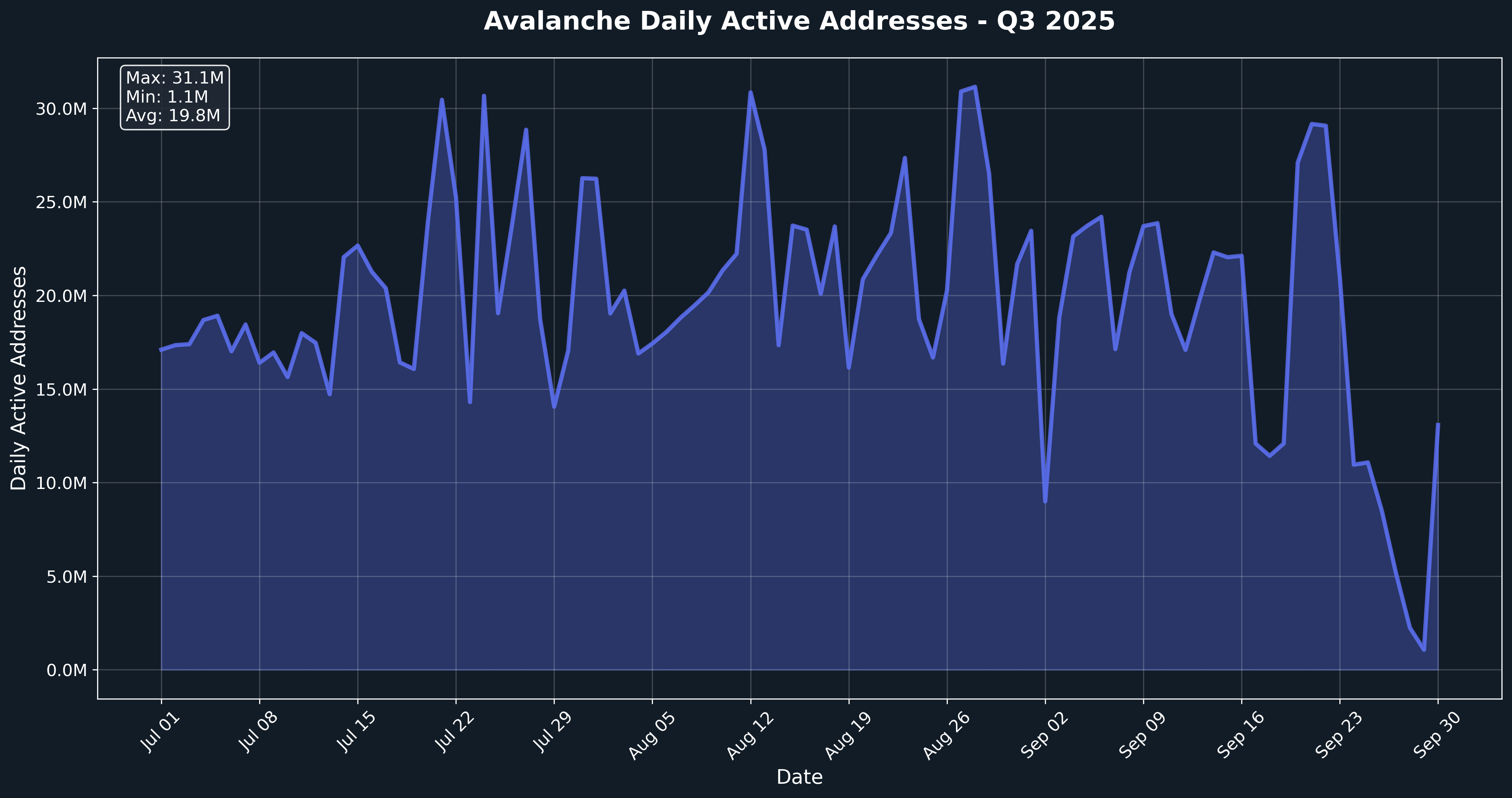
Cost Efficiency: Low fees and high throughput support 45M monthly transactions across 112 subnets, surpassing C-Chain activity.
-
Compliance Customization: Tailor subnets for regulatory needs, enabling compliant RWA tokenization like Galaxy Digital’s $75M CLO.
-
Seamless Interoperability: Connect with Avalanche ecosystem for fractional ownership and 24/7 trading, as in Balcony’s $240B New Jersey real estate project.
Navigating Challenges and Scaling for the Long Haul
In my decade steering portfolios toward Web3, I’ve learned subnets excel when paired with hybrid tactics. Monitor subnet TPS against macro inflows; Balcony’s real estate flood could pressure validators if unscaled. Diversify across asset classes – realty via Balcony, loans via Galaxy, bonds via Citi – to hedge sector risks. AVAX at $10.33 reflects this stability, dipping minimally amid 24-hour swings from $10.50 to $10.07. Institutional momentum builds regardless, with subnets outpacing mainnet activity.
Looking ahead, 2026’s sovereign blockchain subnets will anchor tokenized trillions. Enterprises like those in New Jersey’s deed revolution or Galaxy’s structured products set precedents. Throughput scales horizontally; add validators, unlock parallelism. Liquidity migrates from silos to unified pools, where a tokenized CLO backs fractional property trades. This isn’t disruption for disruption’s sake; it’s efficiency compounding returns. Subnets empower forward-thinkers to own the infrastructure, turning RWA potential into portfolio anchors.
Medium-term strategies shine brightest now. Allocate to AVAX exposure, layer in subnet-specific tokens for yield, and watch as 112 chains evolve into hundreds. The network’s resilience, even at $10.33, signals conviction. Tokenization cascades from deeds to derivatives, with Avalanche subnets as the unassailable backbone.