
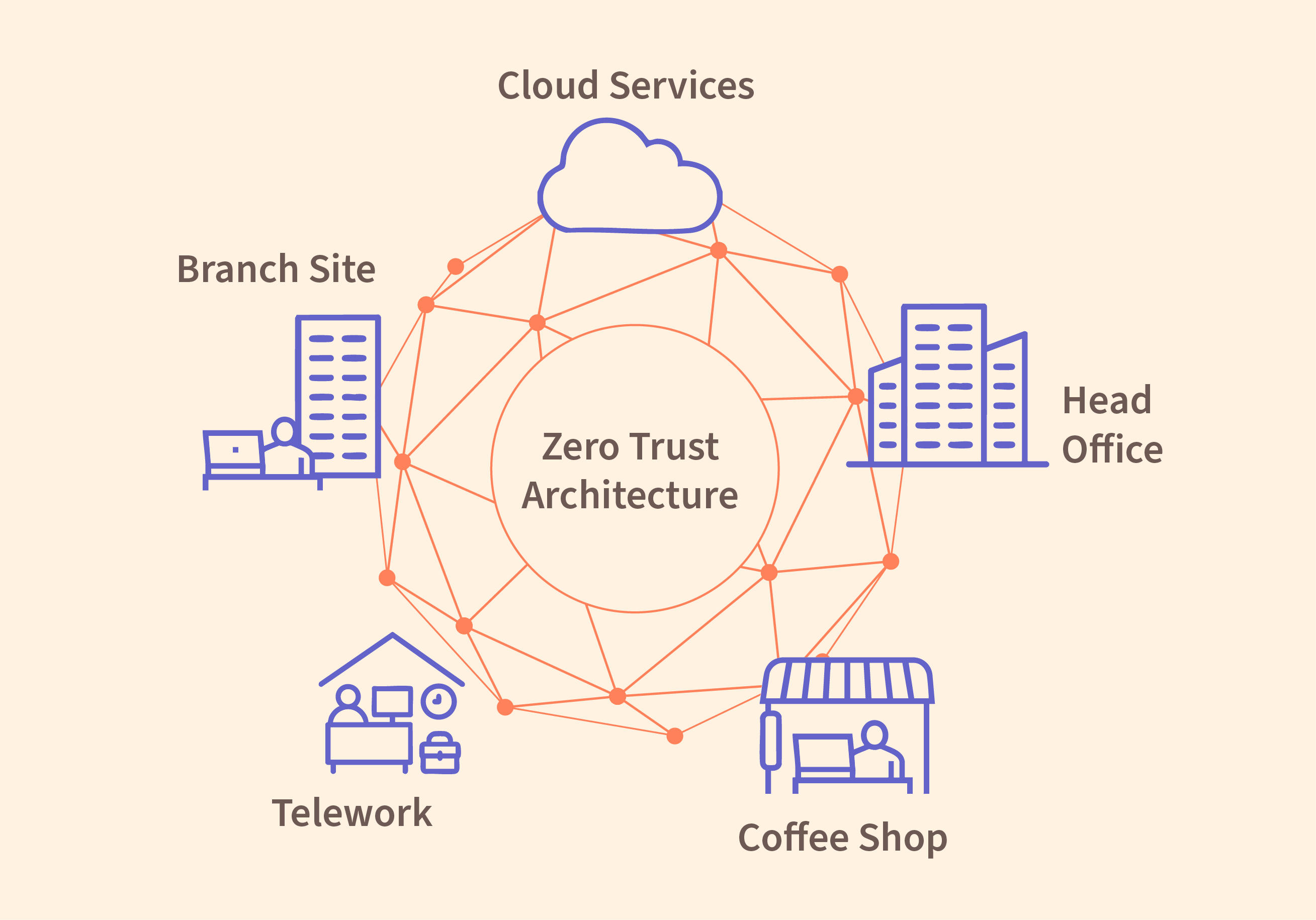
Why adaptive network segmentation matters
Traditional network security relied on static firewall rules and perimeter defenses, assuming that once a user or device was inside the network, it was safe. That assumption no longer holds. Attackers who breach the perimeter can move laterally with ease, exploiting the open space between systems.
Adaptive network segmentation changes this dynamic by replacing static rules with policies that evolve based on behavior. Instead of relying on manual configurations that quickly become outdated, these tools analyze traffic patterns and user activity to identify anomalies. The system automatically adjusts access controls to contain threats before they spread.
Static rules fail against lateral movement. Adaptive segmentation adapts in real-time.
This shift from static to dynamic microsegmentation is critical for 2026 security. By continuously learning from network activity, AI tools can enforce the principle of least privilege more effectively than human administrators. This limits the damage of any successful breach. For organizations facing sophisticated threats, this level of agility is no longer optional—it is a necessity.
The transition also reduces the manual burden on security teams. Configuring and maintaining segmentation policies for complex, hybrid environments is time-consuming and prone to error. AI-driven tools automate this process, ensuring that segmentation policies remain consistent and up-to-date without constant human intervention. This allows security teams to focus on strategic initiatives rather than routine maintenance.
Best adaptive segmentation tools for 2026
Traditional network segmentation relies on static rules and manual configuration, which quickly becomes unmanageable as environments grow. Adaptive segmentation uses machine learning to analyze traffic patterns, dynamically adjusting policies to contain lateral movement without constant human intervention.
The following tools represent the leading solutions for 2026, selected for their ability to automate policy enforcement, detect anomalies, and integrate seamlessly into existing infrastructure. Each entry focuses on technical utility and deployment capabilities.
Illumio Core
Illumio Core remains a top contender for organizations prioritizing zero trust micro-segmentation. Its agentless architecture allows for rapid deployment across hybrid and multi-cloud environments, including legacy devices that cannot support software agents. The platform uses machine learning to map application dependencies automatically, creating a "policy map" that visualizes traffic flows and identifies unnecessary connections.
Illumio’s AI engine continuously monitors traffic to detect deviations from established baselines. When anomalies occur, the system can automatically generate policy recommendations or enforce containment rules. This approach significantly reduces the time required to segment complex environments while maintaining visibility into all east-west traffic. For a deeper understanding of the zero trust principles that underpin these tools, refer to the NIST framework.
Tufin SecureTrack
Tufin SecureTrack excels in environments with complex, multi-vendor network infrastructures. It aggregates data from firewalls, routers, and switches across on-premises and cloud environments to provide a unified view of segmentation policies. The AI-driven analysis identifies shadow IT, orphaned rules, and policy conflicts that often lead to security gaps.
The platform’s automation capabilities allow teams to simulate policy changes before deployment, reducing the risk of network outages. Tufin’s reporting features provide detailed compliance audits, making it suitable for regulated industries. Its strength lies in its ability to manage segmentation at scale, ensuring that policies remain consistent and enforceable across diverse network segments.
ExtraHop Reveal(x)
ExtraHop Reveal(x) focuses on deep packet inspection and behavioral analytics to drive segmentation decisions. By analyzing network traffic at the wire level, it identifies applications, devices, and users with high precision. The AI models detect subtle anomalies that traditional signature-based tools might miss, such as encrypted traffic patterns associated with malware or data exfiltration.
Reveal(x) integrates with segmentation platforms to automatically enforce policies based on real-time threat intelligence. This proactive approach allows security teams to respond to incidents before they spread laterally. The platform’s scalability makes it ideal for large enterprises with distributed networks and high-volume traffic.
Cisco Secure Network Analytics
Cisco Secure Network Analytics (formerly Stealthwatch) leverages Cisco’s extensive network telemetry to provide comprehensive visibility into network traffic. The AI engine analyzes NetFlow, IPFIX, and packet data to identify suspicious activities and enforce segmentation policies automatically. It integrates tightly with Cisco’s ecosystem, including firewalls and switches, enabling seamless policy enforcement.
The platform’s machine learning models are trained on global threat intelligence, allowing them to detect known and unknown threats with high accuracy. Cisco’s focus on automation reduces the operational burden on security teams, allowing them to focus on strategic initiatives rather than manual policy management.
Fortinet FortiSASE
Fortinet FortiSASE delivers cloud-delivered segmentation and security services, integrating seamlessly with FortiGate firewalls and other network devices. The AI-driven analytics engine monitors traffic across hybrid environments, identifying anomalies and enforcing policies based on user identity and device posture. This approach ensures that segmentation policies are applied consistently, regardless of where users or devices are located.
FortiSASE’s cloud-native architecture allows for rapid deployment and scalability, making it suitable for organizations with distributed workforces. The platform’s integration with Fortinet’s Security Fabric provides a unified view of security posture, enabling more effective threat detection and response.


As an Amazon Associate, we may earn from qualifying purchases.
How to choose an adaptive segmentation platform
Selecting the right adaptive segmentation tool requires balancing deployment speed with technical depth. IT leaders should prioritize platforms that offer agentless architecture to minimize endpoint disruption while ensuring robust support for legacy devices. The goal is to find a solution that adapts to your existing infrastructure without demanding a complete overhaul.
Evaluation should focus on three core metrics: deployment time, legacy compatibility, and AI maturity. Look for vendors that provide clear benchmarks for initial setup and continuous learning capabilities. A tool that claims advanced automation but fails to integrate with older hardware offers little practical value in complex enterprise environments.
The following comparison table highlights key differentiators among leading platforms. Use this framework to assess which solution aligns best with your operational constraints and security requirements.
| Feature | Tool A | Tool B | Tool C |
|---|---|---|---|
| Deployment Speed | < 24 hrs | 1-2 weeks | < 48 hrs |
| Legacy Device Support | High | Medium | High |
| AI Maturity | Dynamic ML | Rule-based AI | Deep RL |
| Agentless Architecture | Yes | No | Yes |
| Integration Complexity | Low | High | Medium |
Frequently asked questions about adaptive network segmentation
How does adaptive segmentation differ from traditional firewall rules?
Traditional segmentation relies on static rules defined by administrators, which often become outdated as network traffic patterns change. Adaptive segmentation uses machine learning to analyze behavior, automatically adjusting access controls based on current activity. This dynamic approach reduces the risk of misconfiguration and ensures that policies remain relevant without manual intervention.
What is the role of machine learning in network segmentation?
Machine learning algorithms process historical and real-time network data to establish baselines of normal behavior. When deviations occur, such as unusual data transfers or unauthorized access attempts, the system identifies these anomalies and triggers segmentation policies. This capability allows for the detection of zero-day threats and insider risks that signature-based tools might miss.
Can AI-driven segmentation work with legacy devices?
Yes, many modern segmentation platforms offer agentless architectures that monitor traffic without requiring software installation on endpoints. This is particularly useful for legacy devices that cannot support modern security agents. By analyzing network flows, these systems can enforce segmentation policies based on device identity and behavior, even for older hardware.
How does adaptive segmentation improve zero trust implementation?
Adaptive segmentation enforces the principle of least privilege by continuously verifying user and device identity. Instead of granting broad access based on network location, it restricts access to specific resources based on risk assessment. This granular control minimizes the attack surface and limits lateral movement, which are core tenets of zero trust architecture.
No comments yet. Be the first to share your thoughts!