
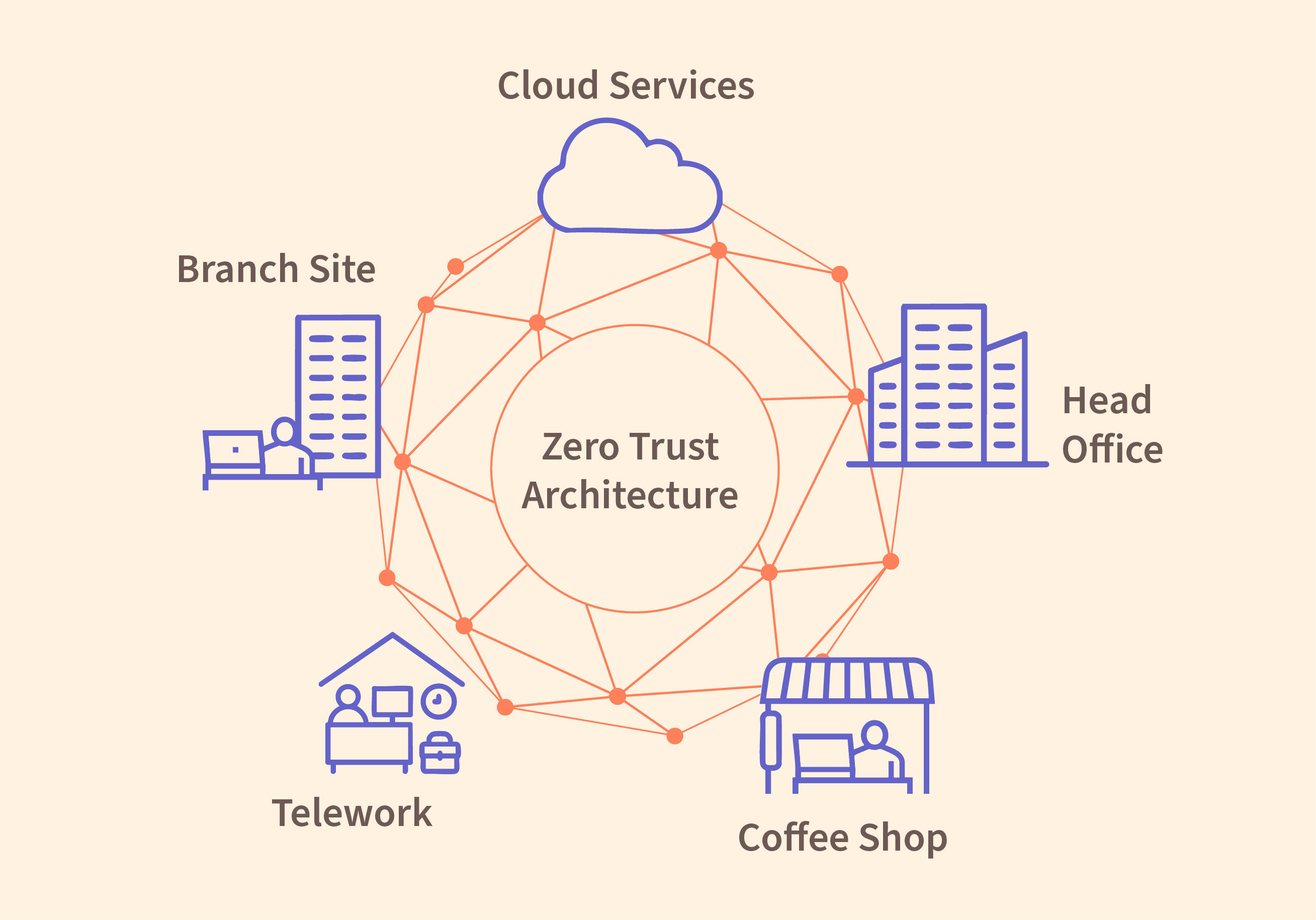
Why micro-segmentation matters in 2026
The traditional network perimeter has dissolved. For years, enterprise security relied on a hard outer shell and a trusting interior. Today, that model fails because attackers who breach the edge move laterally with ease. Micro-segmentation replaces the flat network with thousands of isolated zones, ensuring that a compromised device in one subnet cannot touch critical assets in another.
This shift is no longer optional for large organizations. Gartner predicts that by 2026, 10% of large enterprises will have a mature and measurable zero trust program in place, up from less than 1% previously [src-serp-8]. Micro-segmentation is the technical engine that makes this maturity possible, enforcing identity-first access controls at the workload level.
In 2026, the focus is on visibility and automation. You need tools that automatically discover traffic flows between subnets and apply policies without manual configuration. The best micro-segmentation solutions integrate directly with your cloud infrastructure and container orchestration platforms, providing real-time enforcement that adapts to dynamic workloads. Without this granular control, zero trust remains a policy document rather than an operational reality.
How to evaluate micro-segmentation tools
Choosing the right micro-segmentation tool requires looking beyond basic firewall rules. In 2026, effective zero trust relies on tools that enforce identity-based policies and continuous verification. You need software that understands workload identity, not just IP addresses, to maintain least-privilege access across enterprise subnets.
Start by checking if the tool supports dynamic policy enforcement. Static rules fail in cloud-native environments where IPs change constantly. Look for solutions that integrate with identity providers to verify every request against user and workload credentials. This ensures that even if a device is compromised, lateral movement is blocked immediately.
Also, verify the tool’s visibility capabilities. You cannot protect what you cannot see. The best tools provide real-time telemetry on all traffic flows, allowing security teams to detect anomalies and adjust policies on the fly. This continuous monitoring is essential for maintaining a secure perimeter in complex hybrid infrastructures.
-
Supports identity-based policy enforcement
-
Enables continuous verification of workloads
-
Provides real-time traffic visibility
-
Integrates with existing IAM systems
As an Amazon Associate, we may earn from qualifying purchases.
Top micro-segmentation solutions for 2026
Use this section to make the Zero Trust Architecture decision easier to compare in real life, not just on paper. Start with the reader's actual constraint, then separate must-have requirements from details that are merely nice to have. A practical choice should survive normal use, maintenance, timing, and budget. If a recommendation only works in an ideal situation, call that out plainly and give the reader a fallback path.
The simplest way to use this section is to write down the must-have criteria first, then compare each option against those criteria before weighing nice-to-have features.
Common pitfalls in zero trust implementation
Many enterprises treat micro-segmentation as a boundary problem rather than an identity problem. The mistake is assuming that if you slice the network, the traffic inside those slices is safe. This over-reliance on network boundaries ignores the reality that modern workloads move. When you segment the subnet but don’t verify the identity of the workload itself, you create secure silos that are still vulnerable to lateral movement.
Neglecting workload identity is the second major error. Tools like Zscaler or Palo Alto Networks Prisma Access excel at user and device verification, but if your internal east-west traffic relies solely on IP addresses, you’re building on sand. An attacker who compromises a single server can jump between segments because the segmentation policy doesn’t care who is talking, only where. You need tools that bind policies to workload identity, not just subnet masks.
The third pitfall is complexity creep. Teams often try to implement zero trust across every subnet simultaneously. This leads to policy fatigue and broken applications. Start with high-value assets. Use micro-segmentation tools like Cato SASE or Aviatrix to enforce least-privilege access on critical workloads first. Once those identities are verified and segmented, expand outward. Trying to boil the ocean usually results in a broken network and a false sense of security.
Frequently asked questions about zero trust tools
How do I choose a micro-segmentation tool for enterprise subnets? Focus on tools that offer visibility into east-west traffic and can enforce policies based on identity rather than just IP addresses. Solutions like VMware NSX, Cisco ACI, and Palo Alto Prisma Cloud provide the granular control needed to isolate workloads effectively. Look for platforms that integrate with your existing cloud infrastructure and SIEM tools to ensure seamless policy enforcement across hybrid environments.
Can micro-segmentation replace traditional firewalls? No, micro-segmentation complements rather than replaces perimeter firewalls. Traditional firewalls protect the network boundary, while micro-segmentation secures individual workloads and subnets within the network. Together, they create a defense-in-depth strategy. Tools like F5 Advanced WAF and Zscaler Private Access work alongside firewalls to provide layered security, ensuring that even if an attacker breaches the perimeter, they cannot move laterally through your enterprise subnets.
What are the common challenges in implementing zero trust architecture? The biggest hurdles are complexity and legacy system integration. Many enterprises struggle with the sheer number of devices and applications that need policy definitions. Tools like Tufin and Apstra help automate policy management and reduce human error. Start by mapping your critical assets and traffic flows before deploying segmentation policies to avoid disrupting business operations.
No comments yet. Be the first to share your thoughts!