
The 2026 regulatory shift for zero trust
The regulatory landscape for network security has fundamentally changed in 2026. What was once considered an advanced technical best practice, AI-driven microsegmentation, is now a core requirement for compliance. This shift is driven by updated frameworks from major regulatory bodies in the US, EU, and industrial sectors, which now explicitly mandate strict network isolation to mitigate cyber-physical risks.
In the United States, the National Institute of Standards and Technology (NIST) has integrated AI-driven segmentation into its zero-trust architecture guidelines for 2026. These updates require organizations to verify every request and segment networks based on identity and context, rather than just perimeter boundaries. Similarly, the US Department of Health and Human Services (HHS) has reinforced HIPAA compliance expectations, emphasizing that traditional network boundaries are insufficient for protecting electronic protected health information (ePHI) in hybrid cloud environments.
Internationally, the European Union’s implementation of the Cyber Resilience Act (CRA) and updates to the NIS2 Directive place new burdens on industrial and critical infrastructure operators. These regulations demand demonstrable evidence of internal network segmentation to prevent lateral movement during a breach. For industrial control systems, the convergence of IT and OT networks has made AI-driven microsegmentation essential for maintaining operational continuity and meeting safety standards.
Gartner’s 2026 research highlights that organizations failing to adopt AI-driven microsegmentation face significant regulatory penalties and increased audit failures. The focus has moved from reactive perimeter defense to proactive, identity-based isolation. This transition is not optional for entities operating under US federal guidelines, EU digital regulations, or industrial safety mandates. Compliance now requires automated, AI-enhanced enforcement of segmentation policies across hybrid and multi-cloud environments.
Mapping Microsegmentation to NIST and HIPAA
As of 2026, US regulatory frameworks treat network segmentation not as a best practice, but as a foundational control for data protection. AI-driven microsegmentation directly satisfies the dynamic access requirements outlined in NIST SP 800-207 for Zero Trust Architecture. By enforcing least-privilege access at the workload level, organizations can demonstrate compliance with the strict data isolation mandates introduced in the HIPAA 2025 NPRM.
The NIST framework emphasizes continuous verification of identity and device health. Traditional perimeter defenses fail to meet this standard in distributed cloud environments. AI-driven segmentation adapts in real-time to behavioral anomalies, ensuring that only authorized workloads communicate. This dynamic enforcement aligns with the US government’s push for resilient infrastructure that can withstand lateral movement by threat actors.
For healthcare entities, the HIPAA 2025 NPRM tightens requirements for electronic protected health information (ePHI). The rule mandates stricter access controls and audit trails for data in motion. Microsegmentation provides the granular visibility needed to map data flows and enforce policy boundaries automatically. This capability reduces the attack surface and simplifies the evidence collection required for compliance audits.
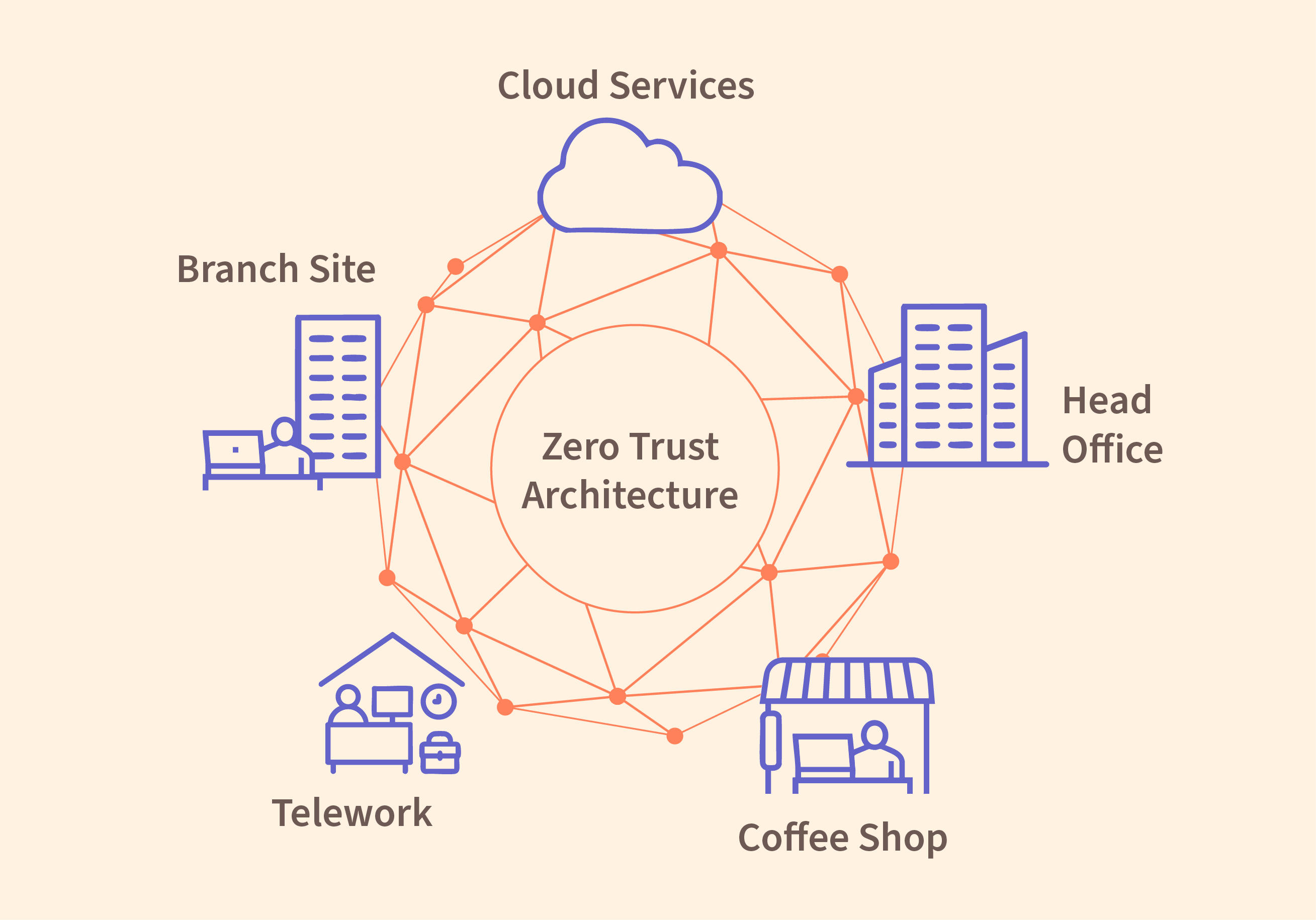
The convergence of these standards creates a clear path for implementation. Organizations must move beyond static firewall rules to AI-driven policies that understand context. This shift is critical for meeting the 2026 compliance deadlines in both the US and EU jurisdictions, where data sovereignty and security are increasingly linked.
Compliance Verification Checklist
-
Verify that AI policies enforce least-privilege access for all workloads containing ePHI.
-
Confirm real-time monitoring aligns with NIST SP 800-207 continuous verification standards.
-
Ensure audit logs capture all microsegmentation policy changes and access attempts.
-
Test lateral movement prevention using AI-driven anomaly detection.
-
Document data flow maps to demonstrate compliance with HIPAA 2025 NPRM isolation requirements.
Policy sprawl in complex subnets
By 2026, enterprise network architectures have evolved into dense, multi-cloud environments where traditional manual policy management is no longer viable. The operational challenge of policy sprawl has intensified as organizations attempt to comply with fragmented regulatory mandates across the US, EU, and industrial sectors. According to Gartner, security teams now face an average of thousands of individual policy rules per subnet, creating a maintenance burden that exceeds human capacity for accuracy and consistency.
The complexity arises from the need to enforce Zero Trust principles across dynamic workloads. Each container, virtual machine, and IoT device requires distinct access controls that change frequently. Without automation, these rules become outdated quickly, leading to gaps in compliance and increased exposure to breaches. The RSAC 2026 conference highlighted that this sprawl is not merely a technical inconvenience but a significant compliance risk, particularly under evolving EU AI Act requirements and US federal cybersecurity standards.
AI-driven microsegmentation tools address this by automating the creation and enforcement of policies. These systems analyze traffic patterns and user behavior to generate precise access rules, reducing the likelihood of human error. This automation ensures that policies remain aligned with current regulatory frameworks, such as NIST SP 800-207, without requiring constant manual intervention. By integrating these tools, organizations can maintain a consistent security posture across complex subnets, ensuring that compliance is continuous rather than reactive.
The shift toward AI-driven enforcement also improves audit readiness. Automated logging and policy versioning provide clear trails for regulators, demonstrating adherence to mandated security controls. This transparency is crucial for industries subject to strict oversight, including healthcare under HHS guidelines and critical infrastructure under industrial security mandates. As these regulations tighten in 2026, the ability to demonstrate automated, accurate policy management becomes a key differentiator for compliant enterprises.
From Static Audits to Continuous Maturity
The regulatory landscape in 2026 is moving away from point-in-time compliance checks. In the US, EU, and industrial sectors, regulators are increasingly requiring evidence of continuous cyber maturity rather than annual certification. This shift demands that security architectures provide real-time visibility into network behavior and policy enforcement.
AI-driven microsegmentation serves as the technical foundation for this continuous monitoring approach. By dynamically isolating workloads and enforcing least-privilege access at the identity level, these systems generate the granular telemetry required for ongoing audit readiness. This capability allows organizations to demonstrate compliance posture continuously, rather than attempting to reconstruct it during periodic reviews.
The transition to continuous maturity models reduces the risk of compliance gaps that often emerge between annual audits. As noted by industry analysts, the market for microsegmentation is expanding rapidly to meet these new AI security requirements, driven by the need to secure hybrid cloud and private AI infrastructure (Dell'Oro Group, 2026). This growth reflects a broader industry recognition that static security models are no longer sufficient for meeting 2026 regulatory expectations.
2026 Regulatory Milestones for Microsegmentation
The following timeline highlights key regulatory and industry developments driving the adoption of continuous maturity models in 2026:
Common questions about 2026 subnet compliance
As regulatory frameworks evolve, organizations deploying AI-driven microsegmentation face distinct compliance hurdles. The following analysis addresses practical concerns regarding 2026 mandates in the US, EU, and industrial sectors, drawing on current regulatory trends and official guidance.
How does AI microsegmentation align with NIST SP 800-207 in 2026?
The Zero Trust Architecture (ZTA) model, as refined by NIST, emphasizes continuous verification. In 2026, AI-driven microsegmentation supports this by automating policy enforcement based on real-time identity and context signals. This automation reduces the manual overhead of maintaining strict subnet isolation, ensuring that access decisions remain consistent with NIST’s requirement for least-privilege access across hybrid environments.
What are the data residency implications for AI processing in the EU?
Under the EU’s evolving digital regulations, including the AI Act and GDPR, data residency remains a critical constraint. AI models used for microsegmentation must process telemetry data within defined jurisdictions to avoid cross-border transfer violations. Organizations must ensure that the AI components analyzing network traffic do not inadvertently move sensitive EU citizen data outside the European Economic Area, a requirement increasingly scrutinized by data protection authorities.
How do industrial control systems (ICS) adapt to microsegmentation mandates?
Industrial environments face unique latency and availability constraints. In 2026, compliance mandates for critical infrastructure, such as those outlined by CISA in the US, require microsegmentation that does not disrupt operational technology (OT) workflows. AI-driven solutions must be trained to recognize ICS-specific protocols, ensuring that security policies do not introduce unacceptable delays or downtime in production networks, a key concern for NIST SP 800-82 compliance.
Is AI-driven policy enforcement sufficient for audit trails?
Regulators require immutable audit trails to demonstrate compliance. While AI automates decision-making, it must also generate detailed logs explaining why a specific subnet access was granted or denied. These logs must be tamper-evident and accessible for review by auditors. The AI system’s transparency is as important as its security efficacy, ensuring that compliance officers can trace decisions back to specific regulatory rules.
No comments yet. Be the first to share your thoughts!