
Map your hybrid network assets
Zero Trust Architecture works best as a sequence, not a scramble through settings. Do the minimum first: confirm compatibility, connect the core hardware, update only when needed, and test the result before adding optional features. That order keeps the task understandable and makes failures easier to isolate. After each step, pause long enough for the interface to finish syncing. Many setup problems are timing problems disguised as configuration problems. If the same step fails twice, record the exact error, restart the smallest affected piece, and retry before moving deeper.
The simplest way to use this section is to keep the setup small, verify each change, and record the stable configuration before adding optional accessories.
Define identity policies for each subnet
In a Zero Trust model, the network perimeter no longer exists. Instead, trust is anchored to verified identities. You must shift from granting access based on IP location to enforcing strict identity policies for every user and device attempting to reach a specific subnet.
This process ensures that even if an attacker breaches a network segment, they cannot move laterally because they lack the necessary identity credentials for the target resources. NIST 800-207 serves as the primary framework for this approach, emphasizing continuous verification over static trust.
Audit and classify subnet resources
Before defining policies, you must know what you are protecting. Inventory every resource within each subnet, including servers, IoT devices, and applications. Classify them by sensitivity level (public, internal, confidential).
This classification determines the strength of the identity verification required. A public-facing web server may require only basic authentication, while a subnet containing financial records will demand multi-factor authentication (MFA) and device health checks.
Establish identity providers and trust anchors
Centralize identity management using a robust Identity Provider (IdP) such as Azure AD, Okta, or an on-premises Active Directory federation. Ensure every user and device has a unique digital identity.
Configure trust anchors by integrating your IdP with your Zero Trust policy engine. This engine acts as the decision point, evaluating identity claims against your defined rules before granting access to any subnet.
Configure least-privilege access rules
Write policies that grant the minimum access necessary to perform a task. Avoid broad "allow all" rules for subnets. Instead, specify exactly which identities can access which subnets and under what conditions.
Consider context-aware factors such as device compliance, user role, and time of access. For example, a policy might allow a developer to access the development subnet only from a managed laptop during work hours.
policy {
  name: "Dev_Subnet_Access"
  condition: {
    user.role == "developer"
    device.compliance == "managed"
    time.hour >= 9 && time.hour <= 17
  }
  action: "allow"
  target: "subnet:10.0.1.0/24"
}
Validate and test policies
Implement policies in a monitoring mode first. Observe access attempts to ensure legitimate users are not blocked and that unauthorized attempts are correctly denied.
Adjust rules based on observed behavior. Once validated, enforce the policies strictly. Regularly review logs to detect anomalies or policy drift that could weaken your Zero Trust posture.
Checklist for Subnet Policy Definition
-
Inventory all resources per subnet and classify by sensitivity.
-
Centralize identity management with a trusted IdP.
-
Define least-privilege rules for each identity-subnet pair.
-
Integrate context-aware checks (device health, location, time).
-
Test policies in monitoring mode before enforcement.
-
Schedule regular reviews of access logs and policy effectiveness.
Segment traffic with micro-segmentation
Traditional network security relies on broad perimeters, like a castle wall that protects the entire moat. Zero trust architecture replaces that wall with micro-segmentation, a technique that isolates individual workloads and services. By treating every connection as untrusted, you prevent lateral movement even if an attacker breaches the initial entry point.
In a hybrid environment, micro-segmentation enforces policy at the workload level rather than the network edge. This granularity ensures that a compromised web server cannot automatically access the database tier, regardless of their proximity on the same subnet. The shift from network-based boundaries to identity-based policies is foundational to modern security frameworks [[src-serp-3]].
1. Inventory and classify workloads
Before applying segmentation, you must know what you are protecting. Map every application, service, and data flow within your hybrid infrastructure. Identify which workloads communicate with each other and classify them by sensitivity and function. This inventory becomes the baseline for your security policies.
2. Define granular policies
Create access control policies based on identity and context, not IP addresses. Define who or what can talk to whom, using specific protocols and ports. These policies should be least-privilege by default, allowing only the minimum necessary communication for each workload to function.
3. Deploy enforcement points
Install enforcement agents or leverage native hypervisor capabilities to apply policies at the source. In cloud environments, this often means using security groups or network policies. In on-premises data centers, this may involve host-based firewalls or software-defined networking (SDN) controllers. The goal is to enforce segmentation at the workload level.
4. Validate and monitor
Test your segmentation policies in a monitoring mode first to identify any legitimate traffic that might be blocked. Once validated, switch to enforcement mode. Continuously monitor for policy violations and anomalous traffic patterns. This ongoing visibility helps you refine policies and detect potential lateral movement attempts.
5. Automate policy updates
As workloads scale and change, manual policy updates become unsustainable. Integrate your segmentation tooling with your orchestration platform to automatically apply policies when new instances are provisioned. This ensures that segmentation keeps pace with your dynamic hybrid environment.
| Feature | Traditional VLAN | Zero Trust Micro-Segmentation |
|---|---|---|
| Lateral Movement | Limited prevention | Strong isolation |
Monitor and verify access continuously
Zero Trust Architecture 2026 relies on the principle that trust is never assumed, only verified. In hybrid subnets, this means treating every packet, user, and device as potentially hostile until proven otherwise. The goal is not just to block threats after they enter, but to detect anomalies in real-time and adjust policies dynamically.
Continuous monitoring provides the visibility needed to identify deviations from normal behavior. By analyzing network traffic patterns, authentication logs, and endpoint signals, security teams can spot unauthorized access attempts or compromised credentials before they escalate. This ongoing verification ensures that least-privilege access remains enforced across all segments, reducing the attack surface for both internal and external threats.
Install lightweight agents on all endpoints and network devices within the subnet. These agents collect telemetry data, including login attempts, resource access, and behavioral metrics, sending it to a centralized security information and event management (SIEM) platform for analysis.

Use historical data to define normal activity patterns for users, devices, and applications. Machine learning models help identify deviations, such as unusual login times, excessive data transfers, or access from unfamiliar locations, flagging these as potential security incidents for immediate review.
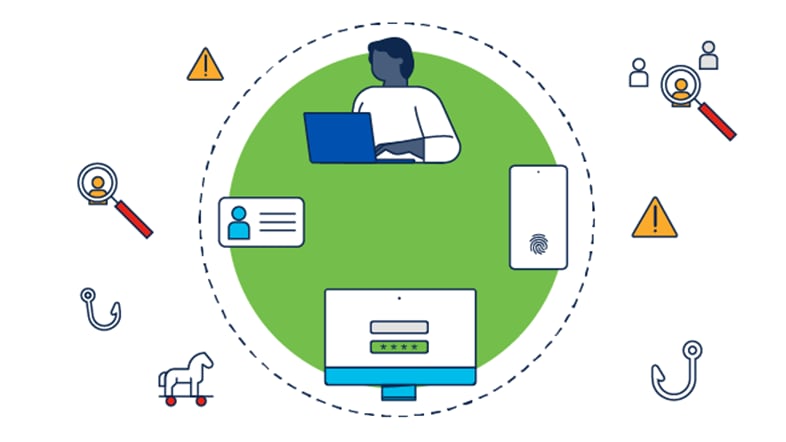
Configure automated responses to detected anomalies. When a high-risk event is identified, the system can automatically revoke access, isolate the affected device, or require additional authentication steps, ensuring that threats are contained without manual intervention.
This process creates a feedback loop where monitoring informs policy updates, which in turn refine monitoring parameters. By continuously validating access, organizations can maintain a resilient security posture that adapts to evolving threats in hybrid environments.
Common zero trust implementation mistakes
Most organizations fail at zero trust not because the architecture is too complex, but because they treat it as a product purchase rather than a process overhaul. The shift from perimeter-based security to identity-centric verification requires granular visibility and strict policy enforcement. Skipping foundational steps leads to fragile deployments that attackers can easily bypass.
Skipping complete asset discovery
Zero trust relies on knowing exactly what you are protecting. You cannot enforce least-privilege access or micro-segmentation without a comprehensive inventory of all users, devices, and applications across hybrid subnets. Many teams attempt to deploy zero trust policies while still relying on outdated, incomplete asset maps. This creates blind spots where unmanaged or legacy devices operate with excessive privileges. Without this visibility, segmentation rules are either too broad (defeating the purpose) or too restrictive (breaking business operations).
Over-relying on legacy tools
Integrating zero trust principles with existing legacy infrastructure is a common trap. Many organizations try to bolt zero trust controls onto outdated VPNs or monolithic firewalls without first modernizing the underlying network architecture. This "zero trust theater" creates the illusion of security while maintaining the same single points of failure. True zero trust requires decomposing the network into smaller, isolated segments. Relying on legacy tools often results in performance bottlenecks and configuration errors that leave gaps in the security posture.
Ignoring user behavior analytics
Static identity verification is no longer sufficient. Attackers frequently compromise legitimate credentials to bypass initial authentication checks. Effective zero trust implementations must continuously monitor user and entity behavior for anomalies. Tools that only verify identity at login miss the context of ongoing activity. Integrating user behavior analytics allows the system to detect lateral movement or data exfiltration attempts in real time, reducing the window of exposure when a breach occurs.
No comments yet. Be the first to share your thoughts!