
Define the zero trust perimeter
Traditional security relied on a hard outer shell: if you were inside the firewall, you were trusted. Zero trust architecture (ZTA) dismantles this assumption. In 2026, the perimeter is no longer a physical location or a network segment; it is defined by identity and context. Every access request, whether from inside or outside the network, is treated as hostile until verified.
This shift requires moving from network-based controls to identity-based verification. You must verify explicitly based on all available indicators, including user identity, device health, and location. As the NSA guidelines emphasize, zero trust operates on the principle that no users or devices are inherently safe. This means implementing strict micro-segmentation to limit lateral movement and enforcing least-privilege access.
To implement this, start by identifying your critical assets and mapping the data flows between them. Then, enforce strict access controls for each segment. This approach minimizes the attack surface and ensures that even if a breach occurs, the damage is contained. The goal is to make every interaction explicit, verified, and encrypted.
Map Critical Enterprise Assets
Before deploying micro-segmentation or identity verification controls, you must identify which workloads and data require the highest level of protection. Zero trust architecture relies on consistent access policies across on-premises, private cloud, and public cloud environments, but these policies are only effective if they protect the right assets. Start by cataloging your enterprise inventory, focusing on high-value targets such as customer databases, intellectual property repositories, and critical application servers.
Use automated discovery tools to scan your network for active workloads and non-human identities, including service accounts, APIs, and IoT devices. These non-human identities often lack traditional user credentials and can become blind spots if not properly mapped. Integrate this discovery data with your identity provider to create a unified view of all entities requesting access. This step ensures that your zero trust policies follow the identity, not just the network location, allowing for precise control regardless of where the asset resides.

Once identified, classify each asset based on sensitivity and exposure. Group related workloads into logical segments for micro-segmentation, applying strict least-privilege access rules to each group. This granular approach limits lateral movement, ensuring that a compromise in one segment does not expose the entire enterprise. By mapping these critical assets first, you build a foundation for a zero trust architecture that is both secure and scalable.
Enforce Strict Identity Verification
Static credentials like passwords and shared secrets are no longer sufficient for modern security postures. Zero trust architecture assumes that no user or device can be trusted, regardless of its location or previous verification. To implement this, you must replace static authentication with dynamic, multi-factor verification that evaluates risk in real time.
Start by enforcing multi-factor authentication (MFA) across all access points. This is the baseline requirement for zero trust. However, MFA alone is not enough. You need continuous identity validation that checks the user's context—such as device health, location, and behavior—every time they access a resource, not just at login.
Dynamic Risk Assessment
Instead of a one-time check, implement a policy engine that evaluates risk continuously. If a user's behavior changes unexpectedly, such as logging in from a new country or accessing sensitive data at unusual hours, the system should challenge them again or revoke access immediately.
Identity-Aware Access Policies
Configure your access control systems to verify identity before granting any network or application access. This means moving away from perimeter-based security to identity-based security. Every request must be authenticated and authorized based on the user's identity and the sensitivity of the resource.
This code snippet illustrates a simple policy where access is denied if the device is non-compliant or the location risk is high. Your implementation should be more granular, checking multiple factors simultaneously.
By enforcing strict identity verification, you ensure that only verified users and devices can access your resources. This reduces the attack surface and makes it significantly harder for attackers to move laterally within your network.
Apply micro-segmentation controls
Micro-segmentation moves security boundaries from the network perimeter to the workload level. By isolating individual servers, containers, or applications, you prevent lateral movement. If an attacker compromises one asset, they cannot pivot to others without explicit authorization.
This approach relies on identity-based policies rather than IP addresses. Identity-based policies follow the workload across on-premises, private cloud, and public cloud environments, ensuring consistent access control regardless of location. Zero trust architecture provides this consistency by verifying every request as if it originated from an untrusted network.
Step 1: Inventory and classify workloads
Begin by mapping all active workloads and their communication patterns. Use network flow data to identify which services talk to which databases or APIs. Classify these workloads by sensitivity and function. You cannot protect what you do not understand. This inventory forms the baseline for your segmentation policy.
Step 2: Define identity-based policies
Create policies based on workload identity, not static IP addresses. Define who can talk to whom, using what protocol, and on what port. For example, a web server should only communicate with the application server on port 8080, not the database directly. These policies must be granular enough to allow business function but restrictive enough to block unauthorized access.
Step 3: Deploy segmentation agents or gateways
Install micro-segmentation agents on endpoints or deploy virtual gateways at the hypervisor level. These components enforce the policies defined in the previous step. They inspect traffic in real-time, dropping packets that violate the identity-based rules. Ensure your deployment strategy covers all critical environments, including hybrid and multi-cloud setups.
Step 4: Validate and monitor
Test your policies in monitoring mode first. Observe traffic that would be blocked to ensure no legitimate business function is disrupted. Once validated, switch to enforcement mode. Implement continuous monitoring to detect policy violations and adjust rules as workloads evolve. This ongoing validation ensures your security measures remain effective against emerging threats.
Integrate continuous monitoring tools
Zero Trust is not a static configuration; it is a dynamic state that requires constant verification. To maintain visibility across your micro-segmented network, you must deploy AI-driven threat detection alongside centralized logging. This integration allows your security operations center (SOC) to adjust policies in real-time, reacting to anomalies before they escalate into breaches.
Traditional security models often rely on periodic audits or manual log reviews, which create blind spots. In a Zero Trust environment, every access request—whether from a user, device, or application—must be verified continuously. By feeding telemetry data into an AI-driven analytics engine, you can identify deviations from baseline behavior, such as unusual login locations or unexpected lateral movement between segments.
The table below contrasts legacy SIEM approaches with modern continuous monitoring capabilities to highlight the operational shift required for effective Zero Trust implementation.
| Capability | Traditional SIEM | AI-Driven Continuous | Zero Trust Fit |
|---|---|---|---|
| Detection Speed | Reactive (hours/days) | Real-time (seconds) | High |
| Policy Adjustment | Manual intervention | Automated remediation | High |
| Data Scope | Log aggregation only | Telemetry + Identity + Context | High |
| False Positive Rate | High (requires tuning) | Low (ML-based baselining) | Medium |
When integrating these tools, prioritize identity verification and device posture checks. For example, if an AI model detects a sudden spike in failed authentication attempts from a specific subnet, it should automatically trigger a micro-segmentation rule to isolate that segment. This automated response reduces the mean time to respond (MTTR) and ensures that trust is never assumed, only verified.
Ensure your logging infrastructure captures granular details about every access attempt. This data fuels the AI models, allowing them to learn normal behavior patterns for each user and device. Over time, the system becomes more accurate at distinguishing between legitimate activity and potential threats, maintaining the integrity of your Zero Trust architecture without overwhelming your team with alerts.
Validate and refine security posture
Testing the implementation ensures that micro-segmentation and identity verification policies function as intended without disrupting legitimate business workflows. Begin by simulating lateral movement attacks to verify that compromised endpoints cannot pivot to critical assets. If a workstation is breached, the network should immediately isolate the device, confirming that strict access controls are active.

Execute simulated attacks against segmented zones. Verify that unauthorized access attempts are blocked and that legitimate traffic flows only through approved channels. Document any latency or false positives that impact user experience.
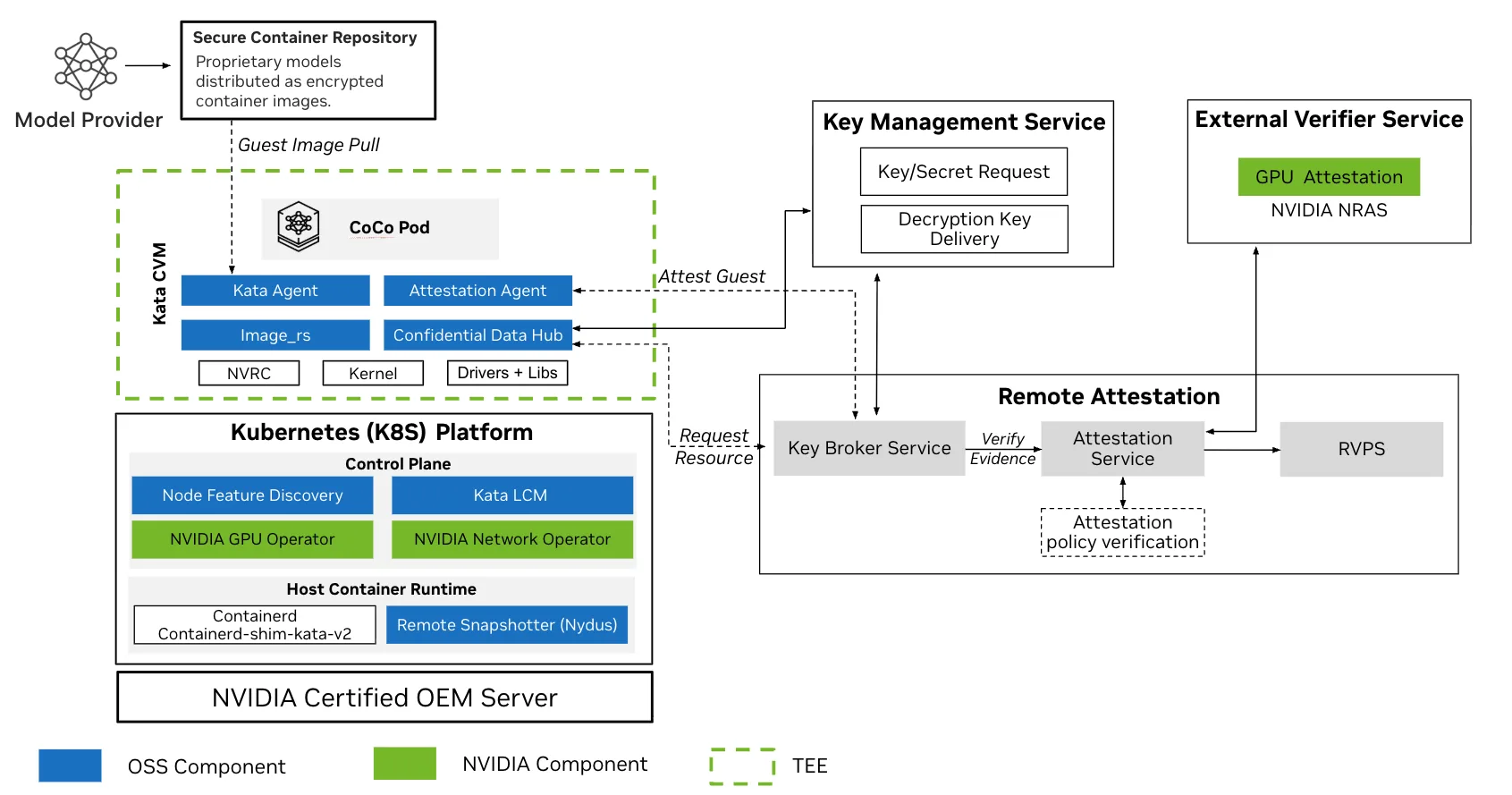
Review authentication logs to ensure multi-factor authentication (MFA) challenges are triggered appropriately. Check for anomalies in session durations and privilege escalations. Ensure that identity providers are correctly enforcing least-privilege access rules.
Adjust firewall rules and access policies based on test results. Remove overly permissive rules that may have been created for troubleshooting. Update incident response playbooks to reflect the new architectural reality.
The final step is establishing a continuous monitoring loop. Zero trust is not a one-time project but an ongoing process of validation. Regularly review logs and adjust policies to adapt to emerging threats.
Checklist for final validation:
-
Lateral movement simulations completed
-
Identity verification logs audited
-
Access policies refined and tightened
-
Continuous monitoring tools configured
Common zero trust implementation: what to check next
Implementing zero trust in 2026 often raises concerns about legacy system compatibility, latency, and total cost of ownership. These challenges are real, but they are manageable with a phased approach that prioritizes identity verification and micro-segmentation.
The key is to treat legacy systems as special cases rather than blockers. By isolating them and verifying access at the gateway, you maintain security without breaking existing operations.
No comments yet. Be the first to share your thoughts!