
Why micro-segmentation matters in 2026
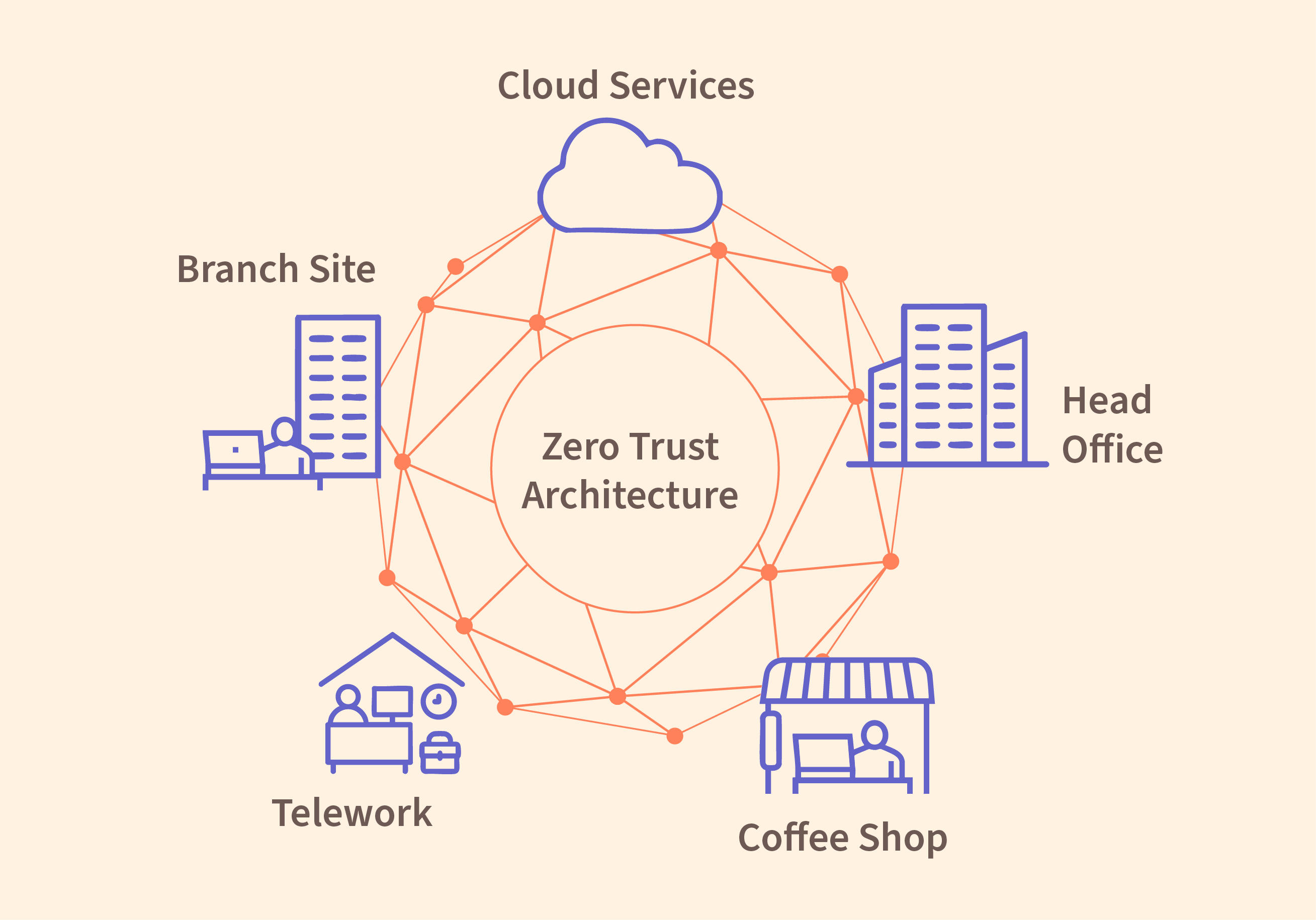
Micro-segmentation is the enforcement layer that makes Zero Trust actually work. Without it, perimeter security is just a suggestion. In 2026, the threat landscape has shifted from human hackers to autonomous AI agents. These agents move laterally through networks at machine speed, exploiting vulnerabilities faster than traditional tools can detect them.
This shift requires a new approach to network security. Micro-segmentation creates granular boundaries around each workload, application, and user. It ensures that even if an AI agent breaches one segment, it cannot move to others. This containment is critical for protecting sensitive data and maintaining business continuity.
The complexity of hybrid cloud environments adds another layer of difficulty. AI agents can exploit the gaps between on-premises and cloud infrastructure. Micro-segmentation provides a consistent security policy across all environments, regardless of where the workload resides. This uniformity is essential for maintaining a strong security posture.
As AI-driven attacks become more sophisticated, the need for robust micro-segmentation tools grows. Organizations must invest in solutions that offer real-time visibility and automated response capabilities. These tools are not just optional; they are essential for surviving the 2026 threat landscape.
How AI transforms network segmentation
Traditional network segmentation relies on static rules and manual policy management. As enterprises scale, this approach creates policy sprawl, where thousands of rigid firewall rules become impossible to maintain. The result is a security posture that is either too permissive to function or too restrictive to be effective.
AI-driven micro-segmentation replaces these static configurations with dynamic, adaptive policies. By leveraging machine learning to analyze real-time telemetry, AI agents continuously learn normal traffic patterns. This allows the system to enforce least-privilege access automatically, adapting to changes in workload behavior without human intervention.
The primary driver for this shift in 2026 is the emergence of the "AI agent" threat vector. Autonomous AI agents can probe networks and exploit vulnerabilities at machine speed, far outpacing human responders. Static segmentation cannot detect or block these rapid, context-aware attacks. Only dynamic, AI-driven enforcement can identify anomalous behavior and isolate compromised segments in milliseconds.
The table below compares the operational impact of traditional methods against AI-driven approaches.
| Dimension | Traditional Static Segmentation | AI-Driven Dynamic Segmentation |
|---|---|---|
| Policy Management | Manual, prone to sprawl and errors | Automated, self-healing, and adaptive |
| Threat Response | Reactive, relies on signatures | Proactive, detects anomalies in real-time |
| Latency | Higher due to complex rule sets | Optimized via intelligent traffic shaping |
| AI Agent Defense | Ineffective against zero-day exploits | Blocks autonomous threats instantly |
Top micro-segmentation vendors for 2026
The 2026 threat landscape is defined by AI agents. These autonomous entities move laterally across networks with speed and precision that human attackers cannot match. Traditional perimeter defenses fail here. You need micro-segmentation tools that use machine learning to detect these AI-driven anomalies in real time.
The leading vendors have shifted from static policy management to dynamic, AI-augmented enforcement. They prioritize hybrid cloud support, ensuring that segmentation policies travel seamlessly with workloads across on-premises data centers and public cloud environments. This capability is no longer optional; it is the baseline for enterprise Zero Trust.
Illumio
Illumio remains the market leader for its deep integration of AI into policy recommendations. Its platform uses real-time telemetry to simulate the impact of policy changes before deployment, reducing the risk of operational disruption. This "impact simulation" feature is critical for large enterprises managing thousands of micro-segments.
Illumio’s strength lies in its agent-based model, which provides granular visibility into east-west traffic. The AI engine analyzes this traffic to suggest least-privilege policies, effectively automating the tedious work of network segmentation. For organizations dealing with complex hybrid clouds, Illumio offers robust support for Kubernetes, VMware, and major public cloud providers.
Tufin
Tufin excels in policy lifecycle management and compliance automation. While its core strength is in orchestrating security policies across multi-cloud environments, its 2026 updates have heavily integrated AI to handle the sheer volume of micro-segmentation rules. This helps CISOs maintain visibility without being overwhelmed by policy sprawl.
Tufin’s platform is particularly strong in regulated industries. It automates the validation of micro-segmentation policies against compliance frameworks like NIST and ISO 27001. The AI components help identify redundant or conflicting rules, optimizing the security posture while ensuring that AI agents cannot exploit policy gaps to move laterally.
Bitdefender
Bitdefender offers a streamlined, agent-based approach that is easier to deploy for mid-sized enterprises. Its micro-segmentation solution integrates directly with its endpoint protection platform, providing a unified view of network traffic and endpoint behavior. This convergence simplifies the architecture, reducing the number of tools security teams must manage.
The platform uses behavioral analysis to detect anomalous traffic patterns indicative of AI-driven attacks. Because it is tightly coupled with endpoint security, Bitdefender can isolate compromised workloads instantly, preventing the spread of threats across micro-segments. This makes it a strong choice for organizations prioritizing rapid response and ease of management.
Tenable
Tenable brings its extensive vulnerability management expertise into the micro-segmentation space. Its platform focuses on risk-based segmentation, prioritizing protections for workloads that are most vulnerable to exploitation. This approach ensures that security resources are allocated where they are needed most, rather than applying uniform segmentation across all assets.
Tenable’s AI capabilities analyze vulnerability data and network traffic to recommend segmentation policies that mitigate the highest risks. This is particularly effective against AI agents that target known vulnerabilities. By aligning segmentation with vulnerability status, Tenable helps organizations reduce their attack surface more efficiently.


As an Amazon Associate, we may earn from qualifying purchases.
Choosing the right enforcement model
The enforcement model determines how micro-segmentation policies are applied to your network. In 2026, the rise of AI-driven threats has shifted the priority from simple connectivity to deep visibility. CISOs must choose between agent-based, agentless, and native enforcement based on their existing infrastructure and the need for human oversight in AI-driven decisions.
Agent-based enforcement
Agent-based solutions install a lightweight software agent on each endpoint. This provides the highest level of visibility and control, allowing for precise policy enforcement at the workload level. It is ideal for hybrid environments where you need to protect workloads across on-premises servers and cloud instances. The agent can detect lateral movement and enforce zero-trust policies even if the network layer is compromised.
Agentless enforcement
Agentless models rely on network telemetry, such as flow data or packet inspection, to enforce policies. This approach is easier to deploy because it requires no software installation on endpoints. It is well-suited for environments where installing agents is not feasible, such as IoT devices or legacy systems. However, it may lack the granular visibility needed to detect sophisticated AI-driven attacks that operate within allowed traffic patterns.
Native enforcement
Native enforcement leverages the built-in security features of cloud platforms or hypervisors. This model is cost-effective and integrates seamlessly with existing cloud infrastructure. It is best for organizations fully committed to a specific cloud provider. While it offers good baseline protection, it may not provide the cross-cloud visibility required for complex, multi-cloud zero-trust architectures.
Common implementation pitfalls to avoid
Deploying AI-driven micro-segmentation introduces specific operational risks that can undermine a Zero Trust architecture if not managed carefully. The primary driver for 2026 adoption is the AI agent threat vector, which requires dynamic, automated responses. However, the speed of these AI agents often outpaces traditional governance, creating a gap where automated decisions may lack necessary context or transparency.
Policy Sprawl and Complexity
As AI agents begin to communicate and move laterally, the number of potential communication paths explodes. Without strict governance, micro-segmentation policies can become unmanageable, leading to "policy sprawl." This operational complexity often results in overly permissive rules as administrators struggle to keep up with the changing landscape, effectively negating the security benefits of segmentation.
The Trust Gap in AI Decisions
A significant barrier to adoption is the lack of trust in AI-driven microsegmentation outcomes. According to recent industry analysis, there is a critical need for human oversight and transparency in these automated systems. If security teams cannot understand why an AI agent blocked or allowed traffic, they are unlikely to rely on it during a crisis. This "black box" problem can lead to alert fatigue or, worse, ignored warnings.
To mitigate these risks, prioritize tools that offer robust visibility into AI decision-making processes. The goal is not just automation, but accountable automation that integrates seamlessly into your existing Zero Trust framework.
Frequently asked questions about micro-segmentation
Is AI-driven micro-segmentation secure enough for enterprise workloads? Yes, when deployed correctly. AI-driven tools analyze traffic patterns to enforce least-privilege access, reducing the attack surface. However, security relies on the quality of the AI models. As noted by industry analysts, AI security requirements are driving market growth, but enterprises must ensure their segmentation policies are regularly audited against evolving threats.
How does micro-segmentation handle AI agents and autonomous workloads? Traditional static rules fail against AI agents that generate dynamic, unpredictable traffic. AI-driven micro-segmentation uses behavioral analytics to identify and isolate AI agents in real-time. It treats these agents as distinct entities, applying specific policies that prevent lateral movement if an agent is compromised or behaves anomalously.
What is the cost impact of implementing AI-driven segmentation? Implementation costs vary by vendor and infrastructure size. While upfront licensing and integration can be significant, the reduction in breach risk and operational overhead often justifies the investment. Many tools offer cloud-native pricing models that scale with your workload, avoiding the need for expensive hardware appliances.
Does AI-driven micro-segmentation support hybrid cloud environments? Most modern tools support hybrid and multi-cloud environments. They provide a unified policy engine that works across on-premises servers, AWS, Azure, and private AI infrastructure. This ensures consistent security posture regardless of where your workloads or AI models reside.
Can existing network tools integrate with AI-driven segmentation platforms? Integration depends on the vendor. Leading solutions offer APIs and plugins for popular SIEM, SOAR, and network monitoring tools. This allows security teams to correlate segmentation data with broader threat intelligence, creating a more cohesive defense strategy.
No comments yet. Be the first to share your thoughts!