
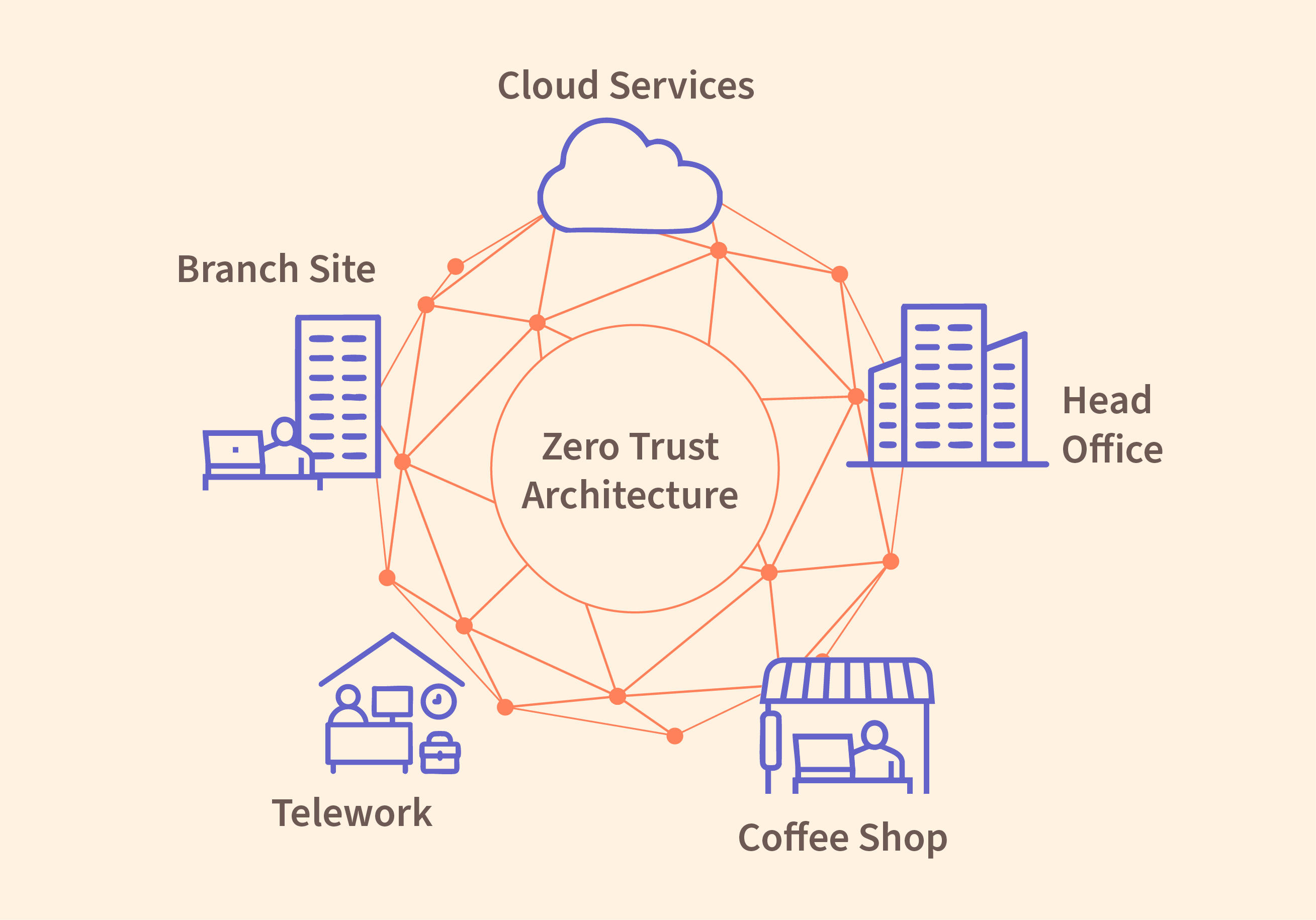
Enterprise Subnet Security 2026
As AI-driven threats grow more sophisticated, enterprise subnet security in 2026 demands more than perimeter defense. The focus has shifted to micro-segmentation, ensuring that even if a breach occurs, lateral movement is halted. This approach is critical for maintaining integrity across hybrid networks.
Visibility gaps remain a primary challenge. Without clear maps of traffic flows, security teams cannot effectively apply Zero Trust principles. Poor segmentation often leaves critical assets exposed to internal threats, making automated discovery tools essential for identifying blind spots.
The industry is moving toward consolidation. Rather than managing dozens of disjointed security tools, enterprises are unifying controls to reduce complexity. This shift allows for faster response times and more consistent policy enforcement across all subnets.
Key actions for 2026 include mapping all network dependencies, enforcing strict access controls, and automating threat detection. These steps form the foundation of a resilient subnet architecture capable of withstanding modern AI-powered attacks.
Enterprise subnet security 2026 choices that change the plan
Defining a micro-segmented Zero Trust architecture in 2026 requires balancing strict isolation against operational agility. As networks expand into hybrid environments, visibility gaps and poor segmentation remain the primary vectors for lateral movement by AI-driven threats. Security leaders must evaluate concrete tradeoffs between automation, compliance overhead, and performance latency.
The following comparison outlines the core considerations for subnet security strategies this year. It contrasts manual policy enforcement with automated, AI-assisted segmentation models to highlight the operational differences.
| Factor | Manual Segmentation | Automated AI Segmentation | 2026 Impact |
|---|---|---|---|
| Policy Enforcement Speed | Days to weeks per change | Minutes to hours | Critical for blocking rapid AI attacks |
| Visibility Accuracy | Prone to configuration drift | Continuous real-time mapping | Reduces blind spots in hybrid clouds |
| Operational Overhead | High IT staff burden | Lower after initial setup | Addresses the 2026 consolidation trend |
| Compliance Auditing | Static, periodic snapshots | Continuous evidence logging | Simplifies regulatory reporting |
Latency and Performance
Micro-segmentation introduces inspection points at every subnet boundary. While automated policies reduce the risk of misconfiguration, the cumulative latency of deep packet inspection across thousands of subnets can degrade application performance. Evaluate whether your current infrastructure can handle the additional overhead without impacting user experience.
Visibility in Hybrid Environments
Traditional perimeter defenses fail when workloads move between on-premise data centers and multiple cloud providers. 2026 demands continuous visibility that adapts to dynamic workloads. Manual mapping becomes obsolete quickly; automated tools that continuously update the network topology are essential for maintaining an accurate security posture.
Compliance and Audit Readiness
Regulatory requirements for data isolation are tightening globally. Automated segmentation provides continuous evidence of policy enforcement, making audits less disruptive. Manual processes rely on periodic snapshots, which can miss drift between audit cycles. Choosing an automated approach aligns with the industry shift toward unification and control, as noted in recent state-of-network security reports.
Build a zero trust architecture decision framework
Enterprise security teams in 2026 are moving past theoretical zero trust models toward strict, micro-segmented subnets. The primary goal is to contain AI-driven threats that exploit visibility gaps in hybrid networks. This framework provides a structured approach to implementing zero trust architecture, focusing on concrete steps that reduce attack surfaces and enforce strict access controls.
Map all network assets and traffic flows
You cannot secure what you cannot see. Start by creating a complete inventory of all hardware, software, and data assets across your hybrid environment. Map every communication path between these assets to identify unauthorized or shadow IT connections. This visibility is the foundation of zero trust, allowing you to detect anomalies before they escalate. Without a clear map, AI-driven threats can move laterally through unmonitored segments undetected.
Define granular access policies for each segment
Move beyond broad network zones to define policies for individual micro-segments. Each segment should have specific access rules based on user identity, device health, and application context. This granular approach ensures that even if a threat actor breaches one segment, their movement is restricted. Implement least-privilege access principles to minimize the potential impact of any single compromise.
Automate identity verification and device health checks
Identity and device posture are the new perimeter. Implement automated systems that continuously verify user identities and device health before granting access. This includes multi-factor authentication, certificate-based authentication, and real-time device compliance checks. Automation reduces the latency of security checks while ensuring that only trusted entities can interact with sensitive resources.
Monitor and enforce policies with real-time analytics
Continuous monitoring is essential for detecting and responding to threats in real-time. Deploy analytics tools that provide visibility into all network traffic and user activities. These tools should be able to detect anomalies, enforce policies dynamically, and trigger automated responses to potential threats. Regularly review and update these policies to adapt to new threats and changes in the network environment.
-
Inventory all network assets and map traffic flows
-
Define granular access policies for each micro-segment
-
Automate identity verification and device health checks
-
Deploy real-time monitoring and analytics tools
-
Regularly review and update security policies
Spotting Weak Zero Trust Claims
Evaluating Zero Trust Architecture in 2026 requires separating genuine micro-segmentation from marketing gloss. Many vendors still rely on static perimeter models disguised as modern security. To identify misleading claims, focus on how they handle visibility gaps in complex hybrid networks and whether they offer real-time enforcement or just periodic audits.
The "Always-On" Visibility Myth
Some solutions claim continuous monitoring but only provide snapshots during scheduled scans. This creates dangerous blind spots where lateral movement can occur between checks. Look for platforms that integrate real-time telemetry from identity providers and network access control points. If the dashboard updates only once daily, the architecture is reactive, not proactive.
Segmentation That Doesn't Scale
True micro-segmentation must adapt dynamically to user context and device health. Weak implementations often rely on static IP rules that break when workloads move or scale. Effective tools automate policy enforcement based on identity and behavior, not just network location. Check if the solution supports dynamic policy updates without manual intervention for every new service.
AI-Driven Threats Require AI-Driven Defense
As threats become more automated, manual rule management becomes a liability. Vendors promising "AI-powered" features should demonstrate actual anomaly detection and automated response capabilities. Beware of tools that use AI only for reporting or basic log analysis. The defense must actively block suspicious behavior in milliseconds, not just flag it for review.
Consolidation Over Proliferation
The 2026 landscape favors unified platforms over fragmented toolsets. If a solution requires five different consoles for identity, network, and endpoint management, it introduces complexity and risk. Look for architectures that unify visibility and control into a single pane of glass. This reduces configuration errors and ensures consistent policy application across all subnets.
Enterprise subnet security 2026: what to check next
Implementing zero trust in 2026 requires addressing specific technical and operational hurdles. These practical questions address the most common objections regarding micro-segmentation, AI-driven threats, and legacy integration.
No comments yet. Be the first to share your thoughts!