
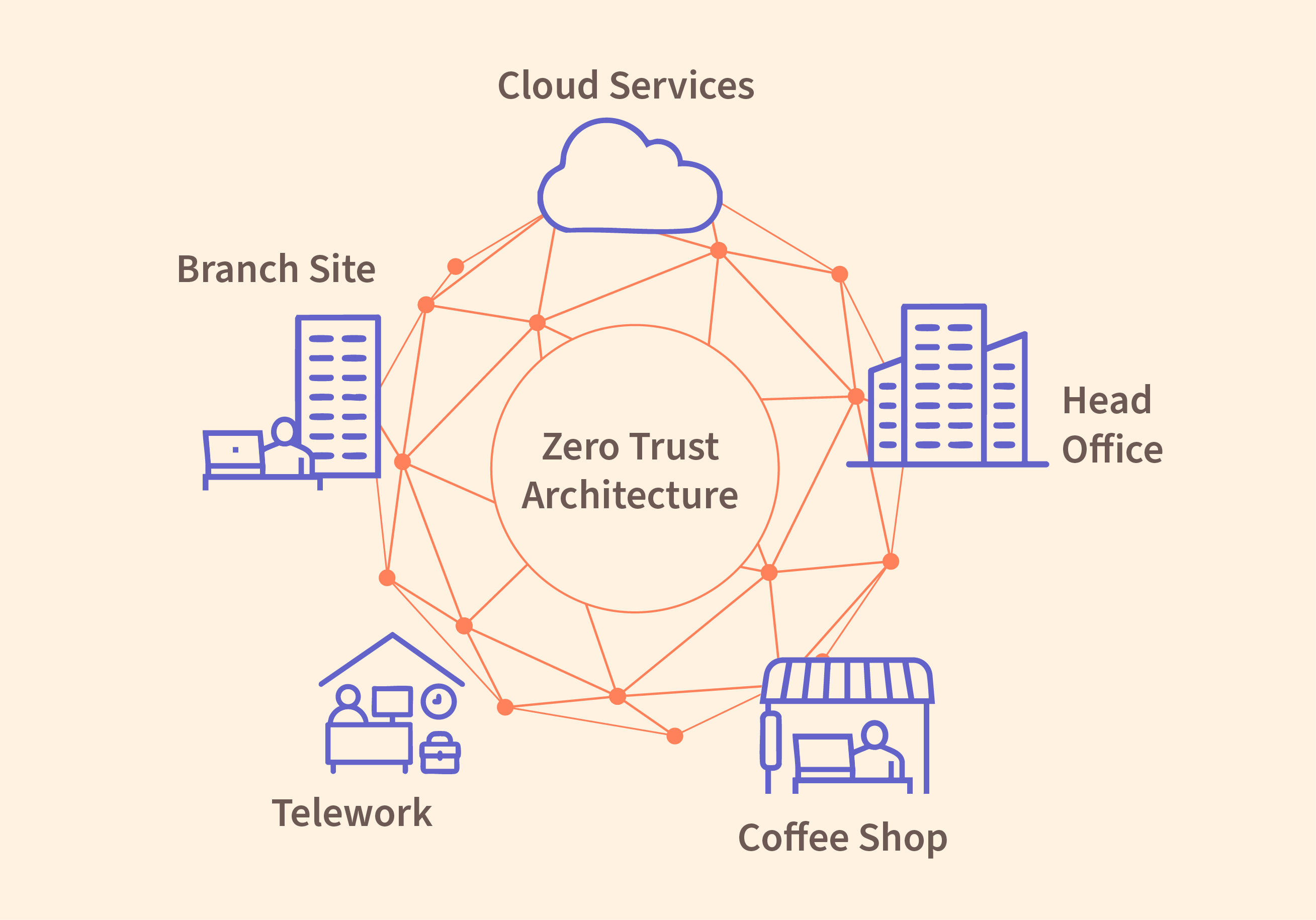
Why static subnets fail in 2026
Traditional network segmentation relies on static IP addresses and rigid subnets, a model built for a perimeter-based security era. In 2026, this approach is obsolete. Attackers move laterally across these flat networks with ease, exploiting the trust granted to any device within a subnet. When a single endpoint is compromised, the entire segment becomes vulnerable, turning a minor breach into a catastrophic data loss event.
Static rules cannot keep pace with modern workloads. Containers spin up and down in seconds, cloud instances migrate across regions, and remote workers connect from untrusted networks. AI-driven microsegmentation addresses this by shifting from IP-based boundaries to identity-based controls. It creates secure zones around individual applications and workloads, regardless of their location or IP address.
This dynamic approach uses artificial intelligence to analyze traffic patterns and detect anomalies in real time. Instead of waiting for a human administrator to update firewall rules, the system automatically isolates suspicious behavior. This granular visibility prevents lateral movement, ensuring that threats remain contained and do not spread across the network.
The transition to AI-driven microsegmentation is not just an upgrade; it is a necessity. As threats become more sophisticated and automated, manual security measures are no longer sufficient. Organizations must adopt a zero trust architecture that assumes breach and verifies every request. This proactive stance ensures that security adapts as quickly as the threats it faces.
How AI enables dynamic subnet isolation
Traditional network security relies on static rules that treat the network like a gated community with fixed fences. When threats evolve, these fences become obsolete, leaving gaps that attackers exploit for lateral movement. In 2026, AI-driven microsegmentation replaces these rigid boundaries with dynamic, adaptive isolation. Instead of relying on human administrators to manually update policies, AI agents analyze traffic patterns in real-time to identify and isolate workloads automatically.
1. Continuous Traffic Analysis
The process begins with AI agents monitoring every packet of data moving through the network. Rather than looking for known bad signatures, these agents build a baseline of "normal" behavior for each workload. This includes typical communication partners, data volumes, and access times. By understanding what healthy traffic looks like, the system can instantly detect anomalies that deviate from the norm, such as a database server suddenly attempting to connect to an external cloud service.
2. Real-Time Policy Generation
Once an anomaly is detected, the AI evaluates the risk and generates a micro-segmentation policy on the fly. This policy defines exactly which connections are allowed and which are blocked, creating a granular boundary around the specific workload. Unlike static firewalls that apply broad rules to entire subnets, these AI-generated policies are precise, targeting only the affected assets. This ensures that legitimate business operations continue uninterrupted while threats are contained.
3. Automated Enforcement and Isolation
The final step is the immediate enforcement of these policies across the network infrastructure. The AI agent pushes the new rules to the relevant security controls, effectively isolating the compromised or suspicious workload from the rest of the network. This happens in milliseconds, preventing lateral movement before the attacker can cause significant damage. The system then continues to monitor the isolated workload, gathering data to refine future policies and improve overall security posture.
AI-driven microsegmentation moves beyond static rules to real-time behavioral analysis, reducing breach blast radius in minutes rather than days.
Implementing zero trust with AI labels
Traditional network segmentation relies on static rules that struggle to keep pace with modern cloud environments. By 2026, the most resilient enterprises have shifted to AI-driven microsegmentation, where artificial intelligence automatically identifies and tags every asset, service, and user. This dynamic labeling replaces rigid IP-based boundaries with contextual, least-privilege access policies that adapt in real time.
The core mechanism is continuous discovery. Instead of manual inventory updates, AI models analyze network traffic patterns, application dependencies, and user behavior to assign security labels to resources. When a new service is deployed or a user’s role changes, the AI updates these labels instantly. Access control systems then enforce policies based on these tags, ensuring that only authorized entities can communicate with specific assets.
This approach dramatically reduces the attack surface. If a threat actor compromises a single endpoint, the AI-labeled microsegments contain the breach, preventing lateral movement across the network. Policies are generated automatically based on observed behavior, eliminating the human error often associated with manual rule creation. The result is a self-healing security posture that evolves with the infrastructure.
The benefits of this automated labeling strategy are tangible and immediate:
Implementing this system requires integrating AI labeling capabilities with existing identity and access management tools. The goal is to create a unified view of trust, where every request is evaluated against the latest AI-generated context. This shift transforms security from a static defense into a responsive, intelligent system capable of neutralizing threats before they escalate.
Stopping lateral movement at machine speed
When a breach occurs, attackers rely on lateral movement—the process of crawling through a network to find high-value targets. In traditional environments, this crawl can take hours or days, giving threat actors ample time to exfiltrate data or deploy ransomware. AI-driven microsegmentation changes the timeline entirely. It acts as an automated first responder, detecting anomalous behavior and cutting off access paths in milliseconds.
By enforcing strict, identity-based policies at the workload level, AI ensures that even if an attacker compromises one server, they remain trapped in that isolated segment. The system recognizes deviations from normal traffic patterns instantly, blocking unauthorized requests before they can propagate. This containment strategy limits the blast radius of any incident, protecting critical enterprise assets without requiring manual intervention from security teams.
This speed is essential in 2026, where automated attacks exploit vulnerabilities faster than human analysts can react. AI-powered segmentation doesn't just react; it predicts and prevents. By continuously learning from network behavior, it adapts to new threats in real-time, ensuring that your zero trust architecture remains resilient against sophisticated, machine-speed threats.
Avoiding Common Pitfalls in AI Segmentation Projects
AI-driven microsegmentation is powerful, but it is not a silver bullet. Many organizations fail in 2026 because they treat automation as a replacement for strategy rather than an accelerator. The most frequent mistake is over-reliance on AI without human oversight. When algorithms learn from noisy or incomplete data, they may generate overly permissive policies that leave critical workloads exposed or, conversely, block legitimate business traffic. This "automation bias" turns a security feature into an operational liability.
Data quality is the second major trap. AI models are only as good as the telemetry they ingest. If your network logs are fragmented or your asset inventory is outdated, the segmentation engine will build walls around ghosts. Before deploying any AI tools, ensure your visibility layer is clean. Prioritize high-fidelity data sources that provide real-time context about workload behavior, not just static IP addresses.
Finally, avoid the temptation to "set and forget." Microsegmentation is a living system. As applications evolve, so must the policies. Regular audits and human-in-the-loop reviews ensure that AI recommendations align with actual business needs. This balanced approach prevents drift and keeps your zero trust architecture resilient against emerging threats.

Frequently Asked Questions About AI-Driven Microsegmentation
How does AI change traditional microsegmentation?
Traditional microsegmentation relies on static rules that require constant manual updates as networks change. AI-driven microsegmentation automates this process by continuously learning application behavior. It dynamically adjusts access policies in real time, ensuring that security controls adapt to new threats without slowing down operations. This shift from reactive to proactive defense is essential for maintaining a true Zero Trust posture in 2026.
Can AI prevent lateral movement in a breach?
Yes. One of the primary benefits of AI-assisted microsegmentation is its ability to stop lateral movement—the technique attackers use to spread through a network after an initial breach. By analyzing traffic patterns and identifying anomalies instantly, AI can isolate compromised segments before the threat spreads. This containment significantly reduces the "blast radius" of an attack, limiting damage and giving security teams time to respond.
Does AI microsegmentation increase operational overhead?
No, it reduces it. Implementing microsegmentation manually is often cited as a major hurdle due to the complexity of mapping thousands of dependencies. AI tools automate the discovery and labeling of workloads, automatically generating least-privilege policies. This automation lowers the burden on security teams, allowing them to focus on strategic initiatives rather than tedious rule management.
Is AI-driven segmentation effective against zero-day threats?
AI-driven segmentation is particularly effective against zero-day threats because it focuses on behavior rather than known signatures. Instead of waiting for a vendor to identify a new malware variant, AI monitors for unusual communication patterns or unauthorized access attempts. If a workload starts behaving strangely, the system can instantly restrict its network access, containing the potential threat before it causes significant harm.
No comments yet. Be the first to share your thoughts!