
What changed in enterprise subnetting 2026
Enterprise subnetting has shifted from a static, perimeter-based model to a dynamic, identity-aware framework. The traditional approach of relying on fixed IP ranges and physical boundaries is no longer sufficient for modern hybrid work environments and multi-cloud deployments.
The primary driver for zero trust subnetting is the convergence of security and connectivity. As AI workloads and distributed teams expand the attack surface, organizations must move toward adaptive segmentation. This means network policies are now tied to user identity and device health rather than just location.
AI plays a critical role in this transition by analyzing traffic patterns in real time. Instead of manual configuration, autonomous networks can detect anomalies and adjust segmentation rules dynamically. This shift reduces the risk of lateral movement by attackers and ensures that access is granted only when necessary.
KeyTakeaways items=["Static perimeter subnetting is replaced by dynamic, identity-based segmentation.", "AI-driven traffic analysis enables real-time adaptation to threats.", "Microsegmentation is essential for securing multi-cloud and hybrid workloads."]
Legacy subnetting versus microsegmentation
Enterprise networks have long relied on VLAN-based subnetting to organize traffic. This traditional model groups devices by physical location or department, creating broad boundaries between network segments. While this approach offers better scalability and cleaner routing for large address spaces, it operates on a "trust but verify" basis. Once a device is inside the perimeter, it often has broad access to other internal resources.
Microsegmentation flips this model by defining security policies around individual workloads, virtual machines, or applications rather than network locations. This technique aligns directly with zero trust subnetting principles, ensuring that access is granted only when explicitly authorized. It creates fine-grained isolation that prevents lateral movement, even if an attacker breaches the initial perimeter.
The choice between these approaches depends on your specific infrastructure needs. Legacy subnetting remains effective for basic network organization and addressing schemes, but it lacks the precision required for modern threat prevention. Microsegmentation provides the granular control necessary for high-security environments, though it requires more sophisticated automation and management tools.
| Dimension | Legacy VLAN Subnetting | Microsegmentation |
|---|---|---|
| Granularity | Broad (Network/LAN-based) | Fine (Workload/Application-based) |
| Automation | Manual configuration | Policy-driven automation |
| Zero Trust Alignment | Perimeter-based trust | Zero trust enforcement |
| Scalability | High for addressing | High for security policy |
Designing subnets for zero trust alignment
Zero Trust Subnetting works best as a clear sequence: define the constraint, compare the realistic options, test the tradeoff, and choose the path with the fewest hidden costs. That order keeps the advice usable instead of decorative. After each step, pause long enough to check whether the recommendation still fits the reader's actual situation. If it depends on perfect timing, unusual access, or a best-case budget, include a simpler fallback.
The simplest way to use this section is to keep the setup small, verify each change, and record the stable configuration before adding optional accessories.
AI-driven traffic analysis in network design
Traditional subnetting relies on static rules that struggle to keep pace with modern enterprise traffic. AI-driven traffic analysis changes this by continuously monitoring data flows to identify anomalies that static policies miss. This approach allows security teams to adjust subnet policies dynamically, ensuring that security controls adapt to real-time threats without manual intervention.
By applying machine learning models to network telemetry, systems can distinguish between normal operational spikes and potential security incidents. For example, if a device suddenly begins communicating with an unusual number of external endpoints, the AI can flag this as anomalous behavior. Instead of waiting for a manual rule update, the system can automatically isolate the affected subnet or restrict its access rights. This reduces the window of exposure and limits the spread of lateral movement within the network.
This capability is particularly valuable in environments with high mobility, such as IoT deployments or hybrid cloud setups. Static segmentation often leads to either overly permissive rules that compromise security or overly restrictive ones that hinder productivity. AI-driven analysis strikes a balance by continuously learning from traffic behavior and adjusting access controls accordingly. As enterprises move toward autonomous networks, this dynamic approach becomes essential for maintaining both security and performance.
The integration of AI into network design also simplifies compliance. Automated logging and real-time policy enforcement provide a clear audit trail of who accessed what and when. This transparency is crucial for meeting regulatory requirements in industries like healthcare and finance. By shifting from reactive to proactive segmentation, organizations can build a more resilient infrastructure that adapts to the complexities of modern enterprise operations.
IPv4 constraints versus IPv6 flexibility
Zero trust subnetting demands granular segmentation—every user, device, and application should ideally reside on its own micro-segment. This level of isolation creates a massive address space requirement that IPv4 simply cannot sustain. With the global pool of IPv4 addresses exhausted, enterprises are forced to rely on complex Network Address Translation (NAT) and hierarchical summarization to conserve the remaining addresses. While these workarounds allow multi-site networks to function, they introduce routing table bloat and obscure the clear boundaries needed for strict zero trust policies [src-serp-4].
IPv6 solves this scarcity issue by providing an effectively infinite address space. This abundance allows network architects to assign unique subnets to every endpoint without fear of depletion. Instead of fighting for every available bit, teams can implement flat, scalable addressing schemes where each segment is distinct and routable. This flexibility is foundational for zero trust, as it enables precise policy enforcement at the network layer without the overhead of address sharing.
The shift from IPv4 to IPv6 is not just about having more numbers; it is about simplifying the architecture. IPv6 removes the need for NAT, which often masks internal traffic and complicates logging and monitoring. By enabling direct end-to-end connectivity, IPv6 makes it easier to verify the identity of every connection, a core principle of zero trust segmentation.
Common subnetting mistakes in 2026
Even with modern Zero Trust frameworks, poor subnetting creates blind spots that identity-based controls cannot fully patch. The most persistent error is relying on legacy VLANs as the primary security boundary. VLANs provide logical separation, but they do not encrypt traffic or verify user identity. Treating a VLAN as a secure zone allows lateral movement if an attacker compromises a single endpoint within that broadcast domain.
Poor IP hygiene compounds these risks. Many enterprises still use overlapping private address spaces or irregular subnet masks that complicate routing and obscure traffic flows. This disarray makes it difficult to apply consistent access policies across the network. When IP addresses are assigned randomly or left unmanaged, troubleshooting becomes reactive rather than proactive, delaying the detection of anomalous behavior.
Ignoring identity context in network segmentation is another critical failure. Traditional subnetting focuses on where a device is located, not who or what is using it. In 2026, segmentation must align with identity attributes such as role, device health, and session context. Without this alignment, a compromised device with valid credentials can move freely across subnets that were never designed to isolate it.
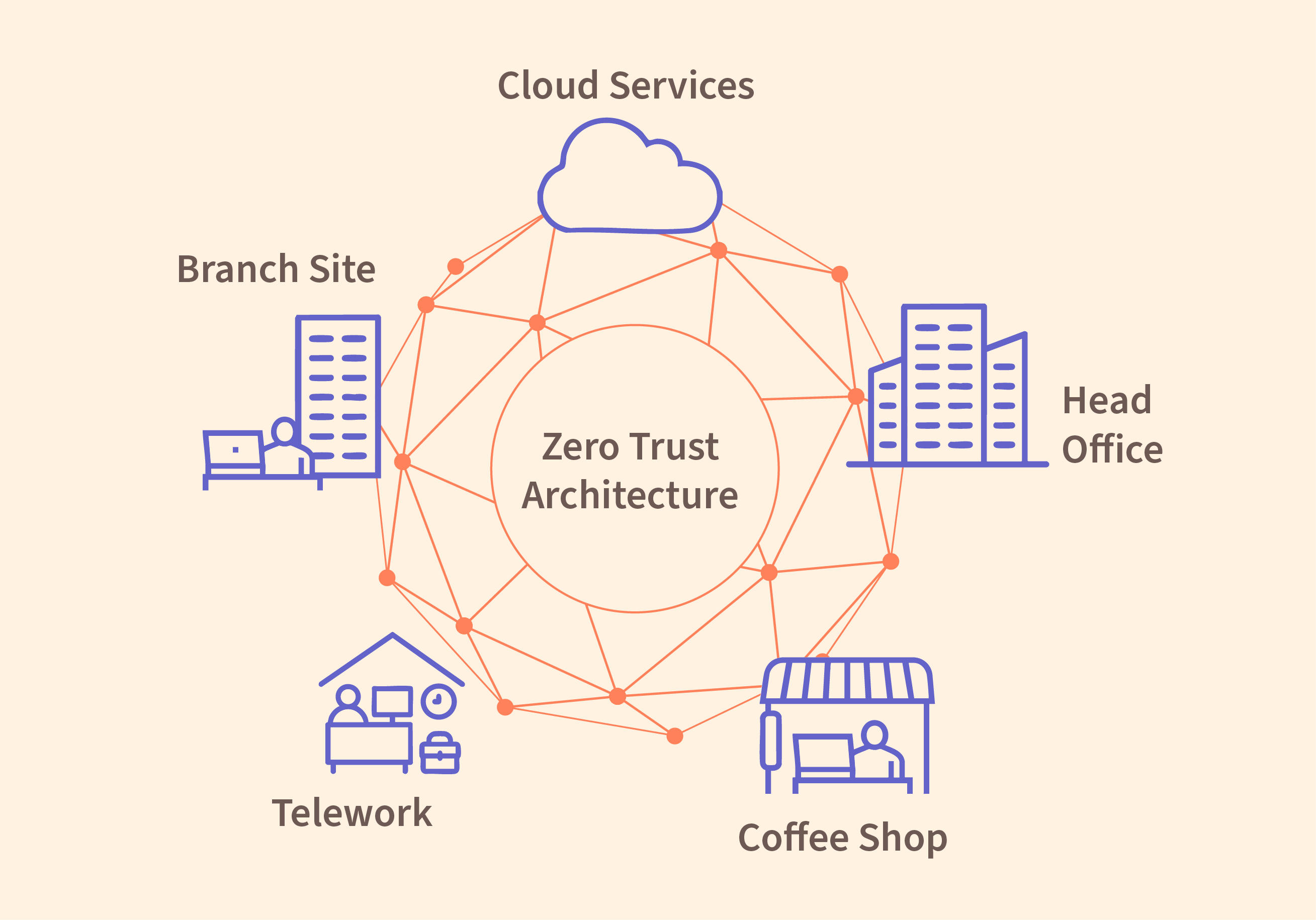
The NIST Zero Trust Architecture emphasizes that network segmentation should support, not replace, continuous verification. Subnets must be designed to limit blast radius while identity policies enforce least-privilege access. Avoiding these common pitfalls ensures that your network structure reinforces, rather than undermines, your Zero Trust goals.
Frequently asked questions about zero trust subnetting
How does zero trust subnetting differ from traditional VLAN segmentation?
Traditional VLAN segmentation relies on a "castle-and-moat" model, assuming that traffic inside the network boundary is trustworthy. Zero trust subnetting changes this by treating every subnet as an untrusted zone, regardless of its internal location. Instead of relying solely on Layer 2 isolation, it enforces strict micro-segmentation and identity-based access controls at the network edge and between subnets. This ensures that even if an attacker breaches one subnet, lateral movement to others is blocked by default.
Is IPv6 necessary for implementing zero trust subnetting in 2026?
While zero trust subnetting can technically function over IPv4, IPv6 is highly recommended for modern enterprise environments. The vast address space in IPv6 allows for unique, persistent IP addresses for every device and user, which simplifies identity-based policy enforcement. It also eliminates the need for NAT (Network Address Translation), which often obscures traffic origins and complicates logging. As enterprises adopt IPv6, they find it easier to align subnet boundaries with organizational units and security policies.
What role does AI play in managing zero trust subnet policies?
AI and machine learning are increasingly used to automate the creation and adjustment of subnet segmentation policies. AI-driven tools analyze network traffic patterns to detect anomalies and automatically suggest or enforce new segmentation rules. This reduces the manual burden on network engineers and ensures that policies adapt to changing threat landscapes in real-time. By continuously monitoring traffic flows, AI helps maintain the "least privilege" principle inherent to zero trust architectures.
No comments yet. Be the first to share your thoughts!