
Why 2026 Demands Stricter Subnet Controls
The enterprise security perimeter has effectively dissolved. By 2026, the traditional model of securing a defined boundary is obsolete. Instead, organizations face visibility gaps in complex hybrid networks that span on-premises infrastructure, multiple cloud providers, and remote endpoints. This fragmentation creates blind spots where lateral movement can occur undetected, making stricter subnet controls and microsegmentation not just beneficial, but essential for operational continuity.
As noted by Blackfog, the primary challenge for firms in 2026 is maintaining visibility across these dispersed environments. Without granular subnet segmentation, security teams cannot accurately map traffic flows or enforce least-privilege access. The shift toward zero-trust architecture requires that every subnet be treated as a potential threat vector. This means implementing strict controls that verify every connection, regardless of its origin, to prevent unauthorized data exfiltration or internal compromise.
The landscape is further complicated by new attack surfaces introduced by emerging technologies. According to 2026 browser data reports, 41% of employees are now using AI web tools, creating significant security blind spots in browser-based data handling. These tools often bypass traditional network monitoring, allowing sensitive information to leak through channels that standard subnet controls might not adequately inspect. This human-centric vulnerability underscores the need for deeper network visibility.
AlgoSec’s 2026 State of Network Security report highlights that the industry is entering a consolidation period defined by unification and automation. As tools proliferate, the complexity of managing subnet policies increases. Organizations must move beyond manual configuration to automated, policy-driven subnet management. This ensures that security controls adapt in real-time to changing network conditions, reducing the risk of misconfiguration and enhancing overall resilience against sophisticated threats.
Note: The rise of AI web tools in 2026 has expanded the attack surface. 41% of employees use these tools, creating new blind spots that traditional subnet security must address. Source: 2026 Browser Data Report
Zero trust architecture for subnets
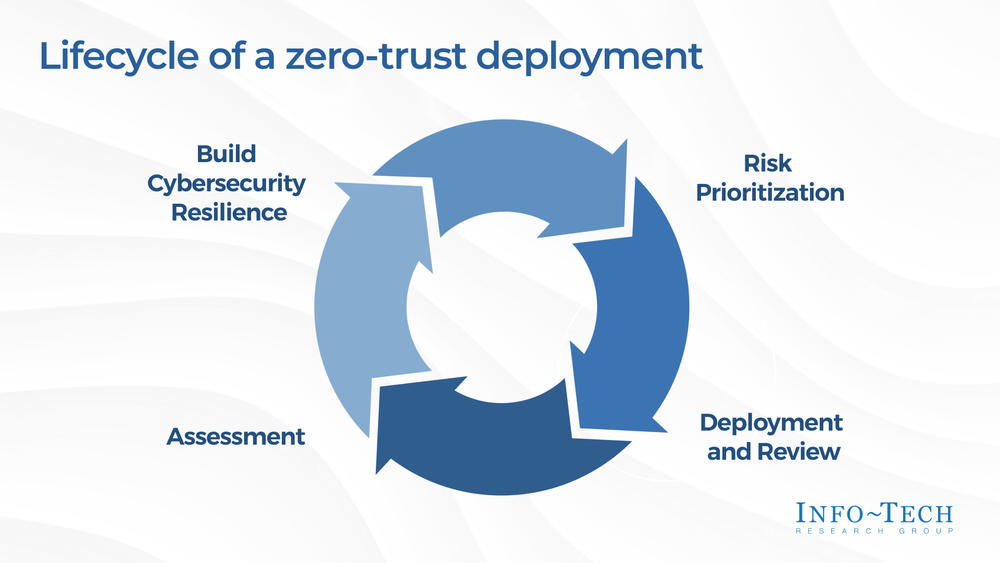
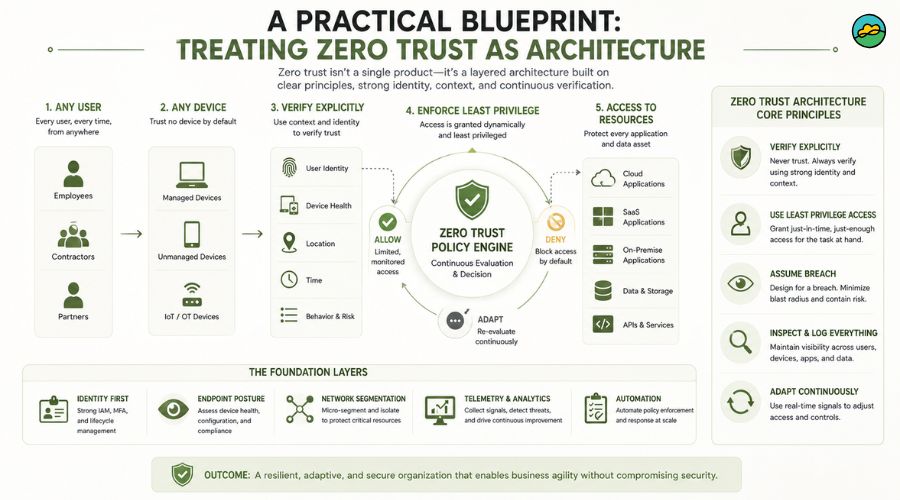
By 2026, the traditional perimeter firewall is no longer sufficient for enterprise subnet security. The shift toward zero trust architecture means that every request to access a subnet is treated as untrusted, regardless of its origin. This approach moves beyond static firewall rules to identity-based access controls, ensuring that only verified users and devices can communicate within specific network segments.
Identity as the new perimeter
In a zero trust model, identity becomes the primary security boundary. Instead of relying on IP addresses or physical location, access policies are enforced based on user identity, device health, and application context. This granular approach limits lateral movement, preventing attackers from spreading across subnets even if they breach an initial entry point. For enterprises operating globally, this consistency is critical for maintaining compliance and security posture across distributed locations.
Continuous verification and monitoring
Zero trust requires continuous verification of all access attempts. Subnet traffic is monitored in real-time, with policies dynamically adjusted based on risk signals. This includes analyzing behavior patterns, detecting anomalies, and responding to potential threats instantly. The integration of AI-driven threat detection enhances this capability, allowing security teams to identify and mitigate risks before they escalate. As highlighted in recent enterprise cybersecurity trends for 2026, proactive protection and continuous monitoring are essential for resilience against evolving threats.
Implementation considerations
Implementing zero trust for subnet segmentation involves several key steps. First, map all network assets and define clear access policies for each subnet. Second, deploy identity and access management solutions that support multi-factor authentication and device validation. Third, integrate security tools that provide visibility into subnet traffic and enable automated response actions. By following these practices, enterprises can build a robust zero trust framework that adapts to the dynamic nature of modern network environments.
AI-driven microsegmentation strategies
As enterprises move deeper into 2026, the static perimeter model has collapsed. AI-driven microsegmentation replaces rigid firewall rules with dynamic, policy-based isolation that adapts to real-time traffic patterns. This approach allows organizations to enforce zero-trust principles at the workload level, ensuring that even if a breach occurs, lateral movement is immediately contained within the subnet.
Automation is the core differentiator. Traditional segmentation requires manual policy updates that lag behind infrastructure changes. AI-driven systems analyze telemetry from endpoints, applications, and network flows to auto-generate least-privilege access rules. This reduces administrative overhead while minimizing the risk of human error that often leaves gaps in security coverage.
To understand the operational shift, compare the capabilities of legacy segmentation against modern AI-driven microsegmentation:
| Feature | Traditional Segmentation | AI-Driven Microsegmentation |
|---|---|---|
| Policy Management | Manual, static rules | Automated, dynamic adjustments |
| Threat Detection | Signature-based, reactive | Behavioral analysis, real-time |
| Lateral Movement | Limited containment | Immediate isolation |
| Scalability | High friction at scale | Native cloud and hybrid support |
| Complexity | High operational overhead | Reduced manual intervention |
The integration of machine learning enables these systems to distinguish between benign traffic anomalies and actual threats. By continuously learning from baseline network behavior, the AI can flag deviations without generating excessive false positives. This precision is critical for maintaining performance while enforcing strict security controls across complex enterprise environments.
For 2026, the focus is on proactive resilience. As outlined in recent enterprise security guides, the combination of zero-trust access controls and AI-driven threat detection creates a robust defense layer that evolves with the threat landscape (Fortinet, 2026). This shift moves security from a reactive posture to an adaptive, intelligent system that protects data integrity across all subnets.
Implementing subnet security best practices
Securing enterprise subnets in 2026 requires moving beyond perimeter defense to a model of continuous verification and isolation. This guide outlines the technical steps for hardening subnet configurations, ensuring alignment with global zero-trust standards and 2026 compliance frameworks.
Treat every subnet as an untrusted zone. Implement microsegmentation policies that require explicit authentication for all inter-subnet traffic. Use identity-aware proxies to verify user and device context before allowing access, ensuring that lateral movement is blocked even if a single subnet is compromised.
Encrypt data in transit between all subnets using TLS 1.3 or IPsec. For sensitive workloads, consider overlay networks with built-in encryption to protect traffic across the enterprise backbone. Ensure key management is centralized and rotated automatically to prevent credential leakage.
Deploy subnet-specific network taps or SPAN ports to feed traffic into a SIEM or NDR platform. Use AI-driven tools to establish baseline behavior for each subnet and alert on anomalies, such as unusual port scanning or data exfiltration attempts. Real-time visibility is critical for detecting threats in 2026's evolving landscape.

Use Infrastructure as Code (IaC) to define and enforce subnet rules. Regularly audit configurations against compliance benchmarks like NIST or ISO 27001 to ensure no drift occurs. Automated scanning should flag misconfigurations, such as open ports or overly permissive ACLs, before they can be exploited.
Key Takeaways:
- Treat all subnets as untrusted and require explicit authentication.
- Encrypt all inter-subnet traffic using modern protocols.
- Monitor subnet activity continuously with AI-driven tools.
- Automate configuration audits to maintain compliance.
Common questions about subnet security
What are the data security trends in 2026?
Enterprise network security in 2026 is shifting from static perimeter defense to continuous, adaptive protection. The primary trends include AI-driven threat detection, cloud security integration, and ransomware resilience. These approaches emphasize proactive monitoring and human-focused attack prevention rather than reactive patching.
What is enterprise network security?
Enterprise network security involves the constant monitoring and management of policies, procedures, and technologies that protect an organization's infrastructure. In 2026, this definition extends beyond traditional firewalls to include microsegmentation and zero-trust architectures, ensuring that every subnet and device is verified before access is granted.
What is the future of cyber security in the next 5 years?
Over the next five years, artificial intelligence and machine learning will become central to cybersecurity operations. These technologies will enable real-time threat detection and response, analyzing massive datasets to identify vulnerabilities before they are exploited. This shift moves security from a defensive posture to an intelligent, predictive system.
No comments yet. Be the first to share your thoughts!