
Why zero trust changes subnet design
Traditional enterprise subnetting was built on a foundation of trust. Network engineers designed flat networks or broad security zones, assuming that any device inside the perimeter was benign. Subnet masks like /24 were used to group hundreds of hosts together, prioritizing address efficiency over isolation. This model worked when the perimeter was a clear physical boundary. Today, that boundary has dissolved into cloud services, remote work, and IoT devices.
Zero trust architecture dismantles the "trust but verify" approach by assuming breach. In a modern enterprise subnetting 2026 strategy, identity replaces IP location as the primary trust anchor. A /24 subnet is no longer a safe haven; it is a potential attack vector if lateral movement is not restricted. Security policies must now apply to individual workloads and users, regardless of which IP block they occupy.
This shift requires granular segmentation. Instead of large /24 or /23 blocks, 2026 designs favor /28 or /32 subnets for critical assets. A /28 subnet supports only 14 usable hosts, forcing a micro-segmented approach that limits blast radius. While this reduces address efficiency, it significantly raises the cost for attackers attempting to move laterally.
The goal is not just to divide address space, but to enforce least-privilege access at the network layer. Every subnet must be treated as a separate security domain. This means rethinking VLANs, implementing software-defined perimeters, and ensuring that every packet is authenticated based on user and device identity, not just source IP.
Static subnets versus microsegmentation
Enterprise subnetting 2026 architectures are defined by a fundamental shift in how network boundaries are drawn. Legacy static subnetting relies on rigid Layer 3 segmentation, where devices within the same subnet trust each other implicitly. In contrast, microsegmentation enforces identity-based policies at the workload level, regardless of the underlying IP address.
The table below compares these approaches across critical operational dimensions.
| Dimension | Static Subnets | Microsegmentation |
|---|---|---|
| Security Boundary | Perimeter-based (L2/L3) | Workload-based (Identity) |
| Policy Granularity | Broad / Subnet-wide | Per-application / Per-host |
| Lateral Movement | Permissive within subnet | Strictly denied by default |
| Management | Manual / Static Rules | Automated / Dynamic |
| Complexity | Low | High |
The Legacy Model
Traditional subnetting divides a large network into smaller segments using subnet masks. For example, a /24 mask provides 254 usable host addresses, while a /26 mask limits the segment to 62 hosts. This approach improves routing efficiency and simplifies broadcast domain management.
However, security within these segments is often binary. If a device is compromised, the attacker can move laterally to any other host in the same subnet. Trust is granted based on IP location, not identity. This makes static subnets vulnerable to internal threats and modern attack vectors that bypass perimeter defenses.
The Microsegmentation Model
Microsegmentation decouples security from physical or logical network topology. Policies are attached to the workload itself, using tags, labels, or identities. This allows for precise control, such as permitting only specific database ports for a specific web server, even if they reside in the same subnet.
While this approach significantly reduces the attack surface and prevents lateral movement, it introduces substantial management complexity. Policies must be continuously updated as workloads scale and change, requiring automation and robust orchestration tools. For enterprise subnetting 2026, the choice often lies in hybrid models that combine hierarchical subnetting for routing efficiency with microsegmentation for critical security zones.
IPv4 constraints versus IPv6 flexibility
The transition from IPv4 to IPv6 in enterprise subnetting 2026 is not merely an address expansion; it is a fundamental architectural shift that resolves the scalability bottlenecks inherent in Classless Inter-Domain Routing (CIDR). While IPv4 forces network engineers to treat address space as a scarce commodity, leading to complex, error-prone subnetting schemes, IPv6 provides a flat, hierarchical addressing model that simplifies microsegmentation and Zero Trust enforcement.
The Subnet Mask Trap
In an IPv4 environment, creating a subnet for a small department requires careful calculation of host bits. A /26 subnet mask (255.255.255.192) provides only 62 usable host addresses. This constraint forces administrators to adopt Variable Length Subnet Masking (VLSM) to minimize waste, resulting in disjointed addressing tables that are difficult to audit. When designing for Zero Trust, this fragmentation complicates policy application because security groups must map across multiple, non-contiguous subnets to enforce least-privilege access.
Hierarchical Simplicity in IPv6
IPv6 eliminates the need for VLSM by offering a /48 prefix to every enterprise site. This allows for a single, contiguous block of addresses where each subnet is assigned a /64 prefix. A /64 provides 2^64 addresses, effectively removing any concern about address exhaustion for individual segments. This abundance allows network architects to assign specific subnets to logical security zones—such as IoT devices, guest Wi-Fi, or critical servers—without worrying about host count limitations. The result is a predictable addressing structure that aligns directly with security policies.
Impact on Routing and Scalability
The consolidation of IPv6 addresses significantly reduces routing table sizes. By aggregating routes at the edge, enterprise core routers process fewer entries, improving forwarding performance. This efficiency is critical in 2026, where network visibility is paramount for detecting lateral movement in a Zero Trust architecture. Unlike IPv4, where route summarization often masks internal topology details, IPv6’s hierarchical design allows for precise granular control while maintaining a clean global routing table.
Microsegmentation Made Practical
Microsegmentation relies on the ability to isolate workloads at the network level. IPv6’s vast address space enables unique IP addressing for every virtual machine and container, facilitating identity-based security policies. In an IPv4 network, Network Address Translation (NAT) often obscures the source IP, complicating logging and threat detection. IPv6 restores end-to-end connectivity, ensuring that every packet carries a verifiable source address, which is essential for enforcing strict access controls between segments.
Next-gen firewall integration patterns
Modern enterprise subnetting is no longer just about address allocation; it is the foundation for micro-segmentation. In a zero trust architecture, firewalls are no longer simple perimeter guards but policy enforcement points embedded within the subnet structure. This shift moves security from a single gate to a distributed mesh of controls.
By aligning subnet boundaries with security zones, engineers can enforce strict access policies at the L3/L4 layer before traffic reaches the application. For example, a /26 subnet might isolate a specific IoT cluster, while a /24 handles general workstation traffic. Each subnet acts as a logical container where firewall rules apply uniformly, reducing the attack surface.
This granular approach allows for dynamic policy updates without re-architecting the entire network. Firewalls can inspect traffic between subnets based on identity and context, not just IP addresses. This ensures that even if a device moves, its security posture remains consistent with its role.
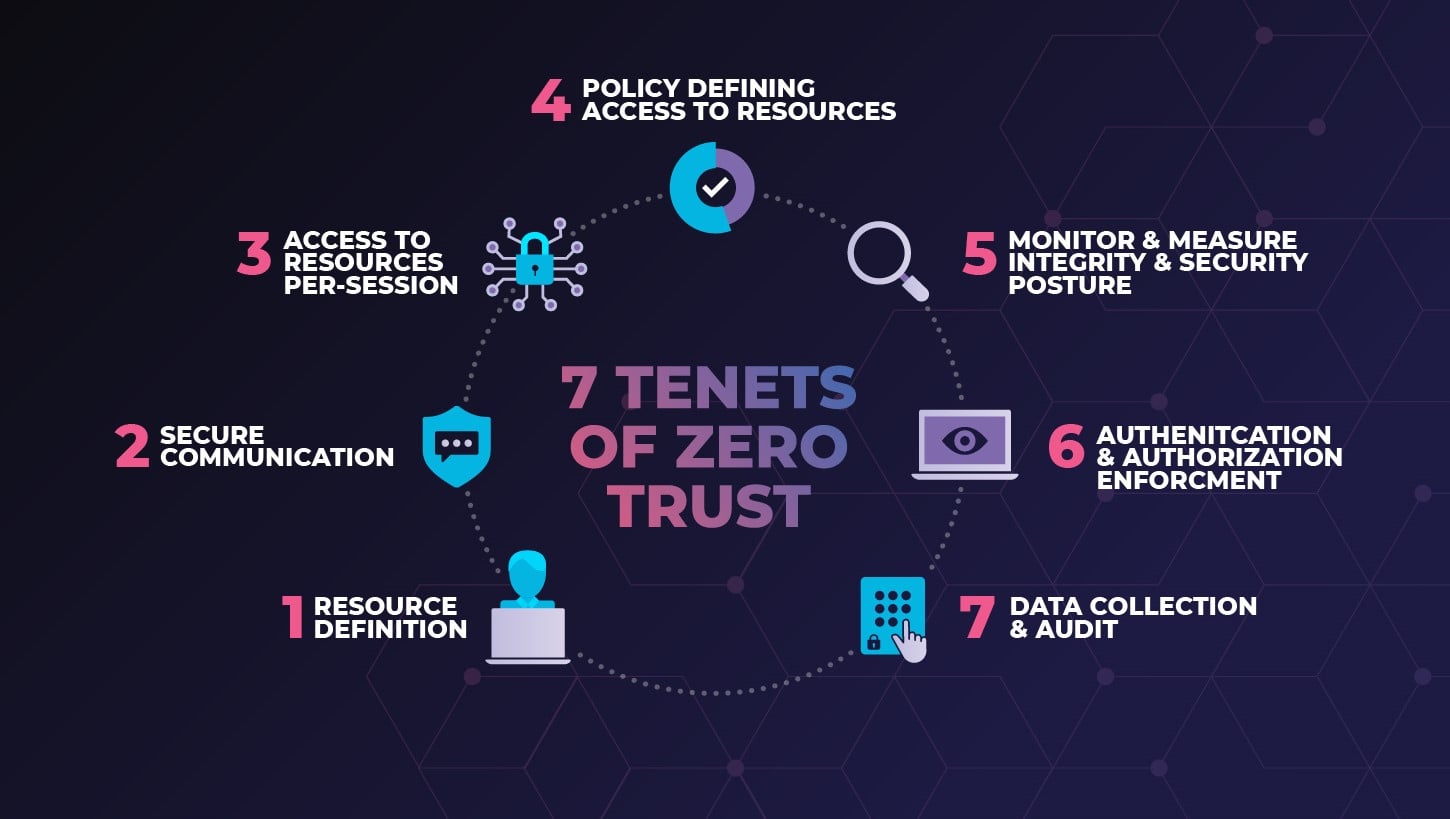
The integration of subnetting with next-gen firewalls requires careful planning. Engineers must define clear boundaries for each security zone and ensure that firewall rules are optimized for the specific subnet size. This prevents rule bloat and maintains high throughput while enforcing zero trust principles.
Build a hierarchical addressing scheme
Enterprise subnetting 2026 requires a structured approach that separates network segments by function rather than physical location. A flat addressing model creates security blind spots that modern Zero Trust architectures cannot easily mitigate. By organizing your IP space into logical blocks, you create clear boundaries for policy enforcement and simplify troubleshooting.
Start by assigning a /16 or /12 block to each major site or business unit. Within each block, use /24 subnets for general user access and /27 or /28 subnets for specific services like Wi-Fi or IoT devices. For example, a /26 subnet provides 62 usable host addresses, which is ideal for small departmental segments, while a /24 offers 254 addresses for larger workgroups. This granularity allows you to apply specific security policies to each segment without over-provisioning addresses.
Document every subnet assignment in a centralized register. This record should include the subnet CIDR, the intended purpose, the VLAN ID, and the responsible team. Regular audits of this register ensure that unused subnets are reclaimed and that new deployments align with your hierarchical design. This discipline prevents address exhaustion and maintains the integrity of your security posture as the network evolves.
Common subnetting questions for 2026
Understanding subnet masks and host capacities is essential for designing enterprise networks that align with zero trust principles. Below are answers to frequently asked questions regarding common subnet configurations.
No comments yet. Be the first to share your thoughts!